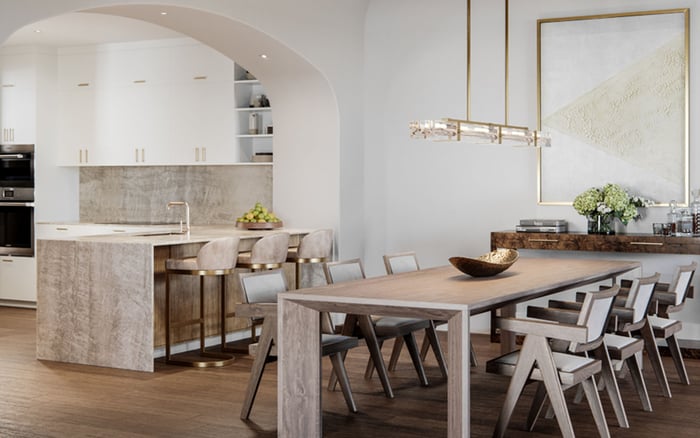
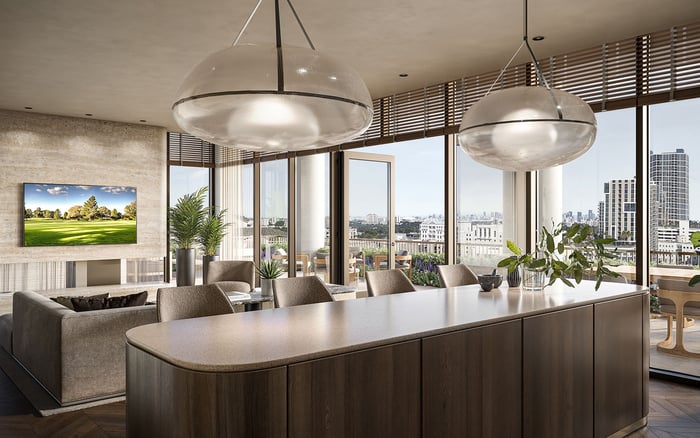
A buyer-oriented framework for evaluating how a seasonal Coral Gables residence will protect art, support thoughtful lighting, and perform while its owner is away.
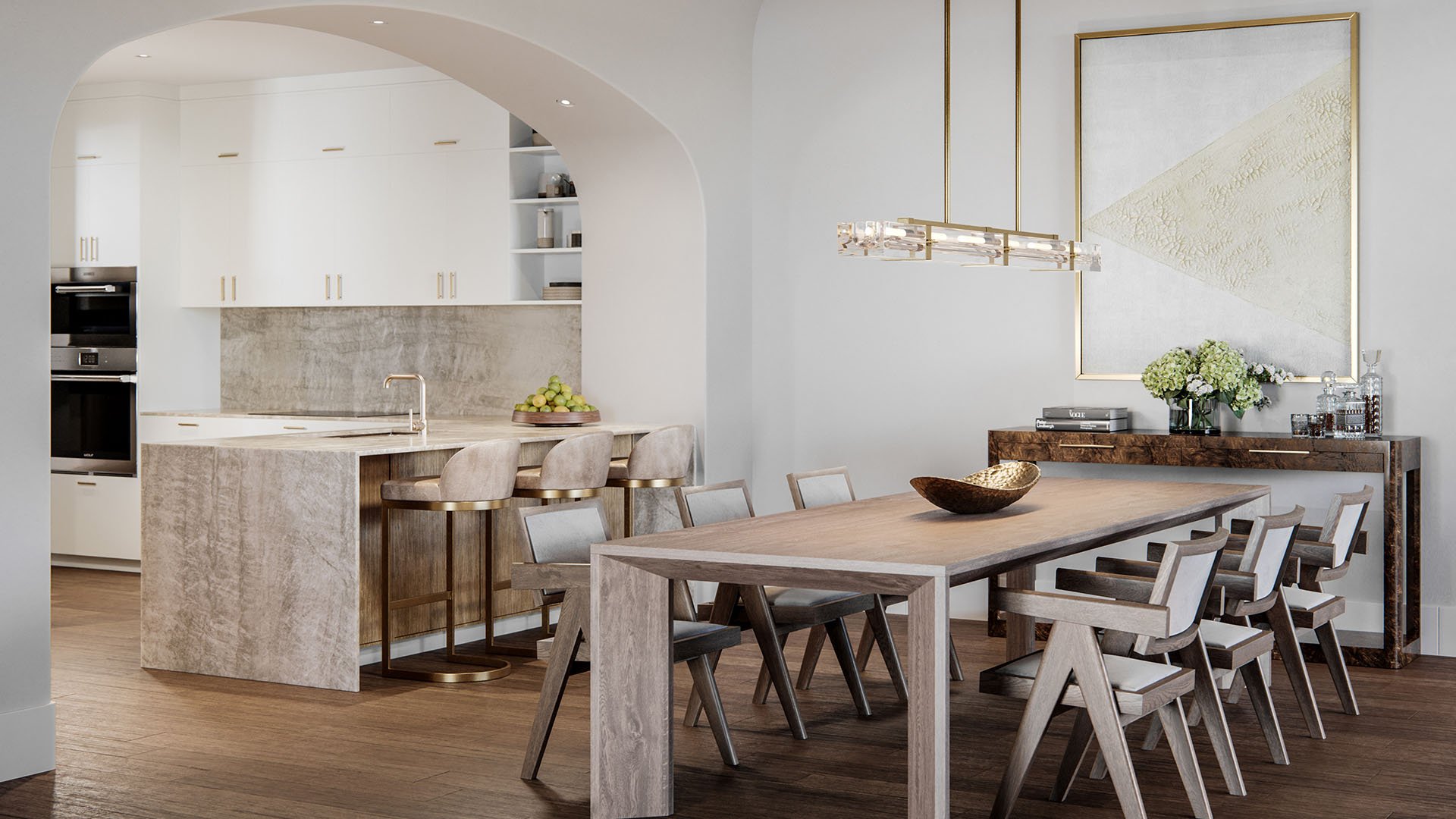
For a seasonal owner in Coral Gables, the defining luxury may not be the most photogenic feature in a sales gallery. It may be a residence capable of sustaining a carefully composed environment, supporting a considered art program, and remaining manageable through long periods of absence.
That shifts the buyer’s focus from the amenity brochure to the home’s less visible layers. Art storage, lighting controls, mechanical planning, monitoring, service access, and accountability warrant scrutiny before finishes and furnishings make the residence feel complete.
This is particularly relevant when a home must perform in two distinct modes: occupied and unoccupied. The buyer is not simply choosing rooms, but an operating framework for a valuable interior, a personal collection, and a household team.
The relevant lens spans Coral Gables, second-home planning, design and architecture, and lifestyle. Each category becomes more meaningful when viewed through the practical demands of seasonal use.
A serious art plan should begin before installation. Buyers can first identify what will be displayed, what may rotate, what requires specialist handling, and what should never be left without an agreed care protocol. That inventory can then inform conversations with an art adviser, conservator, lighting designer, interior designer, and insurance professional.
The floor plan should be assessed as a sequence of potential display conditions, not a collection of empty walls. Ask where daylight enters, how glazing and window treatments will be managed, where lighting hardware can be placed, and whether large works can travel from the arrival point to their intended locations without avoidable risk.
Storage warrants the same scrutiny. A spare closet is not automatically an art room. Buyers should ask a qualified specialist to assess the proposed location, finishes, shelving, access, security, and environmental requirements for the works involved. The right answer depends on the collection, not a generic definition of luxury.
When considering Ponce Park Coral Gables or Cora Merrick Park, a collection-minded buyer can introduce these questions during the initial residence review rather than treating them as post-closing details.
Art lighting is not merely decorative. It shapes both how a collection is experienced and how readily the interior can adapt as works move. A lighting plan should therefore account for display walls, sculpture locations, circulation, reflected light, window treatments, and the evening character of each room.
Before committing to a residence, ask whether the intended lighting concept can be executed cleanly. Review ceiling conditions, switching logic, control locations, fixture access, and the relationship between architectural and decorative lighting. If the collection changes regularly, adaptability may prove more valuable than a fixed arrangement designed around a single installation.
Seasonal ownership adds another layer. Preset scenes should be intelligible to the owner, guests, and household staff. Controls should not require improvisation after months away, and the process for changing schedules or settings should be clear. The most elegant system is often the one that can be operated, serviced, and documented without confusion.
Buyers comparing a private-home setting such as The Village at Coral Gables with nearby residential alternatives can use the lighting brief as a consistent test. The objective is not to declare one format superior, but to determine which best accommodates the owner’s collection and routines.
“Climate control” is too broad a phrase for meaningful diligence. A seasonal owner should ask the relevant professionals to define the conditions required for the residence, its contents, and any stored works. Those requirements can then be translated into operating settings, monitoring expectations, maintenance responsibilities, and escalation procedures.
The buyer should understand which spaces are independently controlled, where readings are taken, who can review them, and what happens when conditions move beyond the agreed range. It is equally important to establish who may enter the residence, who authorizes specialist access, and how each intervention is recorded.
In this context, redundancy and clarity can matter more than complexity. A sophisticated system without an accountable response plan may inspire less confidence than a simpler arrangement with named contacts, documented responsibilities, and regular review.
The same discipline applies when expanding the search to neighboring communities. At Opus Coconut Grove, for example, a buyer can apply the same due-diligence framework without assuming that one project’s operational approach mirrors another’s.
Before leaving for the season, the owner’s representatives should have a written plan tailored to the residence. It can address scheduled inspections, alarm notifications, approved access, housekeeping boundaries, mechanical service, lighting schedules, window treatments, and procedures for any art-related concern.
The protocol should distinguish routine decisions from events requiring immediate owner approval. It should also identify a primary decision-maker and a backup. Photographic condition records may be useful before departure and after any authorized handling, but the format and frequency should be agreed upon with the owner’s advisers.
A buyer should test this operating model during diligence. Ask management or the relevant service providers how access is arranged, how notices are communicated, and how outside specialists are accommodated. Do not rely on general assurances. Request a clear account of the steps that would follow a system alert or an urgent request for entry.
The strongest residence is not necessarily the one with the longest amenity list. For a seasonal owner with art, it may be the home whose plan, systems, service structure, and location work together with the least friction.
A useful decision matrix can separate essentials from preferences. Essentials might include suitable display locations, a credible storage strategy, controllable lighting, defined environmental oversight, secure specialist access, and an absence protocol. Preferences can encompass aesthetic details that are easier to modify later.
This approach also clarifies the role of each adviser. The designer considers the lived interior. The lighting consultant develops illumination and controls. The conservator advises on the collection. Mechanical and technology professionals assess systems. Insurance and security advisers review risk within their respective scopes. The owner’s representative coordinates the whole.
In this context, discretion is not passive. It is a carefully organized form of readiness, established before the residence is left quiet for the season.
When should art planning begin during a residence search? Begin during diligence, while display walls, circulation, storage possibilities, and system constraints can still influence the decision.
Is a spare closet sufficient for art storage? Do not assume so. Ask a qualified art professional to assess the space against the needs of the specific collection.
Who should review lighting for a significant collection? A lighting designer and the owner’s art advisers should coordinate with the interior and architectural teams.
What should a buyer ask about lighting controls? Ask how scenes, schedules, window treatments, overrides, and service access will function in occupied and unoccupied modes.
What does climate diligence involve? It involves defining collection-specific requirements, understanding system capabilities, and documenting monitoring and response responsibilities.
Should every room have the same environmental settings? Qualified professionals should determine the appropriate settings based on room use, contents, and the residence’s systems.
What belongs in a seasonal absence protocol? Include inspections, authorized access, alert handling, maintenance, documentation, and a clear chain of decision-making.
How should outside art handlers be accommodated? Confirm arrival procedures, access routes, permissions, supervision, and any building or property requirements before scheduling work.
Can amenities still influence the purchase? Yes, but they should be weighed alongside the residence’s ability to support the owner’s collection, routines, and periods away.
What is the most useful final pre-purchase exercise? Walk through a hypothetical extended absence and identify who monitors, decides, enters, documents, and communicates at every stage.
To compare the best-fit options with clarity, connect with MILLION.
If branded residences are on your mind — as a home or as an allocation — we would be glad to share what we are seeing, privately.
Begin a quiet conversation