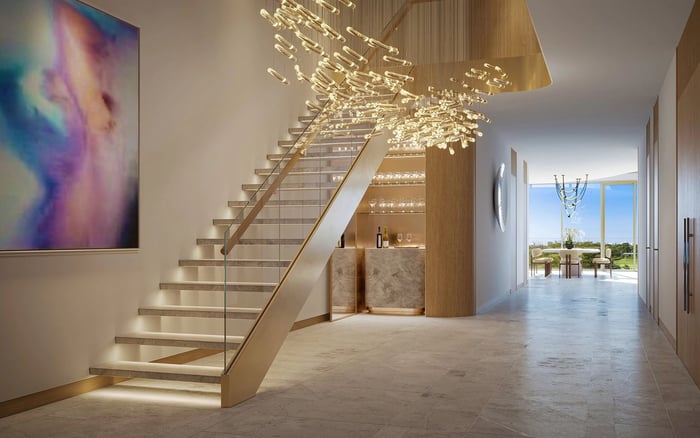
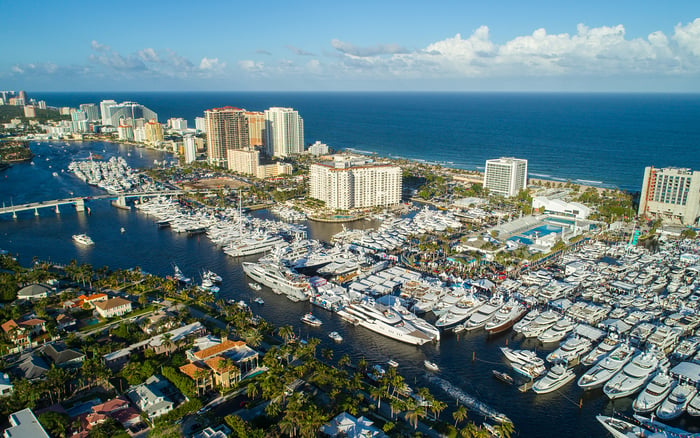
For seasonal Fort Lauderdale owners, FLIBS hosting works best when the residence is treated as one part of a broader hospitality plan. Advance confirmation of building permissions, vendor access, transport, service flow, acoustics, and guest movement can help protect privacy and keep entertaining composed.
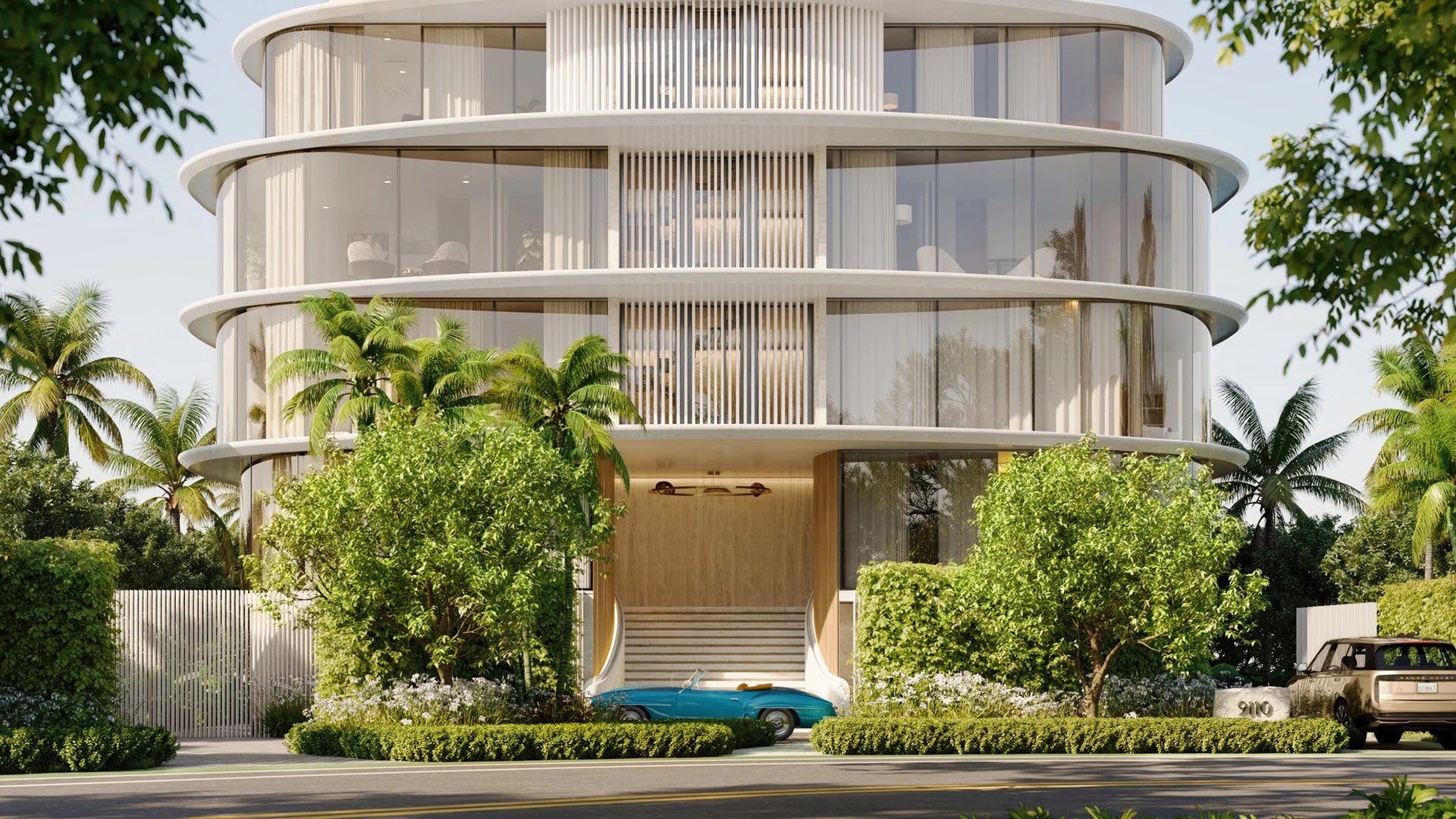
During the Fort Lauderdale International Boat Show, a seasonal residence can become the private center of a broader hospitality plan. The central question is not simply whether a home has a dramatic terrace or generous living room. It is how gracefully the property can support arrivals, departures, meals, conversations, vendor activity, and moments of retreat.
A breakfast with close guests, an afternoon pause between appointments, a catered reception, and a quiet evening return place different demands on the home. Elevators, valet operations, refrigeration, service circulation, acoustics, parking, and household staffing may all affect the experience. Entertaining capacity is therefore an operational consideration as much as a spatial one.
During FLIBS, true entertaining capacity is measured by ease, privacy, and control.
A residence’s practical hosting capacity may depend on building policies, occupancy requirements, guest registration, parking availability, elevator procedures, and rules for outside vendors. Seasonal owners should request current requirements in writing before issuing invitations, particularly when caterers, florists, rental furnishings, musicians, or additional security may be involved.
This review is especially relevant when comparing homes near Fort Lauderdale’s waterfront and beach districts. St. Regis® Residences Bahia Mar Fort Lauderdale and Four Seasons Hotel & Private Residences Fort Lauderdale offer distinct residential contexts to evaluate. The useful inquiry is project-specific: how will guests, deliveries, staff, vehicles, and private resident access be managed during a demanding event period?
Written guidance can be particularly valuable for second-home owners. It gives a property manager or household team a defined operating framework before the owner and guests arrive.
A composed itinerary can use several settings, each assigned a clear purpose. The residence may suit a private breakfast, a focused meeting, or a small dinner. Show-related hospitality may be better suited to broader social circulation, while a prearranged yacht appointment can support a more concentrated conversation. A hotel, restaurant, or privately arranged venue may provide another option for a larger group.
This layered approach helps keep the home selective. Instead of making the residence responsible for every stage of the day, the host can reserve it for moments where privacy, personal attention, and control matter most.
Guest lists should be divided by purpose rather than treated as a single audience. Close friends, business contacts, yacht-viewing guests, and dinner invitees may require different timing and settings. A clear plan reduces unnecessary overlap and makes each invitation more intentional.
Catering success often depends on what guests never see. Before selecting a menu, the owner or property manager should confirm loading access, elevator reservations, vendor credentials, delivery parking, kitchen capacity, waste removal, and permitted setup and breakdown periods.
The service sequence should be mapped in advance. Arrival, setup, guest service, reset, and removal each need a defined window. Vendors should know where to park, who authorizes entry, which route protects resident privacy, where supplies may be staged, and when equipment must leave.
Owners considering The Ritz-Carlton Residences® Fort Lauderdale should request current property-specific event and vendor protocols rather than infer access procedures from a project’s service positioning. The same discipline applies to every condominium: hospitality standards do not replace written operating guidance.
Menu design should follow the physical and administrative realities of the residence. A format that limits complicated preparation, excessive equipment, or prolonged breakdown may be more elegant than a concept that strains the kitchen and service route. The goal is not maximal production; it is calm execution.
Every reception benefits from a deliberate transition from active entertaining to a quieter close. The timing should reflect current building requirements, applicable local rules, staffing plans, transportation arrangements, and consideration for neighboring residences.
Acoustics deserve special attention in waterfront condominiums, where terraces and open doors can alter how sound travels. Hosts should decide in advance when music will be lowered, when outdoor gathering will move inside, and how departures will be staggered. The plan should also identify who has authority to make those adjustments without interrupting the owner.
Lighting should be similarly restrained. Decorative illumination can establish atmosphere without creating glare or affecting nearby homes. Shielded, controlled lighting generally supports the privacy and discretion expected of a residential setting.
A quieter final phase can also improve the guest experience. Smaller conversations, seated service, and coordinated departures may feel more personal than extending the reception at full intensity.
A waterfront address may simplify part of an itinerary, but it does not eliminate the need for a complete movement plan. Invitations should identify the meeting point, transportation sequence, parking assumptions, and a fallback option. Drivers, household staff, property management, and guests should receive consistent instructions.
The route should be tested as a sequence rather than evaluated one destination at a time. Consider where guests begin, where they may need to wait, how they enter the residence, and how they leave without crowding the lobby, valet area, or private elevators.
Buyers evaluating Sixth & Rio Fort Lauderdale can apply the same test used for waterfront properties: assess how the residence fits the owner’s complete Fort Lauderdale hosting pattern rather than judging the address in isolation.
Transportation planning should also account for changes. A delayed appointment, altered guest count, or revised dinner plan should not require the household team to rebuild the entire evening. A primary route and a simple alternative can preserve composure.
Event hosting should not compromise the privacy that makes a seasonal residence valuable. Guest registration, vendor identification, staff access, photography preferences, and the handling of personal information should be agreed upon before the event.
The home itself can be zoned for hospitality. Guest areas, service areas, private rooms, and staff circulation should be clearly separated where possible. Personal belongings, sensitive documents, and rooms outside the hosting plan should be secured before vendors arrive.
The same principle applies to communications. One designated contact should coordinate with the building, vendors, drivers, and security. Centralizing decisions reduces conflicting instructions and allows the owner to remain focused on guests.
The strongest FLIBS hosting plan is not necessarily the largest. It is the one that assigns every encounter to an appropriate setting and gives the owner room to adjust. The residence can remain a controlled salon rather than becoming an all-purpose event venue.
Before show week, the household team should review permissions, guest flow, vendor access, staffing, parking, transportation, acoustics, lighting, privacy, and the closing plan. Each item should have an owner, a deadline, and a fallback. That preparation protects the residence while supporting the discretion guests expect.
For discreet guidance on selecting a Fort Lauderdale residence that supports your seasonal hosting priorities, connect with MILLION.
If branded residences are on your mind — as a home or as an allocation — we would be glad to share what we are seeing, privately.
Begin a quiet conversationConsider guest flow, service circulation, parking, elevators, staffing, and privacy alongside the home’s physical size.
Confirm guest registration, occupancy, parking, elevator, vendor, setup, breakdown, and noise requirements directly with property management.
Written guidance gives the household team a clear framework and reduces the risk of conflicting instructions during the event.
The home can be reserved for private meals, focused meetings, or smaller gatherings while other settings accommodate broader activity.
Review loading access, vendor credentials, delivery parking, kitchen capacity, waste removal, and permitted service windows.
Create separate windows for arrival, setup, service, reset, and equipment removal, with a responsible contact assigned to each stage.
It should address music, outdoor activity, lighting, staffing, transportation, departures, and any current property requirements.
A complete plan helps coordinate meeting points, parking, drivers, guest arrivals, and fallback arrangements across the itinerary.
Separate guest, service, and private areas, secure personal spaces, define photography preferences, and use one designated event contact.
Ask how each property manages guests, deliveries, vendors, vehicles, staffing, privacy, and event-related access.