A collector-focused comparison of Onda and La Maré, separating waterfront amenities from the art-handling, freight-access, and climate specifications buyers should secure before committing.

For a buyer with significant artwork, a waterfront residence must work on two levels: as an exceptional place to live and as a carefully managed setting for a collection. At Onda and La Maré, the meaningful comparison goes beyond architectural atmosphere. It turns on whether a particular residence, its delivery route, and its operating arrangements can accommodate the works the buyer intends to bring.
Neither project can be treated as a verified turnkey art-logistics solution on the information established here. That does not mean services are absent. It means art handling, freight access, and preservation requirements belong in written purchase-diligence questions, not assumptions drawn from a luxury presentation.
“Shared ownership priorities” here means the practical alignment of buyers who intend to make decisions together. It does not describe an established fractional-ownership offering or confirmed co-owner operating rules at either project.
Onda Bay Harbor is a seven-story, 41-residence bayfront building at 1135 103rd Street, Bay Harbor Islands, FL 33154. That gives buyers a specific starting point for a logistics review, but the address alone does not identify an approved receiving entrance or establish how a large crate reaches an individual residence.
La Maré Bay Harbor Islands is a collection of boutique waterfront buildings. Its Bay Collection address is 10301 East Bay Harbor Drive, Bay Harbor Islands, FL 33154. Buyers should verify the address, entrance, and operating arrangements for their chosen residence rather than apply one building's details across the collection.
Before comparing service promises, ask each sales and management team to identify the relevant building, residence, delivery entrance, and approving authority. A collector's assessment must follow the actual route an artwork would take, not a generalized description of the development.
Neither project has a confirmed art-handling program encompassing white-glove receiving, condition inspection, installation assistance, and vendor coordination. These are separate functions. Buyers should ask who, if anyone, is authorized to perform each one and whether an independent specialist must be retained.
A useful written brief should distinguish accepting a delivery from accepting responsibility for the artwork. Ask who checks crate condition, records arrival, supervises unpacking, and authorizes movement into the residence. Establish where the work may wait if the owner or installer is delayed, and whether that location is suitable for the collection.
For buyers making decisions jointly, nominate one person to coordinate with management and the art shipper. Agree in advance who can approve an installation change, accept a condition exception, or authorize additional handling costs. Treat these as proposed owner arrangements, subject to legal advice and the building's rules-not services presumed to come with ownership.
Service-elevator dimensions and load ratings, loading-bay specifications, door clearances, and freight-staging capacity remain unconfirmed for both projects. A collector should request a measured route assessment before treating a particular work as deliverable.
Ask the art shipper to assess the work's full packed dimensions and weight, including the crate, against every relevant transition. The review should cover the receiving point, door openings, corridors, turning requirements, elevator access, and entry into the residence. The uncrated artwork's dimensions are no substitute for that assessment.
Request moving rules, delivery hours, insurance requirements, elevator measurements and load limits, staging arrangements, and any oversized-delivery approval process. Ask whether reservations are required and who can approve an exception. Obtain written confirmation for the proposed delivery rather than relying on a general assurance that large furniture can be accommodated.
If a route fails the shipper's assessment, resolve the alternative before dispatch. Do not assume that unpacking earlier, changing entrances, or using another access point will be permitted or appropriate for the work.
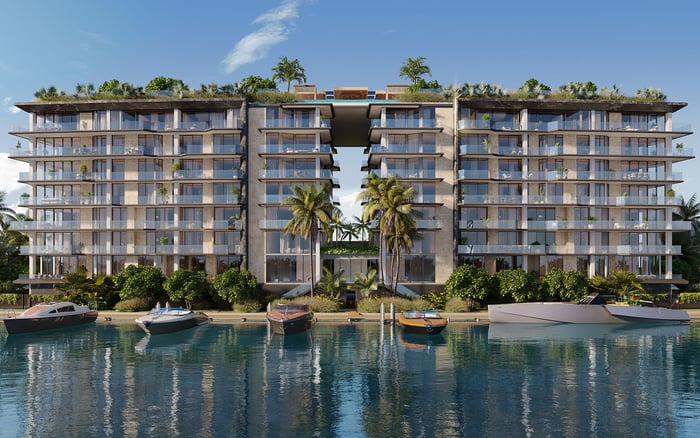
Onda's direct ocean access through Haulover Inlet and La Maré's private boat slips are relevant lifestyle features. Neither, however, establishes an approved marine-delivery route for artwork, dedicated art-freight facilities, or heavy-crate handling procedures.
Keep boating access and collection logistics as separate diligence items. If a marine arrival is contemplated, ask management and the specialist shipper to confirm permission, handling arrangements, the complete onward route, and applicable insurance requirements. Until those questions are resolved in writing, water access should not be treated as the solution to a difficult land-based delivery.
The distinction matters particularly when several owners are weighing amenities together: an attractive boating feature is not an operational answer for a valuable collection.
Onda's energy-efficient air-conditioning and heating system includes ultraquiet technology, alongside air-and-water filtration. Those features do not verify a collection-preservation system. Museum-grade humidity control, independent dehumidification, artwork storage, and temperature-and-humidity monitoring remain unconfirmed at both Onda and La Maré.
Start with the collection's requirements. Ask a conservator to define appropriate conditions and testing for the actual works rather than apply a universal temperature or humidity target. Then ask the building team what the residence's equipment can deliver and which modifications, if any, would require approval.
The discussion should cover humidity stability, HVAC zoning, independent dehumidification, monitoring, leak detection, and backup-power coverage. Ask which systems, if any, remain supported during an interruption and how alerts would reach an authorized person when the residence is unoccupied. These are questions to resolve, not confirmed capabilities at either address.
For buyers also considering Bay Harbor Towers or extending their search toward Bal Harbour, the same collection-specific brief can keep comparisons consistent. It is a framework for evaluation, not a claim that another property provides specialist art services.
For Onda and La Maré, prepare a decision file containing the measured delivery route, management's written permissions, the shipper's assessment, and the conservator's climate requirements. Add a proposed owner protocol covering vendor access, installation approvals, monitoring responsibility, cost allocation, and emergency contacts. Have appropriate advisers review ownership arrangements separately from the building's operational permissions.
The stronger choice is the residence that can meet the collection's requirements with clear responsibilities and acceptable operating arrangements. On the established facts, neither project earns an automatic advantage for art logistics or preservation. Written, residence-specific answers should decide the comparison.
Explore a collection-led approach to South Florida ownership with MILLION.
If branded residences are on your mind — as a home or as an allocation — we would be glad to share what we are seeing, privately.
Begin a quiet conversationA comprehensive art-handling program is not established here for either project. Buyers should obtain written details about receiving, inspection, installation, and vendor coordination.
Onda is a seven-story, 41-residence bayfront building at 1135 103rd Street, Bay Harbor Islands, FL 33154.
The Bay Collection address is 10301 East Bay Harbor Drive, Bay Harbor Islands, FL 33154. Verify the address and delivery entrance for the specific residence.
Service-elevator dimensions and load ratings remain unconfirmed here for both projects. Request measurements and limits before planning a shipment.
The shipper should compare the artwork's full packed dimensions, weight, and turning requirements with the entire delivery route, including doors, corridors, elevators, and residence entry.
Onda's direct ocean access through Haulover Inlet does not establish an approved marine-delivery route for artwork. Obtain specific permission and a specialist logistics assessment.
No, the private boat slips do not establish dedicated art-freight facilities or heavy-crate handling procedures.
No, its ultraquiet, energy-efficient air conditioning and filtration do not verify museum-grade humidity control or a collection-preservation system.
Ask about humidity stability, HVAC zoning, dehumidification, monitoring, leak detection, and backup-power coverage. A conservator should define requirements and testing for the specific collection.
Not in this comparison. No fractional-ownership program or co-owner operating rules are established for either project; the focus is on aligning buyers' responsibilities and decisions.