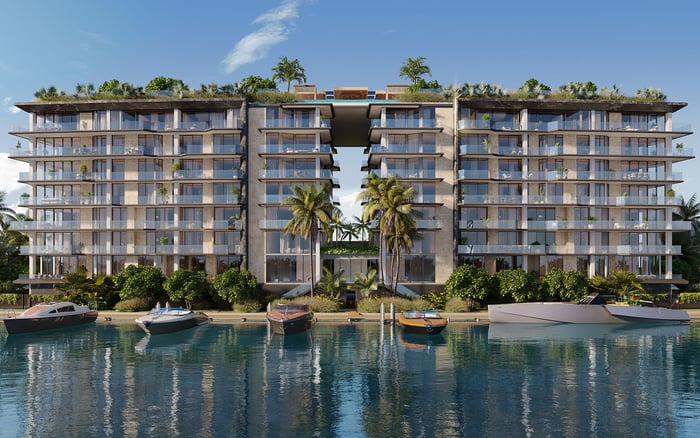
A discreet buyer’s framework for evaluating La Maré’s construction records, warranty rights, and potential claims, with an emphasis on exact property identification and written documentation before closing.
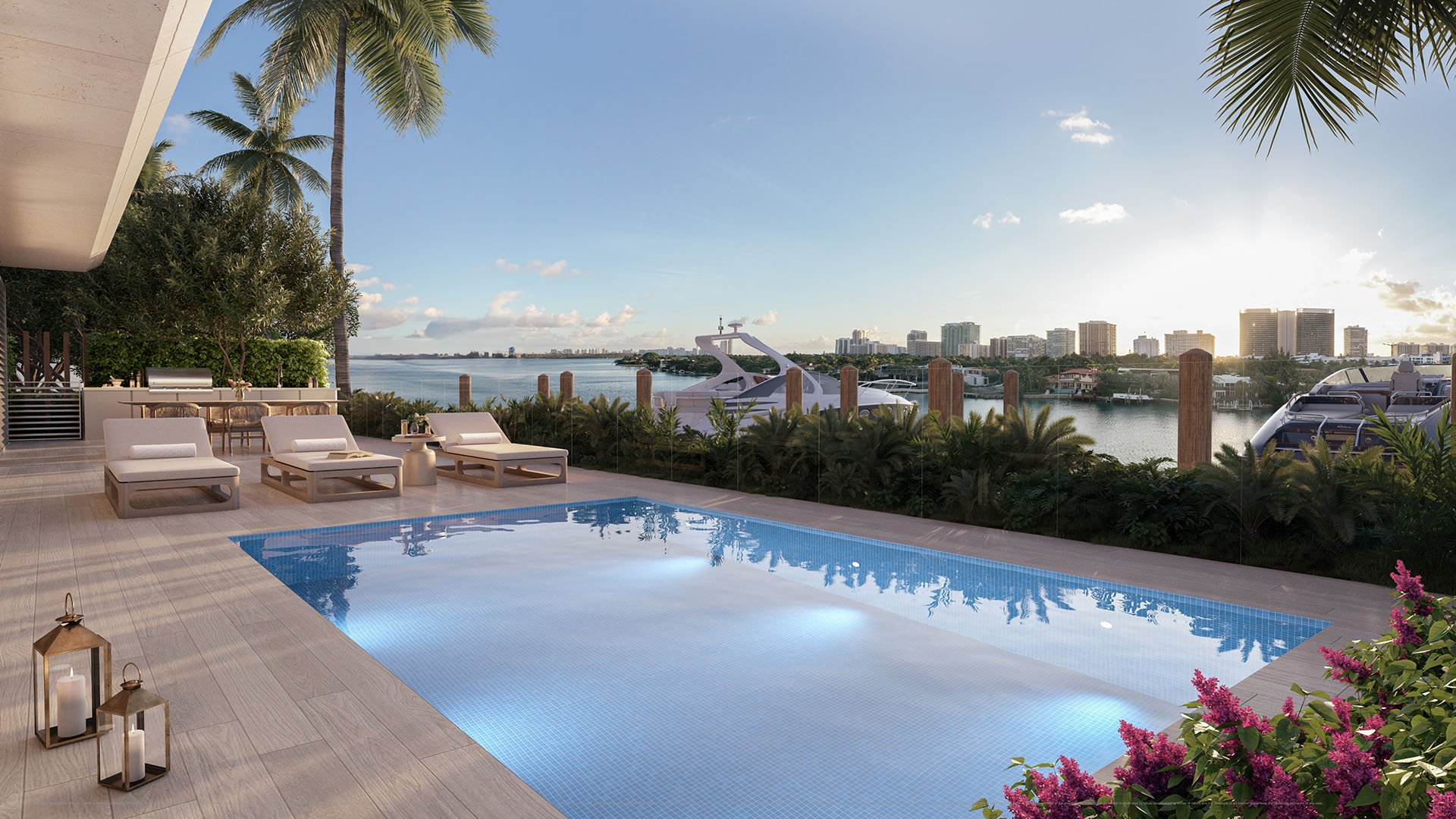
For a private client considering La Maré Bay Harbor Islands, the waterfront setting and private boat slips establish the lifestyle proposition. The purchase decision deserves an equally precise documentary foundation: what was approved, what was built, what protection remains, and whether any unresolved matter could carry over to a new owner.
The Bay Collection address is 10301 E Bay Harbor Drive, Bay Harbor Islands, FL 33154. Regency Development Group is identified as the developer, and Kobi Karp Architecture & Interior Design as the architect. These identifiers are a starting point, not a substitute for matching records to the exact collection, legal condominium entity, and unit under consideration.
La Maré-specific defect litigation, engineering findings, settlements, and open claims remain unconfirmed. That does not establish that none exists. Nor should a discussion of construction-defect diligence be read as an allegation that the property has a defect. The task is to separate documented conditions from unanswered questions before a buyer commits.
A useful construction history goes beyond a litigation search or a seller’s assurance. Request a dated sequence connecting any identified condition, notice, inspection, proposed remedy, completed work, and subsequent verification. Distinguish an unresolved complaint from a documented finding, and a proposed repair from an accepted completion.
Request board minutes, management records, engineering inspections, maintenance logs, water-intrusion records, insurance claims, litigation disclosures, and developer correspondence, where available and applicable. Review these materials together. A reference to corrective work in one document warrants a request for the corresponding scope, contractor information, inspection outcome, and evidence of completion.
Do not presume that every maintenance entry signals defective construction. Conversely, do not treat the absence of a lawsuit as proof that no condition requires attention. Ask the reviewing engineer to reconcile the written history with observed conditions, particularly waterproofing, windows, doors, balconies, roofs, mechanical systems, and fire-life-safety systems.
For clients also considering Bay Harbor Towers, use the same document categories without transferring conclusions between properties. A neighboring project’s records cannot answer questions about La Maré.
The Town of Bay Harbor Islands requires a building permit for most construction work, and its Building Department enforces local and state construction and maintenance codes. Access to uploaded permit documents and inspection results makes the municipal record an important starting point.
Request the relevant permit history and reconcile it with the work described in seller, developer, or association documents. Where a repair is identified, ask which permit covers it, what plans and product specifications supported it, and whether the inspection record corresponds to the completed scope. A permit alone is neither a warranty nor a definitive assessment of current physical condition.
Permit applications call for the signatures of the property owner and contractor qualifier, both notarized. General requirements also include contractor licensing and insurance documentation, alongside plans, product approvals, and specifications appropriate to the work. Confirm current requirements rather than relying on older code references or thresholds.
Exterior modifications require review and approval by the Town Planner and/or Design Review Board. Association authorization may also be required. A municipal permit does not replace condominium approval or authorize work contrary to association rules. Request both approval records where relevant.
Warranty duration, exclusions, notice deadlines, ownership of claim rights, and transfer procedures are not established for the contemplated transaction. Do not assume that an original purchaser’s protection automatically passes to a subsequent owner, or that every building component carries the same coverage.
Request the original purchase agreement, exhibits, amendments, warranty booklet, assignments, closing documents, and prior defect notices. Ask counsel to identify the party providing each warranty, the property or component covered, the beneficiary, and any conditions governing transfer. A general statement that a residence is under warranty is insufficient guidance for the transaction.
The legal review should answer four questions: who owns the right, whether assignment is permitted, whether required notices were timely, and whether a release has extinguished or limited the right. Ask counsel to distinguish rights associated with the individual residence from those potentially held by an association.
If assignment is available, request written confirmation of the required procedure and evidence that it has been completed. If protection cannot be established, evaluate the acquisition on that basis rather than assigning value to an unverified warranty.
Ask the relevant parties for written confirmation of known open claims, unresolved repairs, and anticipated special assessments. Where applicable, request Chapter 558 notices, pre-suit demands, settlement agreements, releases, and related correspondence. This is a document request, not a statement that any such proceeding exists at La Maré.
For each disclosed matter, compile a concise status record: the condition alleged, parties involved, affected property, response received, repair proposed or completed, and remaining obligations. Have counsel evaluate any settlement or release before assuming that a new owner could pursue the same issue independently.
An assurance that an issue was handled should prompt a request for supporting closure documents. A payment, a repair undertaking, and a release may have different implications. Ask the engineer to assess the repair evidence and counsel to assess the legal effect. Neither review should substitute for the other.
The same discipline applies when comparing Onda Bay Harbor. Compare the completeness of each property’s documentation, not unsupported conclusions about relative construction quality or claim exposure.
Organize the acquisition file into property identity, municipal records, physical-condition evidence, warranty rights, and claim status. For every unresolved item, identify the document still needed, the party expected to provide it, and the professional responsible for interpreting it. This makes uncertainty specific enough to address.
Before closing, ask counsel whether unresolved questions warrant further disclosure, an assignment, a contractual condition, or another negotiated protection. Ask the engineer whether additional inspection or repair verification is appropriate. These are transaction-specific decisions, not automatic entitlements or universal remedies.
For a buyer weighing Bay Harbor Islands against Bal Harbour, the essential standard remains unchanged: architectural appeal should be supported by records that explain condition, responsibility, and recourse. The objective is neither suspicion nor reassurance by default. It is an informed purchase supported by evidence and clearly understood limits.
For a discreet perspective on your next residential acquisition, connect with MILLION.
If branded residences are on your mind — as a home or as an allocation — we would be glad to share what we are seeing, privately.
Begin a quiet conversationNo. La Maré-specific defect lawsuits, engineering findings, settlements, and open claims remain unconfirmed, which also does not establish a clean history.
The Bay Collection address is 10301 E Bay Harbor Drive, Bay Harbor Islands, FL 33154. Match each document to the exact collection, legal condominium entity, and unit.
Regency Development Group is identified as the developer, and Kobi Karp Architecture & Interior Design as the architect.
Automatic transfer is not established. Counsel should review ownership of the rights, assignment provisions, notice requirements, and any releases.
Request the original purchase agreement, exhibits, amendments, warranty booklet, assignments, closing documents, and prior defect notices.
Request board minutes, management records, engineering inspections, maintenance and water-intrusion records, insurance claims, litigation disclosures, and developer correspondence where applicable.
Begin with the Town of Bay Harbor Islands online permitting portal and relevant municipal records. Compare uploaded documents and inspection results with the work and conditions being evaluated.
No. A permit does not replace association approval or authorize work that violates association rules.
Where applicable, request Chapter 558 notices, pre-suit demands, settlements, releases, and related correspondence. Seek written confirmation of known open claims, unresolved repairs, and anticipated special assessments.
Ask an engineer to compare the repair scope, permit and inspection history, completion evidence, and physical conditions. Have counsel separately review any settlement, release, or remaining claim right.