
For Park Grove buyers, shoreline costs begin with documented responsibility, not proximity to the bay. A disciplined review of ownership, engineering, permits and reserves helps distinguish lifestyle appeal from financial exposure.
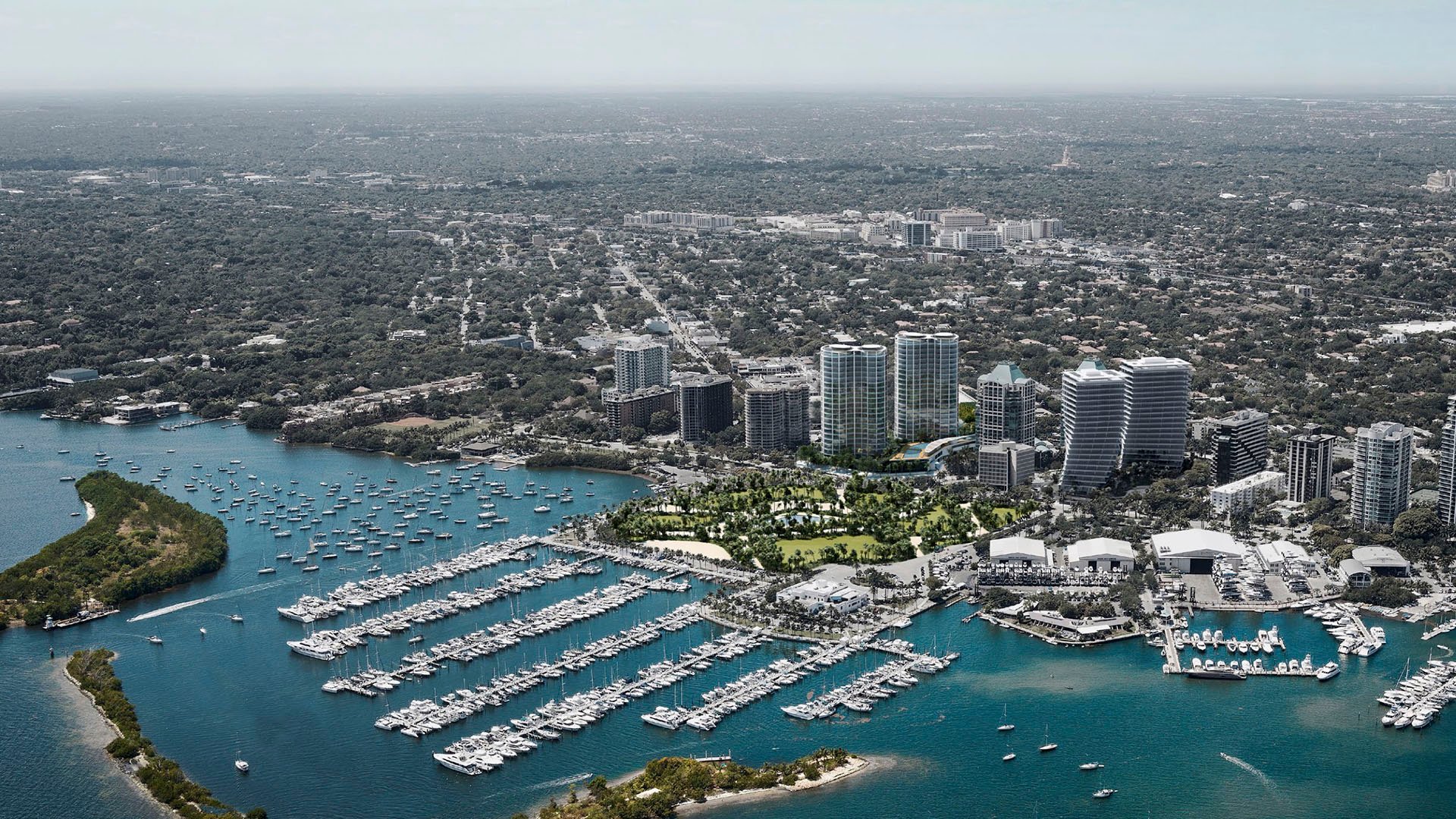
At Park Grove Coconut Grove, the waterfront-cost question begins with a distinction: proximity to the bay does not establish responsibility for its edge. Before weighing seawall repairs, dredging or dock upkeep, a buyer should confirm whether the condominium owns, maintains or contributes to the relevant infrastructure.
That distinction protects both the purchase decision and the lifestyle expectation. A water view does not establish boating access, and the absence of boating access does not, by itself, resolve every shared-expense question. Ownership, use rights and payment obligations must be considered separately.
Park Grove buyers should not assume a seawall condition, dredging interval, dock-maintenance budget or related assessment amount. Start with the unit’s charge schedule and the documents connecting its condominium budget to any shared community facilities.
For 2811 Bayshore Drive, unit 20BC, the association designation is condominium and the water-access designation is “Water Access No / None.” This is a unit-level description, not a project-wide determination of shoreline ownership or financial obligations.
A buyer should therefore ask two separate questions: what waterfront rights accompany this residence, and what waterfront expenses, if any, can be allocated to it? Neither answer should be inferred from photographs, neighborhood geography or references to shared amenities.
The same distinction applies to a comparison with Vita at Grove Isle. Compare documented rights and responsibilities, not simply the appeal of each address. A comparison worksheet should separate access rights, recurring charges, capital obligations and the entity responsible for each asset. Leave unconfirmed entries unresolved rather than treating them as zero.
If the governing documents establish a shoreline obligation, the next question is what work the structure requires. Request a current engineering assessment, available inspection records, the proposed work scope and any associated funding plan. A general assurance about condition cannot replace a defined scope and documented responsibility.
Miami’s Brickell and Coconut Grove seawall-improvement program illustrates why scope deserves scrutiny. It includes the design and construction of three seawalls in Fair Isle and South Grove Bayside, combining seawall raising or replacement with dredging, outfall-pipe work, manhole structures, tidal valves, riprap and restoration.
Those municipal projects do not establish an expense for Park Grove. Their relevance is narrower: shoreline construction can extend beyond the visible wall. When reviewing an applicable proposal, ask whether the estimate includes associated drainage, stabilization and restoration work, or leaves those elements separate.
For underwriting, connect three items: the engineering scope, the legally responsible party and the funding available for that scope. Without that connection, even a detailed construction estimate does not establish the amount attributable to a particular residence.
Two dimensional thresholds require careful distinction. In Miami-Dade County, replacement seawalls can qualify for administrative short-form Class I review when the installation and necessary filling or dredging remain within one foot of the existing seawall’s wet face. This is a county review pathway, not a universal permission to build.
Separately, Florida Statutes §403.813 includes a seawall-restoration permit exception for work at the previous location, upland of it or within 18 inches waterward, subject to applicable conditions. That state exception does not eliminate Chapter 161 permitting requirements or other applicable regulatory requirements.
The county’s one-foot threshold and the state’s 18-inch allowance address different approvals. They are not interchangeable in a budget discussion. Ask the project’s permitting professional to identify the applicable approvals and conditions before treating an anticipated construction schedule or price as settled.
Evaluate dredging as a separate responsibility, not an automatic obligation of a waterfront address. If an association obligation exists, request the authorized footprint, original design specifications, permit history and documents identifying who must maintain the area.
Florida’s maintenance-dredging exception covers specified existing canals, channels, structures and previously dredged areas. Its conditions concern original design specifications, environmental impacts and applicable notice or engineering requirements. The word “maintenance” alone does not establish eligibility.
Miami-Dade requirements also distinguish non-maintenance dredging: work exceeding 100 square feet requires a standard-form application and County Commission review at a public hearing. Most residential dredging and filling requires a Florida Department of Environmental Protection permit. Work on state-owned submerged lands may also require written authorization to use those lands, separate from environmental permitting.
For a buyer, the practical question is whether an applicable dredging allowance corresponds to a defined, authorized scope. Do not assign Park Grove a recurring dredging expense or assumed maintenance cycle without documentation establishing both the obligation and its basis.
Before discussing dock upkeep, confirm whether any dock rights or obligations attach to the residence. Ask who owns the structure, who may use it and which document assigns maintenance costs. If a separate agreement governs access, review its charges and responsibilities alongside the condominium documents.
Where a dock obligation is established, request the maintenance scope, inspection records, service agreements and replacement provisions. Then ask how the budget separates ongoing upkeep from capital work, and whether the unit participates through association charges, a separate agreement or another documented allocation.
The same review applies when considering Four Seasons Residences Coconut Grove alongside Park Grove: ask the same questions without presuming either property’s marine infrastructure or expense structure. A sound comparison supports each responsibility with a document, not an assumption based on location.
Request the estoppel certificate, declaration, bylaws, current budget, reserve study, recent meeting minutes and inspection-status records. Pair these materials with the residence’s charge schedule and a clear explanation of how its condominium budget relates to shared community facilities.
For any established shoreline obligation, ask management and qualified advisers to trace the expense through the documents: who authorizes the work, how costs are allocated, what funding is identified and whether an assessment has actually been approved. Keep proposed work, approved spending and amounts payable by the unit distinct.
The decision standard is straightforward. If responsibility is established, evaluate scope, approvals and funding. If it remains unclear, seek clarification before converting uncertainty into either a reassuring zero or an alarming repair figure. Evaluate bay-oriented living with the same precision as the residence itself.
For a discreet perspective on Coconut Grove residences and the obligations behind waterfront ownership, explore MILLION.
If branded residences are on your mind — as a home or as an allocation — we would be glad to share what we are seeing, privately.
Begin a quiet conversationNo such obligation should be assumed from location alone. Review the governing documents and charge schedule to establish whether the residence bears any shoreline costs.
No. Its “Water Access No / None” entry is a unit-level description and does not resolve project-wide rights or obligations.
Request the estoppel certificate, declaration, bylaws, current budget, reserve study, recent meeting minutes and inspection-status records. Also obtain the unit’s charge schedule and an explanation of shared-facility allocations.
No. Nearby municipal work does not establish a Park Grove ownership or cost-allocation obligation.
Shoreline work can combine seawall raising or replacement with dredging, drainage infrastructure, tidal valves, riprap and restoration. Any applicable estimate should identify which elements it includes.
Replacement seawalls can qualify for administrative short-form Class I review when the installation and necessary filling or dredging remain within one foot of the existing seawall’s wet face. This is a county review pathway, not a blanket exemption.
Florida’s conditional seawall-restoration permit exception covers work at the previous location, upland of it or within 18 inches waterward. It is separate from county review and does not remove Chapter 161 or other applicable requirements.
In Miami-Dade County, non-maintenance dredging exceeding 100 square feet requires a standard-form application and County Commission review at a public hearing.
No. Florida’s exception applies to specified existing areas and has conditions involving original design specifications, environmental impacts and notice or engineering requirements.
First establish dock ownership, use rights and the document assigning expenses. If an obligation exists, review its maintenance scope, inspection records, service agreements and replacement funding.


.jpg&width=700&height=438&fit=cover)