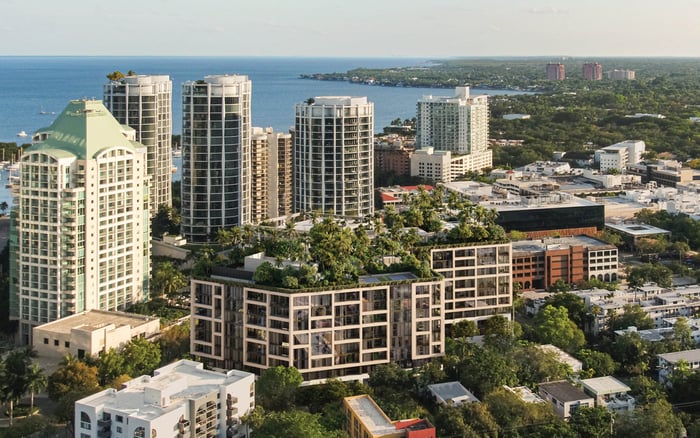
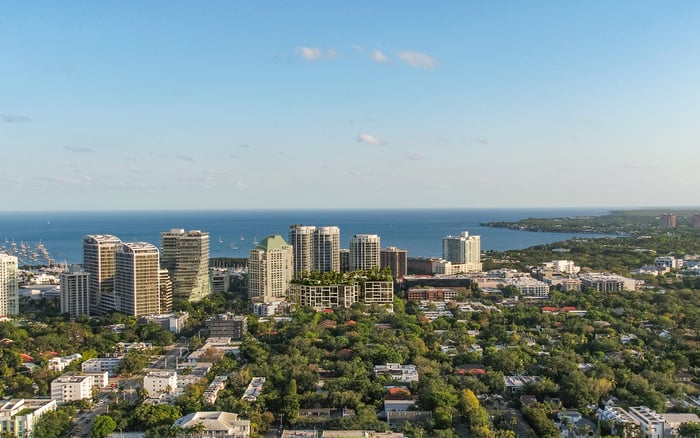
A buyer-focused framework for evaluating reserves, insurance deductibles, and the first owner-controlled budgets at two prominent Coconut Grove condominium projects.
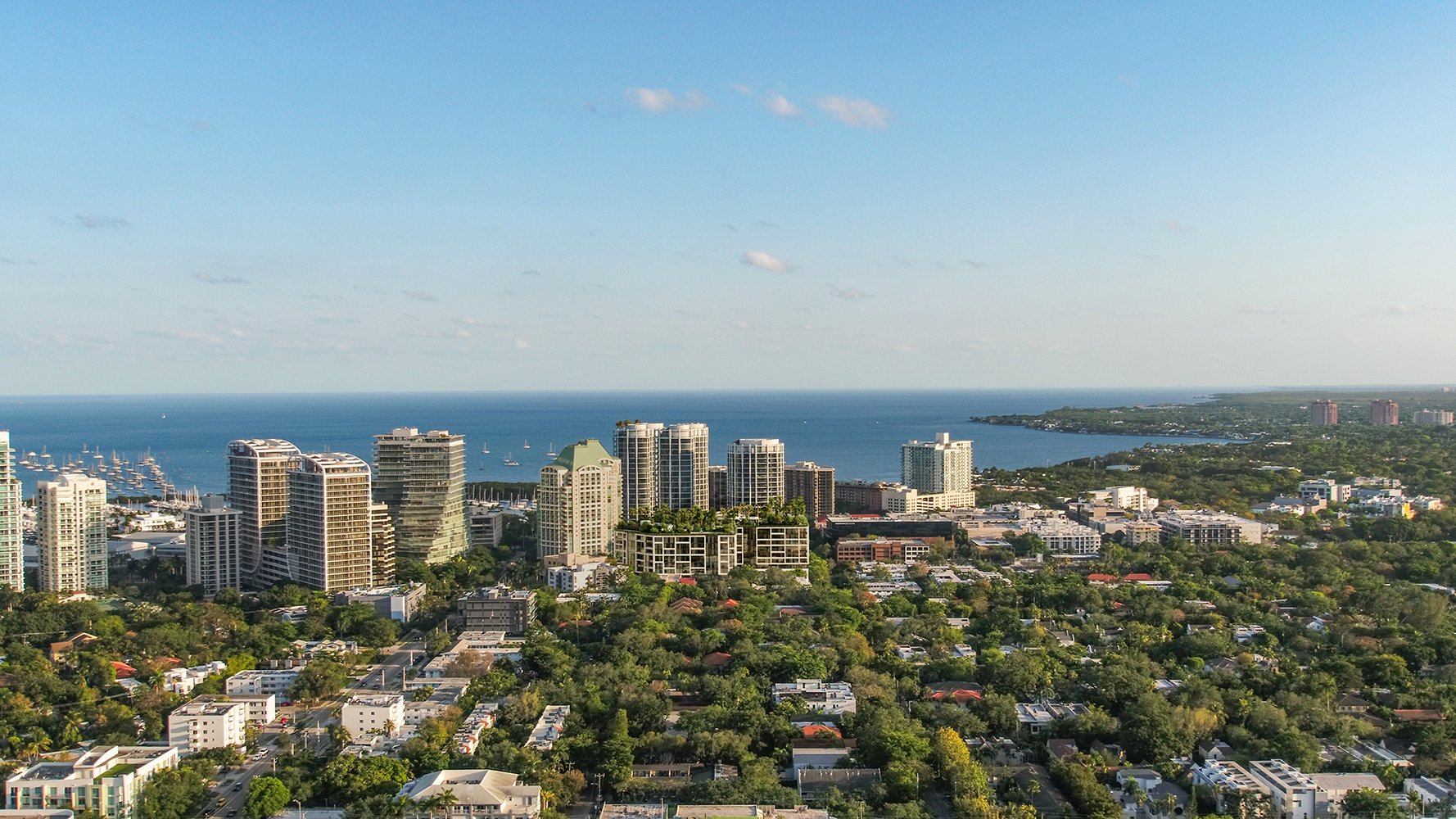
At the upper end of Coconut Grove real estate, the most consequential details are not always visible in a rendering or model residence. Reserve assumptions, insurance deductibles, operating expenses, and the transition to owner control can shape both annual carrying costs and the long-term stewardship of a building.
Financial diligence is therefore especially relevant at Four Seasons Residences Coconut Grove, a condominium planned with 70 private residences, and The Well Coconut Grove, at 2835 Tigertail Ave. The two properties present distinct lifestyle propositions, yet buyers should apply the same disciplined review to each.
For either development, the current reserve balance, final insurance-deductible schedule, and adopted post-turnover budget remain to be verified. Those figures should come from the legally controlling condominium documents, association records, insurance materials, and written responses supplied during diligence.
The quality of a condominium is measured not only by what it offers today, but by how responsibly it plans for tomorrow.
Florida condominium annual budgets generally include reserve accounts for capital expenditures and deferred maintenance, subject to statutory exceptions and restrictions on waiving or reducing contributions. Common reserve categories include roof replacement, building painting, pavement resurfacing, and other qualifying capital or deferred-maintenance items.
A useful reserve schedule is more than a contribution line. For each covered component, it should disclose the estimated replacement or deferred-maintenance cost, useful life, remaining useful life, and beginning reserve balance. Together, those inputs help an owner determine whether the annual contribution follows a coherent plan rather than merely producing an attractive first-year assessment.
Buyers should also identify the funding method. Item-by-item reserves assign funding to separate components, while pooled reserves operate under a distinct disclosure framework. Neither label alone establishes adequacy. More revealing are the assumptions beneath the schedule, the work anticipated during the planning horizon, the funds already accumulated, and whether projected contributions keep pace with expected obligations.
Reserve funds and accrued interest generally remain in reserve accounts and are used for authorized expenditures unless the required owner approval permits another use. This separation matters because a healthy operating account cannot automatically substitute for properly funded long-term obligations.
Florida’s standard condominium budget format treats insurance premiums as operating expenses, not reserve expenditures. Buyers should therefore resist combining the insurance line with reserve funding when comparing projected carrying costs.
The premium is the recurring cost of coverage. A deductible is the portion of a covered loss that may remain before insurance responds, subject to the policy terms and governing documents. The practical question is not simply whether the association carries insurance, but how each deductible is defined, how it may be allocated, and what liquidity options exist if a loss occurs.
Request the declarations pages, deductible schedules, coverage limits, policy period, and any material allocation provisions in the condominium documents. Ask whether the operating budget includes a contingency relevant to uninsured or deductible exposure, and whether association borrowing or a special assessment could be considered if available cash proves insufficient. Neither project’s exposure can be assessed without its current policy documents.
This distinction is particularly important in a luxury building, where premium expense can be substantial even though it does not create a reserve asset. A polished projected budget may state the annual premium clearly while leaving the potential effect of deductibles to separate documents.
A developer-prepared projection is an opening framework, not a permanent financial constitution. After turnover, an owner-controlled board evaluates actual contracts, staffing needs, insurance costs, reserve assumptions, collections, and the building’s early operating experience. Variances do not necessarily signal poor planning, but they warrant explanation.
Florida rules impose limits on reserve waivers and reductions. Required reserves cannot be waived or reduced before the proposed annual budget is mailed to unit owners. After turnover, a developer may use its remaining voting interests to support a waiver or reduction, but that decision applies to only one budget year. Buyers should review meeting notices and minutes to understand what was proposed, who voted, and how the decision affected that year’s contribution.
For a pre-construction acquisition, compare at least three financial views when available: the initial projected budget, the first adopted association budget, and the first owner-controlled budget. Separate recurring operations from reserve contributions, one-time start-up items, debt service, and contingencies. Then determine whether any shortfall could lead to higher assessments, association borrowing, or a special assessment.
Context can sharpen diligence. Established properties such as Park Grove Coconut Grove may offer a useful conceptual contrast between a building with an operating history and a new development governed initially by projections. Nearby Mr. C Tigertail Coconut Grove further illustrates how service models and building programs can differ materially within the same neighborhood.
The purpose is not to compare a single assessment figure. Budgets can reflect different residence counts, amenity programs, service standards, staffing structures, insurance arrangements, and reserve needs. A lower monthly number may omit costs that emerge elsewhere, while a higher figure may support a broader operating model or more deliberate long-term planning.
At Four Seasons Residences Coconut Grove, pricing has been listed up to $15,070,000, reinforcing why financial governance belongs beside architecture and hospitality in the acquisition analysis. For The Well Coconut Grove, buyers can request condominium documents by email or as a physical book. In both cases, controlling documents should take precedence over marketing impressions.
A sophisticated diligence file should include proposed and adopted budgets, complete reserve schedules or studies, insurance declarations and deductible schedules, governing documents, association debt information, recent financial statements when available, and turnover records once created. Buyers should also request written clarification of projected reserves and any known or contemplated special assessments before placing a pre-construction deposit.
Read the documents together. Confirm that reserve balances reconcile with financial statements, that major assumptions align with the schedule, and that insurance expense appears in operations rather than being mistaken for a reserve contribution. Review material contracts and identify which may change after owner control. If the association expects to borrow, determine the purpose, repayment source, term, and effect on assessments.
This approach belongs in serious buyer’s guides because it reframes carrying cost as an investment in stewardship rather than a simple monthly charge. Counsel, insurance advisers, accountants, and reserve professionals can interpret provisions within their respective disciplines. The buyer’s objective is a documented view of recurring expenses, long-term capital planning, and contingent exposure before closing.
For discreet guidance on Coconut Grove’s luxury condominium market, connect with MILLION.
If branded residences are on your mind — as a home or as an allocation — we would be glad to share what we are seeing, privately.
Begin a quiet conversationIt should show each covered item’s useful life, remaining useful life, estimated replacement or deferred-maintenance cost, and beginning fund balance.
Florida’s standard condominium budget format treats insurance premiums as operating expenses rather than reserve expenditures.
A premium is the recurring cost of coverage, while a deductible can create contingent exposure after a covered loss. Policy terms and governing documents determine the relevant details.
Florida law allows limited exceptions and imposes procedural restrictions. Required reserves cannot be waived or reduced before the proposed budget is mailed to owners.
When approved under the applicable process, a developer-supported waiver or reduction after turnover applies to only one budget year.
Item-by-item funding assigns reserves to separate components, while pooled reserves follow a distinct disclosure framework. Buyers should examine the assumptions and balances under either method.
Compare the initial projected budget, the first adopted association budget, and the first owner-controlled budget when each is available.
The available public materials do not establish verified current reserve balances for either project. Buyers should request current schedules and financial records directly.
Request declarations pages, deductible schedules, coverage limits, policy periods, and relevant allocation provisions in the governing documents.
They can reveal how an association may address cash needs or funding shortfalls beyond regular assessments and reserve contributions.