Casa Bella is a branded residential condominium, not a hotel-condo. Buyers should test any headline rent estimate against lease restrictions, carrying costs, vacancy, operating expenses and the timing of pre-closing deposits.

The first adjustment to any revenue narrative at Casa Bella by B&B Italia Downtown Miami is conceptual: Casa Bella is positioned as a fully residential luxury condominium, not a hotel-condo. That distinction matters. Nightly pricing, hotel distribution, transient demand and rapid guest turnover do not belong in an ownership model designed around residential leasing.
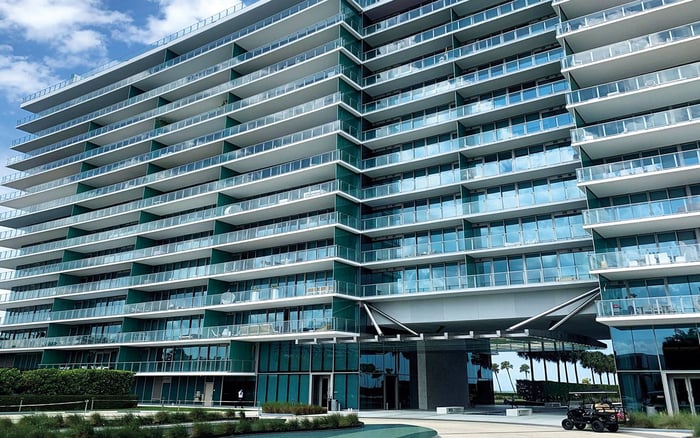
At 1444 Biscayne Boulevard in Downtown Miami’s Arts & Entertainment District, the planned 56-story tower comprises 312 luxury residences. The collaboration among Related Group, Alta Developers and B&B Italia places it within Miami’s expanding field of branded residences, where design identity, private-home service and long-term desirability are central to the proposition.
A persuasive gross-rent figure is only the opening line of an investment analysis.
Rental income is not immaterial. It should simply be evaluated as residential real estate, with lease duration, association rules and unit-specific costs defining what is operationally possible.
The leasing terms indicate that owners may rent no more than six times per year, with a minimum lease term of 30 days. Buyers should confirm both provisions in the current declaration, condominium documents and association rules before relying on them.
If those terms govern, the 30-day minimum rules out nightly Airbnb-style operation. The six-leases-per-year ceiling also limits how frequently an owner can reset pricing or replace tenants. A model based on daily rates multiplied across peak-season nights would therefore misstate the permitted use. Even a monthly model should account for the friction between leases, tenant approval and residence preparation.
The practical emphasis is closer to long-term rentals than hospitality inventory, although the minimum term may permit furnished monthly occupancy. Buyers should confirm whether applications, screening, move-in procedures, deposits, elevator reservations or leasing fees apply. Each requirement can affect timing, cost or both.
Gross revenue is rent collected before the expenses required to own and operate the residence. It is not net operating income. Defensible underwriting should begin with achievable rent for the exact floor plan and purchase basis, then deduct recurring and episodic costs.
An HOA estimate of $0.95 per square foot should be tested against the current condominium budget, as an estimate may not capture reserves, assessments, utilities or every owner obligation. The analysis should also include vacancy, property management, maintenance, real estate taxes, insurance and leasing-related charges.
Furniture and interior upkeep deserve particular attention in a design-led building. Presenting a residence at the standard expected by an affluent tenant may carry costs entirely outside a headline rent forecast. Turnover can introduce cleaning, repairs, touch-ups and replacement expenses, even when leases are measured in months rather than nights.
Management is another variable. Resident services include a 24/7 doorman and security, valet parking, concierge assistance and on-site management, but these should not be presumed to constitute a hotel rental desk or guaranteed-income program. No standardized rental return or guaranteed yield is set out.
Configurations extend from a 711-square-foot one-bedroom residence to larger multi-bedroom homes and penthouses. There is no single Casa Bella rental yield. Purchase price, square footage, view, floor, furnishing level and recurring charges can produce materially different outcomes across the tower.
A smaller residence may require less total capital, but that alone does not establish a superior return. A larger home may command higher rent while carrying greater absolute HOA expense, furnishing costs and maintenance exposure. Buyers should model the specific residence rather than apply a building-wide rent assumption.
The same discipline applies when examining nearby Downtown Miami inventory. Aston Martin Residences Downtown Miami and Waldorf Astoria Residences Downtown Miami may enter the same high-level search, but each project must be evaluated through its own documents, cost structure and intended use. Brand recognition does not make leasing policies interchangeable.
Casa Bella’s deposit schedule calls for 20% at contract, 10% at groundbreaking, 10% at top-off and 60% at closing. In total, 40% of the purchase price is scheduled before closing.
That pre-closing commitment is not an operating expense, but it belongs in a complete investment analysis. Capital placed on deposit cannot be evaluated as though it remained freely available until closing. A headline annual-rent figure usually begins after delivery and occupancy; it does not express the carrying or opportunity cost of funds committed during the development period.
Buyers using leverage should also separate financing from property-level operating performance. Net operating income is calculated before debt service, while an owner’s cash return reflects financing costs and total equity invested. Mixing those measures can make two otherwise similar projections appear comparable when they are not.
Casa Bella’s appeal extends beyond a rent calculation. Its positioning emphasizes Italian design, technology, views and private residential services. Residents also receive one year of privileged access to Grand Bay Beach Club in Key Biscayne. These qualities may contribute to tenant appeal and owner enjoyment, but they should not be converted into an assumed rent premium without evidence for the chosen residence.
Location comparisons also require care. A buyer considering Aria Reserve Miami in nearby Edgewater may be weighing waterfront orientation against Casa Bella’s Downtown setting, yet the underwriting still turns on unit economics and governing rules. Amenities can help explain demand; they do not replace expense analysis.
For readers approaching the decision through buyer’s guides, the most useful model has three layers. First, establish permitted use by confirming the minimum lease duration, annual lease-frequency cap, tenant approval process and all association charges. Second, estimate realistic collected rent after vacancy rather than automatically multiplying an asking rate by 12 months. Third, deduct every ownership and leasing expense before calculating yield.
The purchase file should include the current declaration, association rules, proposed or adopted budget, insurance information, deposit schedule and any leasing application materials. Buyers should also ask whether the HOA estimate is quoted monthly on a per-square-foot basis and precisely which services it includes.
Finally, run more than one case. A base case can reflect expected occupancy and ordinary maintenance. A more conservative case can incorporate downtime, additional repairs and higher carrying costs. No unsupported appreciation assumption is needed to determine whether the rental thesis is resilient.
Casa Bella can remain compelling as a sophisticated Downtown Miami residence with potential rental utility. The decisive point is that rental utility is not synonymous with hotel operation, and projected gross revenue is not spendable net income. For a private review of Casa Bella and comparable South Florida opportunities, connect with MILLION.
If branded residences are on your mind — as a home or as an allocation — we would be glad to share what we are seeing, privately.
Begin a quiet conversationNo. Casa Bella is positioned as a fully residential luxury condominium, so hotel-style nightly revenue assumptions are not directly applicable.
Circulated terms indicate a 30-day minimum lease, which would prevent nightly operation if confirmed in the governing documents.
Circulated terms indicate no more than six leases per year. Buyers should verify the current limit in the declaration and association rules.
No standardized rental return or guaranteed-income model is stated.
Underwriting should account for HOA charges, vacancy, management, maintenance, taxes, insurance and leasing-related expenses.
One circulated estimate is $0.95 per square foot, but buyers should verify the amount and inclusions against the current condominium budget.
The schedule calls for 20% at contract, 10% at groundbreaking, 10% at top-off and 60% at closing.
The published schedule places 40% of the purchase price into deposits before closing.
No. Configurations range from a 711-square-foot one-bedroom to larger homes and penthouses, so rent and yield can vary materially.
Confirm the minimum term, annual lease-frequency cap, tenant-approval process, association fees and all move-in or leasing charges.