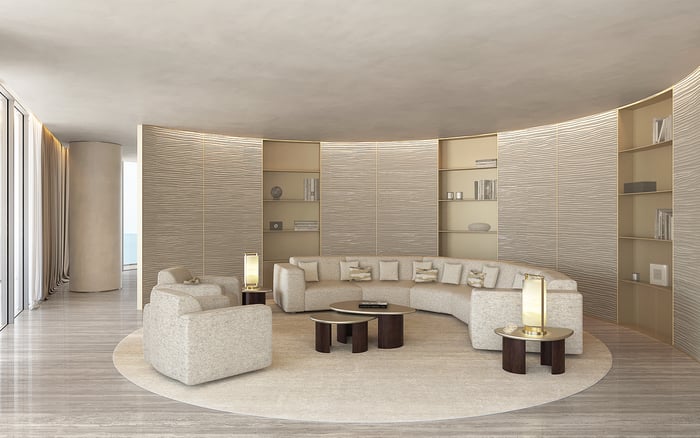
A practical comparison of Pompano Beach and Hillsboro Beach for buyers weighing family routines, private-school travel, multigenerational privacy, accessibility, and day-to-day household movement.

Choosing between Pompano Beach and Hillsboro Beach should begin with the way a household actually operates. Families with children, grandparents, caregivers, staff, frequent guests, or multiple drivers need more than an appealing residence. They need an address that supports recurring trips, changing schedules, personal independence, and quiet when it matters.
The comparison is therefore less about declaring one location universally better and more about identifying which setting introduces less friction. School routes, medical appointments, recreation, service access, guest arrivals, and airport trips should all be mapped before a buyer decides which coastal address feels most practical.
The most private address is not always the one that makes family life easiest to manage.
Build a seven-day calendar that includes every predictable departure and arrival. Add school runs, extracurricular activities, appointments, staff shifts, exercise, dining, social plans, and visits from extended family. Then identify which trips overlap and who is responsible for each movement.
This exercise helps distinguish a household that benefits from many nearby options from one that is comfortable organizing around a quieter residential base. It also reveals whether several family members will regularly need independent transportation or whether most routines can be coordinated.
When evaluating Pompano Beach residences, buyers may consider Armani Casa Residences Pompano Beach and The Ritz-Carlton Residences® Pompano Beach as part of an address-level comparison. The important question is how each residence relates to the family’s own destinations, not how the area performs in the abstract.
A school commute should be evaluated from a specific home to a specific campus. General impressions can miss the practical effects of arrival windows, dismissal traffic, sibling schedules, after-school activities, and a caregiver’s return trip.
Drive each likely route during the periods when the household would actually use it. Repeat the test on different weekdays and include the full round trip. If siblings may attend separate campuses, test overlapping routes rather than assessing each journey in isolation.
Families should also confirm admissions, grade availability, calendars, transportation, after-school care, and pickup procedures directly with the schools under consideration. Those details can materially change the value of an otherwise convenient address.
For Hillsboro Beach, the same process should include every recurring destination beyond school. A buyer considering Rosewood Residences Hillsboro Beach should experience the surrounding travel pattern at school, work, and service times instead of relying only on a map or a weekend tour.
Privacy can mean visual separation, acoustic control, independent entrances, bedroom distance, elevator access, or the ability to leave without interrupting another person’s routine. A multigenerational household should decide which forms of privacy matter most before comparing floor plans.
During tours, trace the path from each bedroom to the kitchen, living spaces, elevators, parking, and guest areas. Consider whether an older relative can move comfortably through the residence, whether adult children can maintain separate schedules, and whether staff can arrive without crossing the household’s most private spaces.
Vehicle circulation also matters. Buyers should review parking allocation, valet procedures, guest arrival, service access, and how multiple simultaneous departures would work. These details are residence-specific and should be verified rather than inferred from a building’s positioning.
In Pompano Beach, Ocean 580 Pompano Beach and W Pompano Beach Hotel & Residences can be compared through this operational lens. Floor plan, access, parking, staffing, and the route to daily destinations may be more consequential than a broad location label.
Seclusion and convenience are not opposites, but they should be measured independently. A household may value a calm residential atmosphere while still requiring frequent departures. Another may accept more surrounding activity in exchange for easier access to its regular destinations.
Buyers should score each shortlisted residence across the same categories: school travel, healthcare access, recreation, dining, guest convenience, staff movement, airport trips, and emergency planning. The goal is not to force every category into a single definition of luxury. It is to understand where each address simplifies the household’s week and where it requires additional coordination.
A trial stay or extended visit can be useful when available. Experience morning departures, afternoon returns, evening plans, deliveries, and weekend activity. Observe how the location feels when several household members need different things at the same time.
Begin with the household calendar, then narrow the search to residences that can accommodate the required room separation, accessibility, parking, and service patterns. After that, conduct live route tests and revisit the most promising properties at different times.
Create a short written brief for each generation. Children may need predictable school and activity routes. Older relatives may prioritize accessible movement and comfortable access to vehicles. Adult family members may need privacy for work, entertaining, or independent schedules. Staff requirements should be evaluated with equal care.
The strongest choice between Pompano Beach and Hillsboro Beach is the one that aligns the residence, location, and household routine. Buyers should verify property features, building procedures, school arrangements, and travel patterns before relying on assumptions about either area.
For discreet guidance comparing these coastal addresses and residences, connect with MILLION.
If branded residences are on your mind — as a home or as an allocation — we would be glad to share what we are seeing, privately.
Begin a quiet conversationStart with the household’s weekly schedule, recurring destinations, and transportation needs. Then compare specific residences against those routines.
Drive the route during actual arrival and dismissal periods on more than one weekday. Include the return trip and any overlapping sibling schedules.
Yes. Confirm admissions, grade availability, calendars, transportation, after-school care, and pickup procedures directly with each school.
It can include bedroom separation, acoustic control, accessible circulation, independent schedules, guest movement, and discreet staff access.
Parking and vehicle procedures affect simultaneous departures, caregiver access, guest arrivals, and each generation’s independence.
Trace the route between bedrooms, shared spaces, elevators, parking, and vehicles. Verify relevant property and building features in person.
Not always. Revisiting at school, work, service, and evening travel times can provide a more practical view of the location.
Score them separately against school travel, healthcare, recreation, dining, guests, staff movement, and airport trips.
The article references Armani Casa Residences Pompano Beach, The Ritz-Carlton Residences Pompano Beach, Ocean 580 Pompano Beach, and W Pompano Beach Hotel & Residences.
Rosewood Residences Hillsboro Beach is included as a residential reference point for an address-level evaluation.