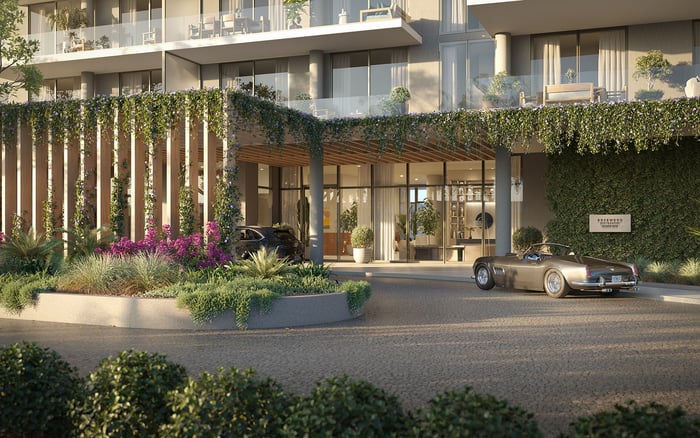
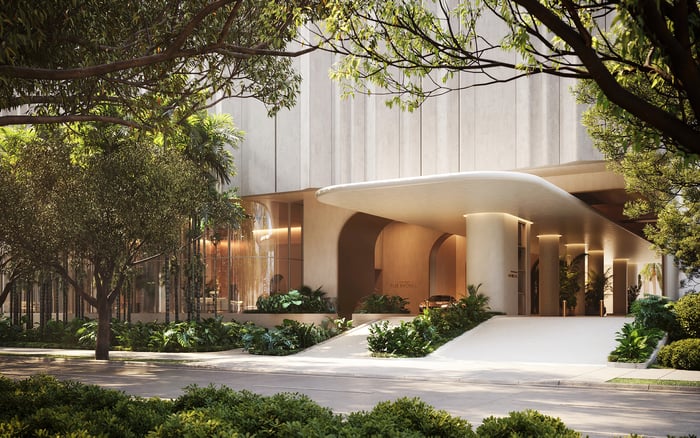
888 Brickell pairs extensive hospitality and wellness amenities with 24/7 white-glove service. Aging-in-place buyers should distinguish that convenience from clinical care, then verify emergency protocols, building resilience, residence accessibility and the precise scope of concierge coordination before committing.
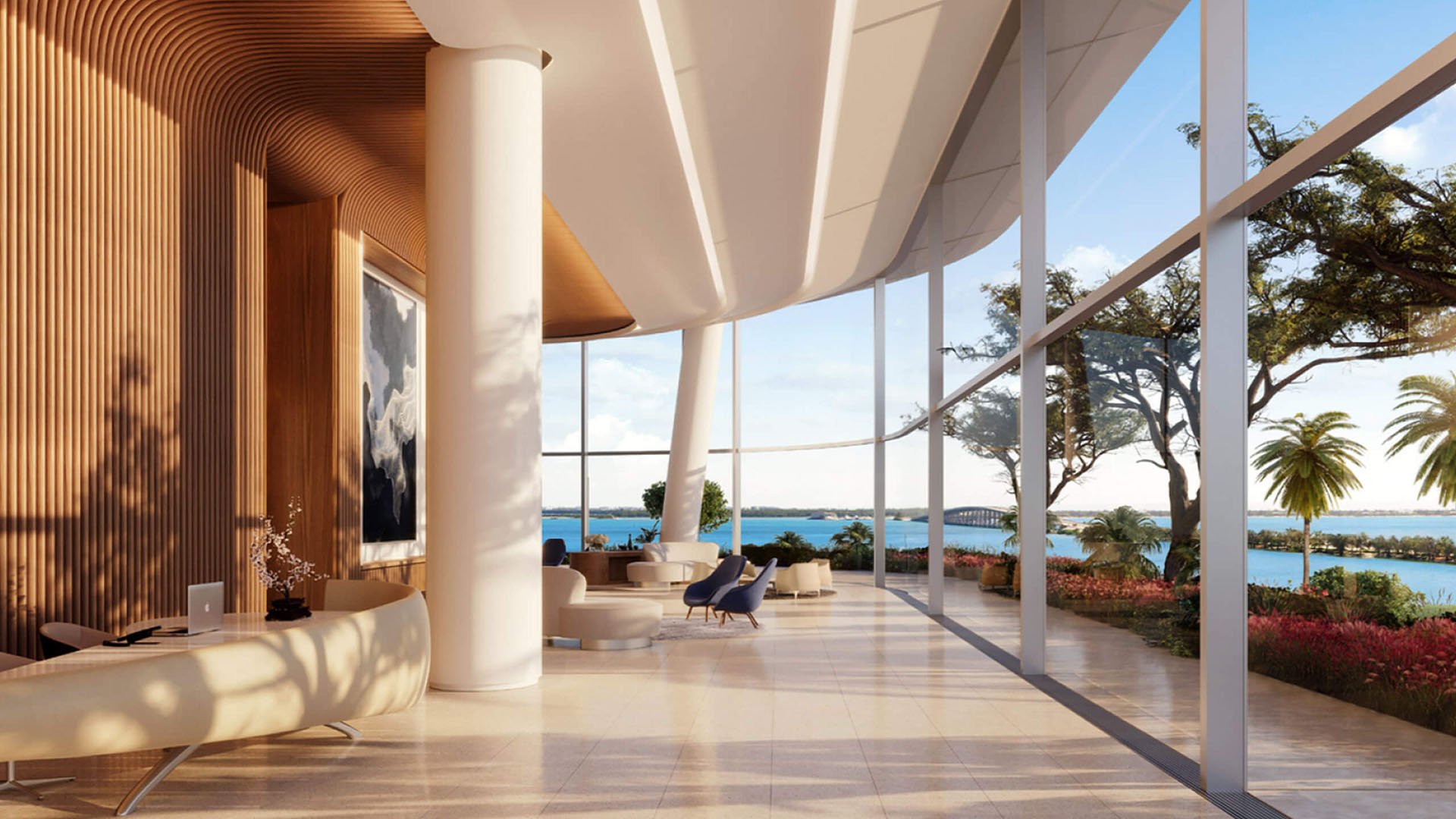
For an aging-in-place buyer, the most consequential luxury may be a residence that remains manageable as mobility, driving habits or health needs change. 888 Brickell by Dolce & Gabbana, planned for 888 Brickell Avenue, combines a highly serviced residential concept with technology, wellness spaces and conveniences designed to keep much of daily life close at hand.
That proposition requires precise interpretation. The tower markets 24/7 white-glove service, attentive concierge support, house phones, interface technology, a custom building app and smart-home systems. These features may make it easier to reach staff, request services and operate the home. On their own, they do not establish emergency medical response, nursing care or assisted living.
The essential distinction is between immediate access to hospitality staff and access to medical care.
Within MILLION's Buyer's Guides, this is a particularly important lens for Branded Residences and any Pre-Construction purchase intended to support a long-term Lifestyle. Buyers are evaluating not only what the building offers on opening day, but also how its physical and service infrastructure may function years later.
Around-the-clock staffing can add a valuable human layer. A concierge may be reachable when a resident needs help arranging transportation, receiving a delivery or contacting building services. House phones and digital interfaces may provide multiple channels for making those requests-a practical advantage if one device is unavailable or difficult to use.
The critical issue is scope. Buyers should obtain written confirmation of whether staff can coordinate home-health visits, medication delivery, nonemergency medical transportation or requested wellness checks. They should also ask whether personnel are trained to assist with a 911 call, guide paramedics to the correct elevator and facilitate entry if a resident cannot answer the door.
Those questions test operations rather than aesthetics. A polished concierge desk can be exceptionally useful while remaining a hospitality service. The planned amenity program does not identify an emergency room, nurse station, on-site physician or dedicated medical clinic. The residence should therefore be assessed as concierge-supported housing, not a medical-care environment.
Emergency readiness is not measured by the number of amenities. Before purchasing, buyers and their advisers should ask management to explain ambulance arrival procedures, responder entry, elevator control and residence access. Elevator redundancy, backup-power coverage, stretcher clearance, ADA-friendly paths and evacuation procedures should all be confirmed rather than assumed.
Hospital proximity and ambulance response times also require independent verification; the property details do not establish either. A careful buyer can map preferred emergency departments, speak with personal physicians about continuity of care and determine how caregivers would enter the building after hours.
This framework applies when comparing other Brickell options, including St. Regis® Residences Brickell and The Residences at 1428 Brickell. The purpose is not to presume that every tower follows the same protocol, but to ask each property's team the same operational questions and compare the answers in writing.
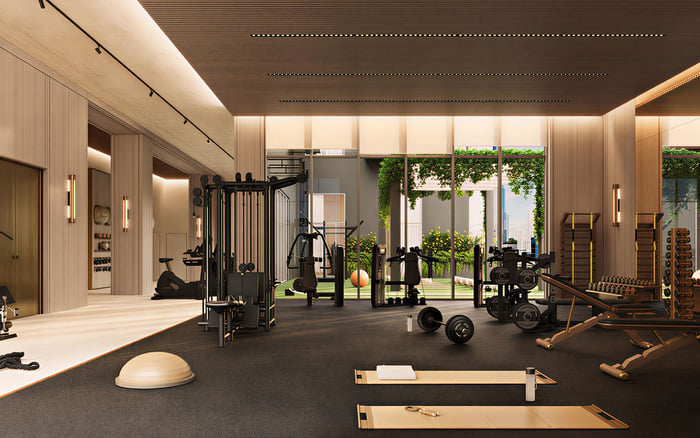
888 Brickell's amenity program is planned to span more than 115,000 square feet. Plans include a resident-only 44-foot lap pool on the 43rd floor, a separate pool club on the 22nd floor, an indoor padel court, fitness facilities, yoga and Pilates spaces, and hot and cold plunge pools. A recovery spa, massages, a juice bar and IV therapy are also planned.
These offerings may support exercise, restoration and routine wellbeing. Yet spa treatments and IV therapy should not be read as evidence of emergency medicine, primary care or nursing services. Buyers should ask who operates any health-adjacent offering, what credentials apply, whether appointments are required and what happens if a participant experiences a medical event.
The distinction protects expectations and planning alike. Wellness amenities can complement a resident's care network, but they do not replace a physician, home-health professional or emergency responder.
Aging in place is often shaped by the accumulation of small tasks. A Rolls-Royce house car and valet service may reduce reliance on personal driving. On-site barber, tailor and beauty-salon services may limit routine off-property errands. Six planned food-and-beverage venues, including a ground-floor signature restaurant, lobby bars, and a pool-club restaurant and bar, could make dining within the building more convenient.
Shared offices, meeting rooms and meeting suites may also provide practical settings for appointments or visiting service providers. A lounge, theater and creative workspace broaden opportunities to remain socially and intellectually engaged without traveling far.
These conveniences should still be examined at the operating level. Buyers can ask whether house-car use requires reservations, whether mobility devices can be accommodated, where outside caregivers wait and how deliveries reach a residence. Anyone also considering Cipriani Residences Brickell can use the same questions to distinguish marketed service from dependable daily logistics.
Building services cannot compensate for a home that becomes difficult to navigate. Planned specifications include integrated appliances, entryways, integrated medicine cabinets and soaking tubs in select residences. Each layout should be reviewed individually for circulation, thresholds, reach ranges and safe bathroom use.
A qualified accessibility professional can assess whether the selected home could accommodate grab bars, a curbless shower, shower seating or wheelchair clearances in the future. Buyers should determine which modifications are structurally feasible, which require association approval and whether finishes can be altered without compromising waterproofing or building systems.
Smart-home controls may simplify lighting, temperature and service requests, but usability matters. Ask for demonstrations of the building app, house phone and residence controls. Consider whether essential functions remain operable during internet or power interruptions and whether a family member or authorized caregiver can receive appropriate access.
The strongest aging-in-place review combines legal, architectural, operational and healthcare perspectives. Request written emergency protocols and a clear description of concierge duties. Confirm responder routes, elevator procedures, backup systems and evacuation planning. Review the exact residence for future modifications, then independently evaluate emergency departments, transportation and personal-care arrangements.
Finally, examine the costs and permissions associated with long-term support. Buyers should understand how caregivers, nurses, therapists and delivery personnel are admitted, whether recurring access can be authorized and where private consultations could occur. None of these questions diminishes the appeal of an elaborate amenity program. They clarify whether the service model can support a resident's evolving priorities with discretion and consistency.
For private guidance on evaluating 888 Brickell and comparable South Florida residences, connect with MILLION.
If branded residences are on your mind — as a home or as an allocation — we would be glad to share what we are seeing, privately.
Begin a quiet conversationThe disclosed amenity program does not identify an emergency room, nurse station, on-site physician or dedicated medical clinic.
No. It describes hospitality and building support, not assisted living, skilled nursing or formal emergency-response care.
Plans include house phones and interface technology for contacting the concierge and building services, along with a custom building app.
The scope is not established in the disclosed details. Buyers should obtain written confirmation of whether staff can coordinate home-health providers and related access.
Confirm 911 assistance, paramedic entry, elevator control, emergency access to the residence and evacuation procedures.
Elevator redundancy, backup-power coverage, stretcher clearance and ADA-friendly responder routes are central diligence points.
It should be treated as a wellness offering, not evidence of emergency, nursing or primary-care services.
The advertised Rolls-Royce house car and valet service may reduce reliance on personal driving, subject to operating rules and availability.
Buyers should review the specific layout for clearances, bathroom safety and the feasibility of future modifications rather than assume universal suitability.
They should investigate both independently because the available property details do not establish the nearest emergency department or typical response times.