A residence-specific guide to evaluating advertised arrival services, service-entry arrangements, household-staff credentials, and vendor access at The Residences at 1428 Brickell before relying on them.
For a household with regular staff, visiting specialists, and frequent deliveries, privacy extends beyond a quiet elevator foyer. It depends on who enters, where they wait, and how they reach the residence. At The Residences at 1428 Brickell, the advertised arrival and support services offer a meaningful starting point. The buyer's task is to establish how those services connect to the specific home under consideration.
Located at 1428 Brickell Avenue, Miami, Florida, the development advertises controlled entry and separated circulation. That language does not confirm that every residence has a fully segregated staff route or dedicated service elevator. Evaluate discretion through a residence-specific circulation plan and written operating policies-not an amenity description alone.
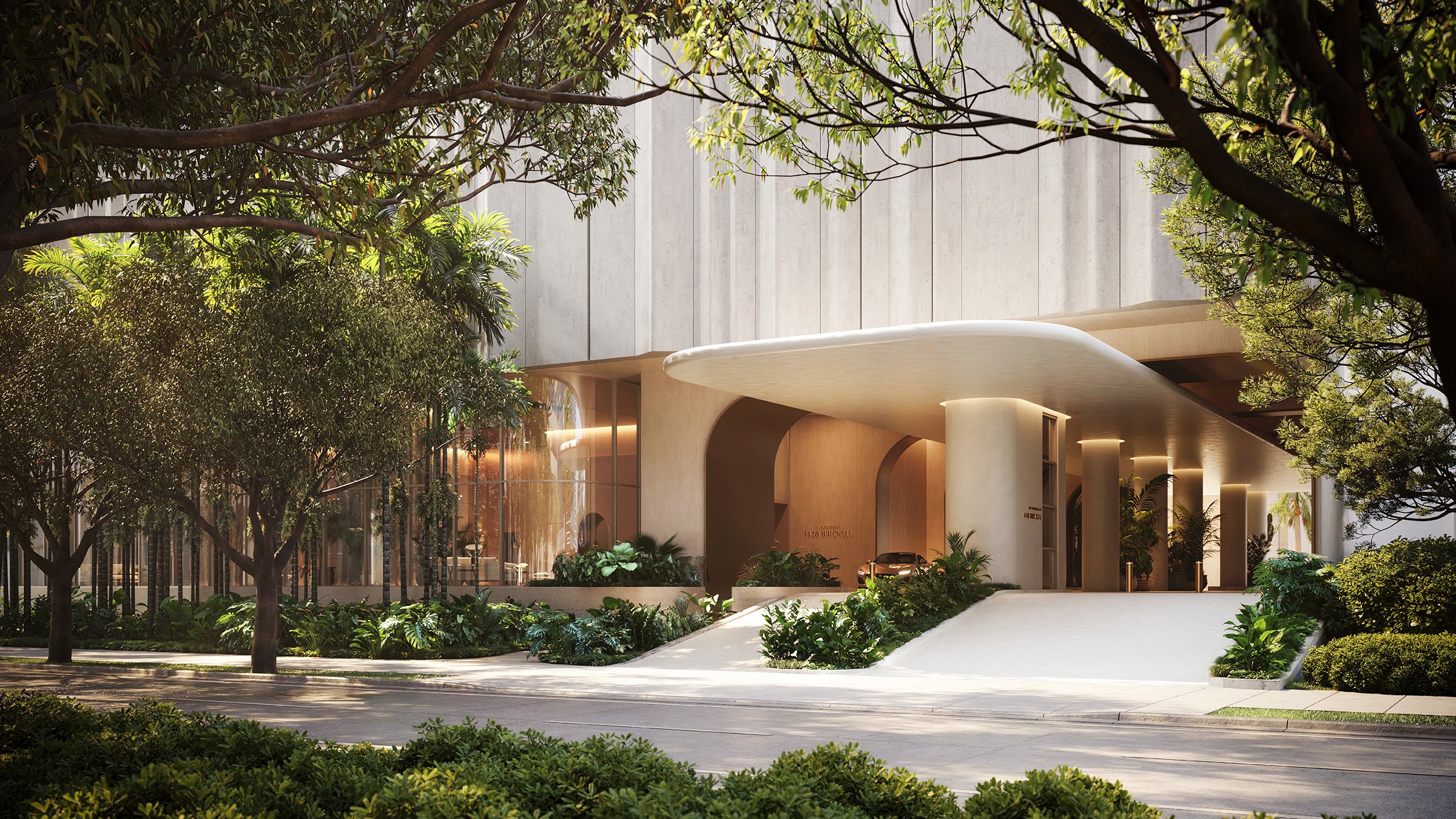
Vehicular access is described from Brickell Avenue and SE 14th Street. Advertised features include a gated entrance, a 24/7 staffed guardhouse, and full-time reception, concierge, valet, and porter service. The porte cochère is described as staffed around the clock by valet attendants and porters. The ground floor includes a 24/7 staffed, double-height lobby and a private concierge office.
These features support a staff-assisted arrival experience. They do not, on their own, establish a separate entrance for a housekeeper, chef, caregiver, or furniture installer. Ask which access point each category uses, who authorizes admission, and whether the route changes outside normal work hours.
Each residence is advertised with two or more valet-serviced parking spaces, and the parking provision includes private loading and unloading areas. Confirm whether those areas serve household vendors, how loading is scheduled, and whether a vendor's vehicle may remain during a visit. Resident parking allocations do not necessarily include vendor parking privileges.
Advertised residence features include high-speed private elevators, a private elevator foyer, and double-door entry. An independent service entrance is also listed, but its availability across every residence layout is not established. The critical distinction is between a second door into a home and a genuinely independent route through the building.
Request an annotated plan for the exact residence identifying resident, guest, household-staff, delivery, loading, service-elevator, and emergency routes. Trace the service path from the street to the apartment door. Mark every shared lobby, corridor, elevator landing, and waiting area. A route may be separate at one point and converge elsewhere.
Request written confirmation of which layouts include the independent service entrance, where it opens within the residence, and which building routes connect to it. Establish whether that entrance can be reached without crossing resident arrival areas. Do not infer a dedicated service elevator from the presence of private residential elevators.
For a buyer also considering Cipriani Residences Brickell, this provides a useful comparison framework: request equivalent route diagrams for each shortlisted home rather than assuming similar access arrangements from service descriptions.
A staffed entrance and a staff-entry protocol answer different questions. The former describes personnel at an access point; the latter determines what a household employee may do after admission. Request written rules for recurring staff, temporary replacements, and occasional specialists.
The review should cover registration, identification, credentials, screening requirements, permitted hours, and responsibility for authorization. Ask whether permissions can be limited to particular days or destinations, how they are withdrawn, and what happens when the resident is away. These remain questions to resolve, not procedures established by the advertised staffing.
Clarify whether household employees must check in on every visit, whether escorts are required, and whether any credential permits access beyond the residence route. Standing authorization should not be assumed to mean unrestricted access. The property's spaces are described as exclusive to residents and their guests, without hotel crowds, outside memberships, or public access; employee and vendor permissions still require separate clarification.
Household vendors bring different operational demands. A florist carrying an arrangement, an appliance technician arriving with tools, and a furniture team handling an oversized piece may need different routes and approvals. Ask management to explain each scenario rather than assuming one delivery procedure covers all three.
Obtain written requirements for insurance, identification, screening, work hours, reservations, and escorts. Establish who approves the visit and whether outside vendors may proceed unescorted. Confirm the authorized destination and whether a resident or designated household representative must be present.
Then test a simultaneous-arrival scenario: the household returns through the porte cochère while a vendor unloads. Ask where vehicles wait, where materials are staged, and whether the parties share circulation. This exercise distinguishes courteous service from physical separation without presuming either is absent.
Porters are advertised as able to transfer packages or luggage from the porte cochère to the elevator or residence. In-residence package delivery, cold storage, and newspaper delivery are also listed among support services. These offerings can ease household logistics, but the handoff needs to be defined.
Ask where custody changes, how deliveries are recorded, who may authorize entry, and what “in-residence” means when nobody is home. For refrigerated items, clarify acceptance windows, storage access, collection arrangements, and any restrictions. For oversized deliveries, confirm loading reservations, elevator availability, protective requirements, and the route to the service entrance, if applicable.
Listed back-of-house functions include a mail room, parking garage, bike storage, and pet spa. That designation does not establish that each is reached by a fully separate service corridor. Ask to see the actual connections.
The strongest Buyer's Guides distinguish advertised services from documented rights and procedures. When evaluating Una Residences Brickell alongside 1428 Brickell, apply the same questions about arrival routes, staff authorization, and loading access. This is a comparison discipline, not a claim that the buildings operate alike.
Keep three items together: the annotated plan for the selected residence, written confirmation of its service entrance, and the applicable staff and vendor policies. Review them alongside the condominium documents. If answers remain conditional, record those conditions in writing rather than treating a verbal explanation as an enduring arrangement.
The decisive question is not simply whether service is offered. It is whether the exact residence and governing procedures accommodate the household's routines with the desired degree of separation. Advertised features should remain distinct from finalized operating rules until the relevant documents establish the arrangement.
For a discreet perspective on residence selection and the details that shape daily ownership, explore MILLION.
If branded residences are on your mind — as a home or as an allocation — we would be glad to share what we are seeing, privately.
Begin a quiet conversationThe development is located at 1428 Brickell Avenue, Miami, Florida. Advertised vehicular access is from Brickell Avenue and SE 14th Street.
The advertised controlled entry and separated circulation do not establish a fully separate staff route for every residence. Confirm the route on an annotated plan for the exact home.
An independent service entrance is listed among residence features, but its availability across every layout is not established. Request written confirmation for the selected residence and its connection to building circulation.
High-speed private elevators are advertised, but a dedicated service elevator is not established by the supplied details. Ask which elevator staff and vendors would use.
The development advertises a 24/7 staffed guardhouse, lobby, and porte cochère, along with full-time reception, concierge, valet, and porter service.
Each residence is advertised with two or more valet-serviced parking spaces, and private loading and unloading areas are listed. Vendor parking rights and loading reservations require separate confirmation.
Request written rules covering registration, identification, credentials, screening, hours, escorts, and authorization responsibility. Clarify how recurring permissions are changed or withdrawn.
The advertised services do not establish whether outside vendors may proceed unescorted. Obtain written confirmation of escort requirements and authorized routes.
Listed services include porter transfer of packages or luggage to the elevator or residence, in-residence package delivery, cold storage, and newspaper delivery. Confirm the handoff and absent-owner procedures.
Review residence-specific circulation plans, written service-entrance confirmation, condominium documents, and applicable management policies. Keep advertised features distinct from finalized operating rules.