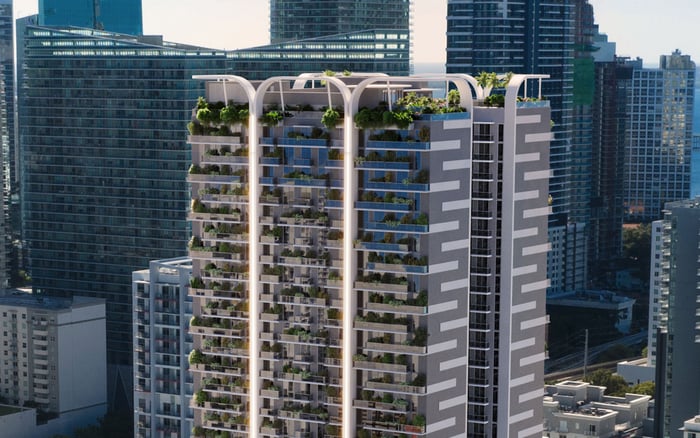
A buyer-focused guide to the questions that matter at 888 Brickell by Dolce & Gabbana: protected residential access, event-week valet capacity, guest credentials, privacy, and enforceable operating commitments.
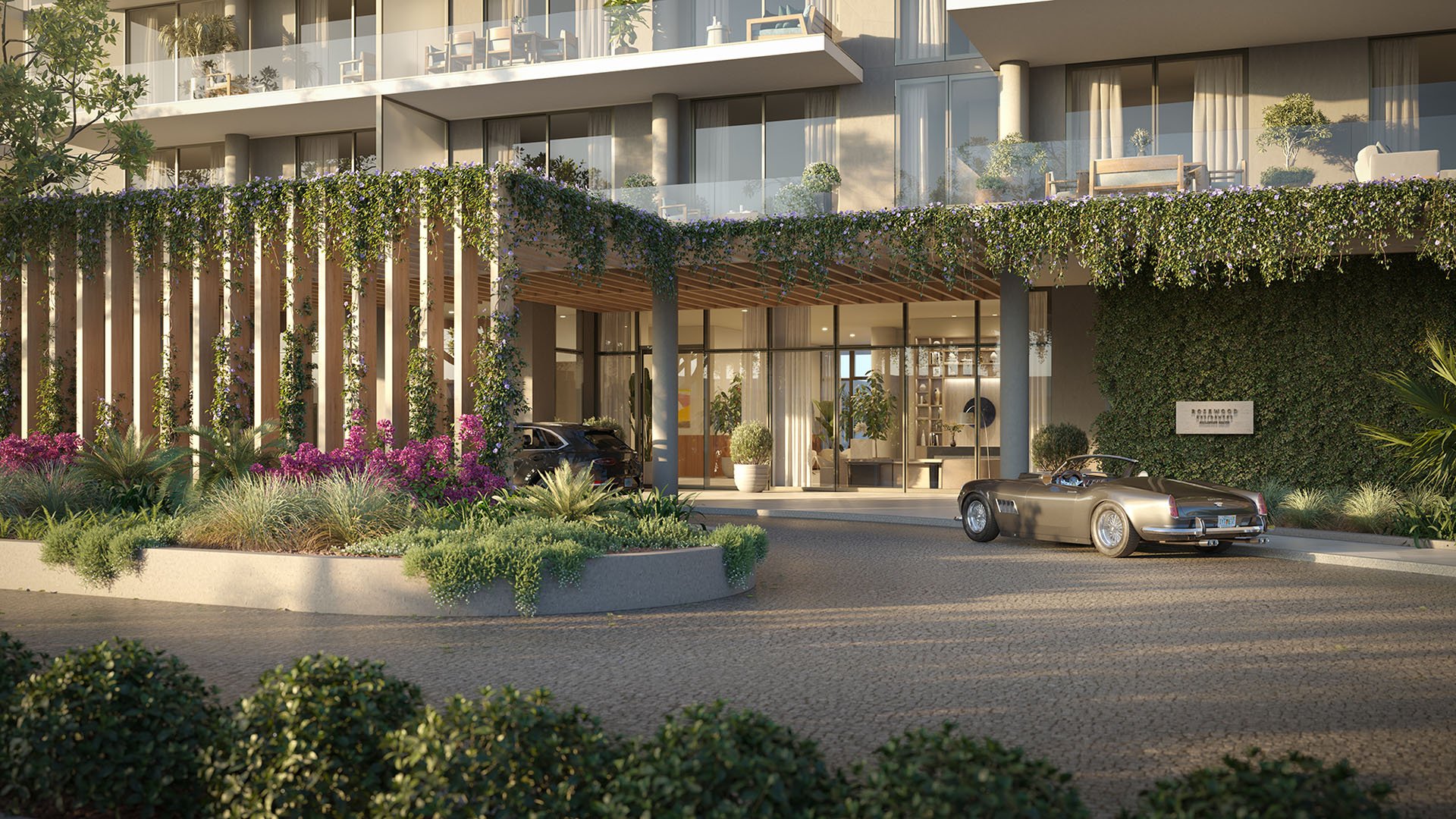
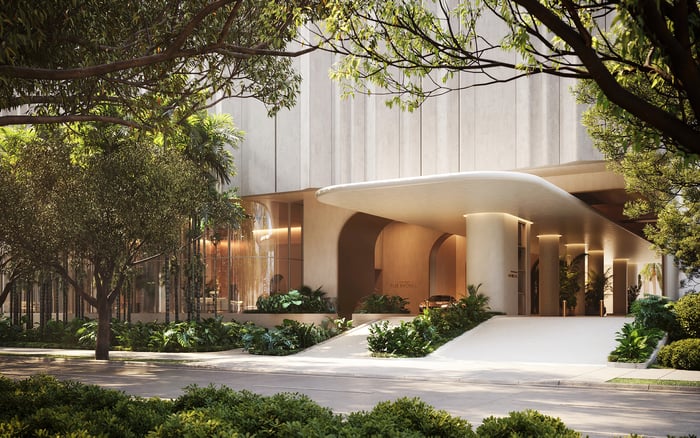
At 888 Brickell by Dolce & Gabbana, planned for 888 Brickell Avenue, the buyer’s question is not simply how arrival will look. It is how arrival will function when residential life, hospitality, dining, club activity, and an event compete for attention. A private porte-cochère can create an elegant threshold; the rules behind it determine whether that threshold remains private under pressure.
The planned mixed-use program combines residences with hospitality and other commercial uses. Advertised features include a private residential lobby, a distinct private club entry, valet service, and Rolls-Royce house cars. These features frame the conversation, but they do not establish final event-week procedures, staffing levels, queue limits, or credential rules.
For buyers evaluating branded residences, discretion should be an operating requirement, not an aesthetic promise. Counsel and management must translate the intended lifestyle into documented access rights, measurable service expectations, and clear responsibility when demand peaks.
Begin with a circulation plan that distinguishes residents, residential guests, hotel guests, club members, restaurant patrons, event attendees, and vendors. Ask management to identify each group’s permitted entrances, elevator routes, waiting areas, and access boundaries. Separate names for a residential lobby and club entry do not, by themselves, establish separation throughout the building.
The most useful question is concrete: can a resident reach the residential elevator without passing through an event check-in queue? Follow with questions about cross-access between hospitality and residential areas, escort requirements, and how staff handle a guest who arrives at the wrong entrance.
Advertised private entrances and soundproofing are intended to preserve residents’ discretion when hotel guests use rooms and suites. Counsel should establish what those features mean in the governing documents and approved plans. Ask whether event operations may temporarily alter residential routes, who authorizes a change, and what alternative access must remain available.
Buyers also considering The Residences at 1428 Brickell can apply the same circulation questions to their comparison without assuming the projects have equivalent operating models.
In September 2023, the planned parking program comprised approximately 273 spaces with valet operation. That is a historical program figure, not confirmed current operating capacity. Likewise, the 259 planned residences describe the development program, not an event-occupancy limit or a measure of vehicle throughput.
Ask management for its vehicles-per-hour assumptions for both arrival and retrieval. Request the proposed stacking capacity, maximum queue, overflow location, and threshold for redirecting arriving vehicles. Clarify whether those calculations account for overlapping residential, hotel, restaurant, club, and event demand rather than an isolated event.
Secure valet and private parking services are advertised for residents and guests. Ask whether residents would have a protected arrival route, a distinct retrieval protocol, or a service standard during peak periods. None should be presumed from the word private.
Departure deserves equal scrutiny. Ask how management would handle a concentrated release of event attendees while residents request their cars. Require clear staffing assumptions, communication procedures, and responsibility for delays-not merely a description of the arrival experience.
Guest preclearance should answer two distinct questions: who may enter, and what happens to the vehicle bringing that person. Ask whether a credential grants building admission only or also affects vehicle screening, valet queuing, parking eligibility, or retrieval priority.
For admission, request the proposed rules for named credentials, validity periods, identification checks, and host approval. Establish whether credentials can be transferred and how plus-ones, late additions, walk-ins, and duplicate credentials would be handled. A guest list is not a complete policy unless someone has authority to resolve exceptions.
Ask who can revoke access and how that revocation reaches the entrance team, valet operator, and other relevant staff. Management should also explain what would happen if the credential system became unavailable. A fallback procedure should preserve residential access without treating an unverified event invitation as unrestricted permission to enter.
For a buyer comparing Cipriani Residences Brickell with other options, these questions provide a consistent diligence framework. They are not assertions about another building’s adopted policies.
An exclusive event space is advertised at the project, with a specification of approximately 5,000 square feet, a stage, bar, and lounge. That remains an advertised specification, not a verified final configuration. Its area does not establish permitted attendance or simultaneous occupancy across the property.
Ask counsel to identify the applicable occupancy limits and management to explain how attendance would be monitored when different uses operate concurrently. Hotel services and curated events are part of the advertised offering, making coordination between operators a material question, not an incidental detail.
Request any approved traffic-control plan and a routing explanation for rideshare vehicles, taxis, chauffeurs, deliveries, event-production vehicles, and emergency access. Ask where each may stop, who prevents conflicting movements, and what triggers rerouting. Overflow arrangements should be documented, not inferred from the presence of valet service.
The same discussion should cover vendor arrival windows, unloading, equipment movement, and access revocation after work concludes. The objective is to prevent event logistics from becoming an informal exception to residential security.
Preclearance can involve sensitive information about residents’ guests and movements. Request the proposed data fields, collection purposes, retention periods, access permissions, and deletion procedures. Ask whether hospitality, club, security, and valet operators would share credential data, and on what terms.
Counsel should examine vendor obligations for cybersecurity, breach notification, credential revocation, and deletion. Management should identify who supervises those obligations and how residents can raise a concern without circulating guest information more broadly.
Operational authority requires the same precision. Who can suspend admissions, halt an event, reroute arrivals, or restore a residential-only pathway? Ask which party bears overtime security costs, crowd-control expenses, damage, and costs associated with unauthorized access. Distinguish event-specific charges from costs that could be allocated to residential owners.
For pre-construction purchasers, the decisive distinction is between an advertised feature and an enforceable commitment. The project’s improvements, designs, and construction remain subject to applicable federal, state, and local permits and approvals. Counsel should reconcile marketing language with executed governing documents, approved plans, management contracts, and hotel or club agreements.
The strongest buyer’s guides turn attractive amenities into practical questions. Here, request a written account of proposed peak-period operations, the documents supporting each commitment, and the mechanism for changing those rules later. Luxury is not the absence of activity; it is confidence that residential access and privacy remain protected when activity intensifies.
Explore a more considered approach to South Florida residential decisions with MILLION.
If branded residences are on your mind — as a home or as an allocation — we would be glad to share what we are seeing, privately.
Begin a quiet conversationThe project is planned for 888 Brickell Avenue in Miami’s Brickell district, with residences, hospitality, and other commercial uses.
Final queue limits, credential rules, staffing levels, and overflow arrangements are not established by the disclosed amenities. Buyers should request written procedures and supporting documents.
A private residential lobby and distinct private club entry are listed amenities. Buyers should verify how entrances, elevators, and intermediate spaces separate different user groups.
The planned program identifies 259 residences. That figure is not an event-occupancy limit.
No: the September 2023 program included approximately 273 planned valet-operated parking spaces. That historical figure establishes neither current capacity nor vehicles-per-hour throughput.
That should not be assumed. Ask whether a credential covers admission only or also affects vehicle screening, parking eligibility, queuing, and retrieval.
Ask about named and time-limited credentials, identification checks, host approval, transfers, plus-ones, late additions, walk-ins, and revocation.
The advertised specification describes an approximately 5,000-square-foot event space with a stage, bar, and lounge. Treat that as a marketed specification, not a verified final configuration or attendance limit.
Counsel should review guest-data collection, retention, access permissions, sharing, and deletion, along with vendor cybersecurity and breach-notification obligations.
Review executed governing documents, approved plans, management contracts, and hotel or club agreements. Confirm authority to change procedures and responsibility for event-related costs.