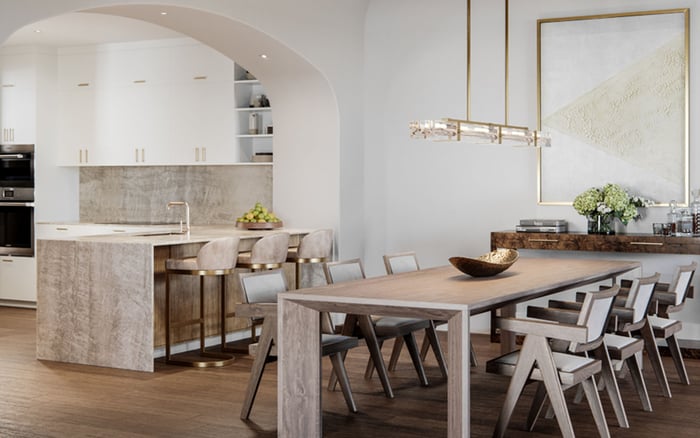
For families relocating from Beverly Hills, residential privacy in Coral Gables should be evaluated as a continuous operating system, not a single amenity. This guide maps the sequence from vehicle arrival and entry through elevator access, household staffing, deliveries, terraces and emergency operations.
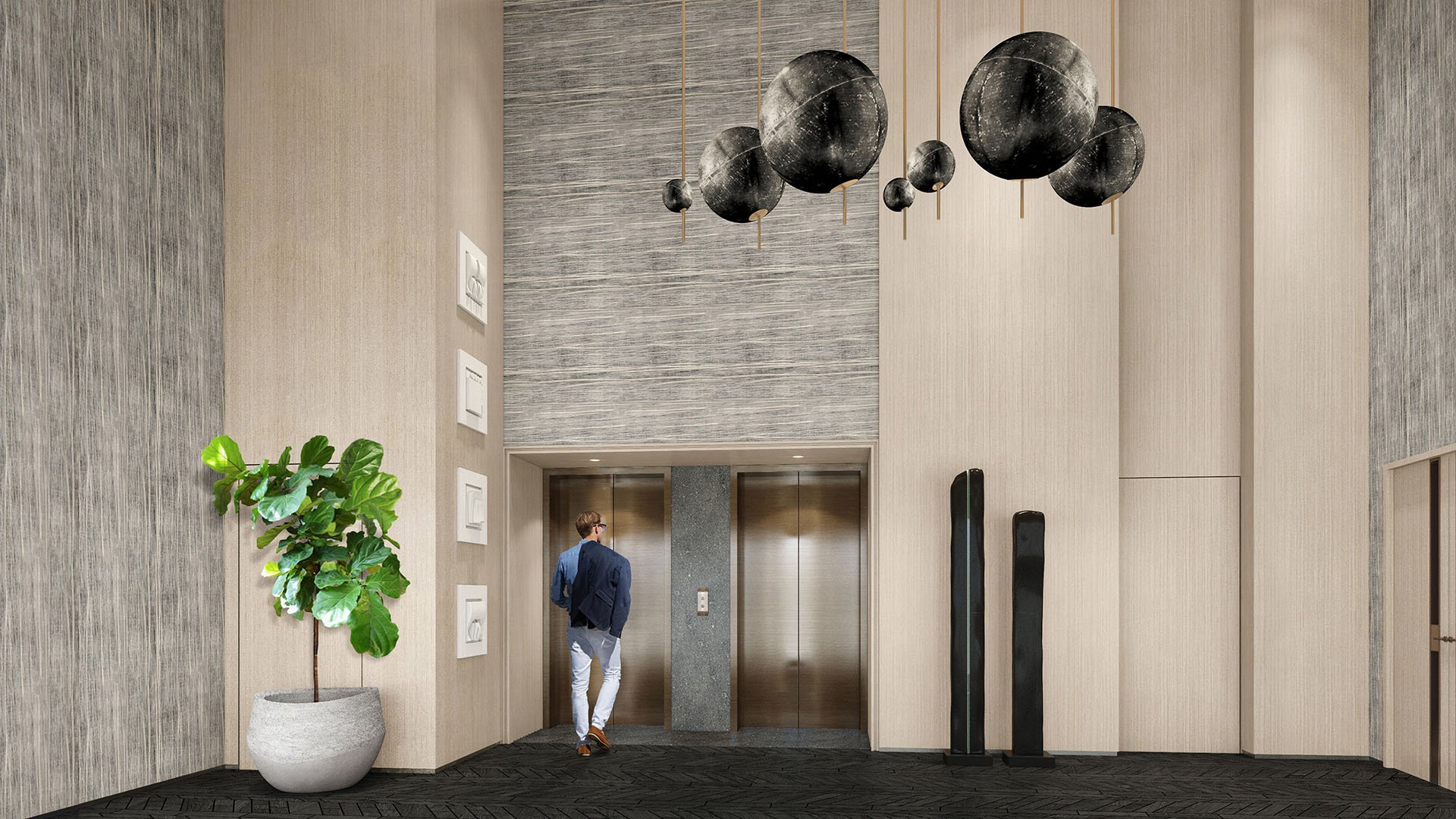
For a Beverly Hills household moving to Coral Gables, privacy begins before the car door opens. The central question is not whether a property advertises a private elevator, but whether the journey from the street to the front door can be managed without avoidable exposure, confusion or overlap.
Review the residence as a sequence of thresholds: curb, driveway or garage, staffed entry point, lobby, elevator call point, landing and foyer. Then consider how family members, guests, household employees, drivers, tutors, contractors and couriers would move through those spaces.
A smaller residential setting may feel quieter, but scale alone does not establish discretion. Buyers should assess circulation, access controls and management procedures together rather than relying on a single feature or marketing term.
Begin due diligence outside. Observe street visibility, vehicle queuing, pedestrian access and the path a guest would take before authorization. If the property provides staffed arrival services, ask who is responsible for confirming visitors, communicating instructions and responding to an unexpected arrival.
When evaluating Ponce Park Coral Gables, apply the same practical tests used for any residence: visit at different times, trace the path from vehicle to home and ask how resident, guest and service arrivals are distinguished.
Garage circulation deserves equal scrutiny. Identify pedestrian doors, elevator call stations, service access points and any place where separate routes converge. Test the route with the vehicles and people likely to use it instead of relying only on a plan.
The phrase “private elevator” can describe different arrangements. It may refer to an exclusive cab, restricted floor access, a private landing or a foyer reached from a shared elevator. Buyers should request plans and written operating rules to determine precisely what is controlled.
Ask how residents call the elevator, how guests are released to a floor and what happens when household staff or contractors need temporary access. Also determine whether elevator doors open directly into living space or into a vestibule with another controlled threshold.
The distance between the elevator and daily family activity matters. Review visual and acoustic separation, the placement of the entry door and the space available for receiving a guest without exposing the rest of the home.
Families comparing Cora Merrick Park and The Village at Coral Gables can use one consistent checklist for each appointment rather than assuming that similar terminology represents the same arrival experience.
A discreet household needs access rules that are specific but manageable. Consider named credentials for regular employees, time-limited permissions for vendors and a prompt process for changing or revoking access. Ask whether permissions can be restricted by person, destination and schedule.
Deliveries should have a defined holding point, verification step and final route. Clarify how groceries, flowers, luggage, packages and large installations are handled. The process should limit unnecessary circulation while allowing authorized items to reach the residence efficiently.
Household employees also need a clear protocol. Decide which entrance each person should use, how arrival is confirmed and whether the route changes when an employee accompanies a child or guest. Confidentiality, photography and incident-reporting expectations should be addressed directly within the household.
Contractor access warrants separate treatment. Confirm who approves a visit, where the contractor waits, which elevator is used and how access ends when the appointment is complete. A defined process is easier to supervise than an informal exception made at the door.
Privacy does not end at the foyer. Study terrace sightlines, neighboring windows, common areas and the path of sound near entrances. Visit at more than one time of day because lighting, occupancy and activity can change how exposed a space feels.
An interior plan should identify where family members gather, where staff stage service and what a person entering the home can immediately see. Window treatments, lighting and landscape design may support discretion, but they should complement rather than compensate for the underlying circulation plan.
Ask how the property operates during an equipment outage, staffing change or unexpected arrival. Determine which doors, elevators, communications systems and access controls remain usable, then review how residents and authorized visitors would be directed.
Repeat the arrival exercise for different users and circumstances. A protocol should remain understandable during school-run periods, evening arrivals, staff transitions and service appointments. Written household instructions can help drivers, employees and family members respond consistently.
Does a private elevator mean the cab is exclusive to one residence? Not necessarily. Confirm whether the term refers to the cab, floor access, landing or foyer.
What should families inspect first at curb arrival? Review street visibility, vehicle queuing, pedestrian access and the visitor-authorization sequence.
Does staffed arrival service guarantee privacy? No. Ask how responsibilities, communication and unexpected arrivals are handled in practice.
Should household staff use the resident entrance? The appropriate route depends on the property and household protocol. It should be clearly documented and controllable.
How should contractor access differ from guest access? Contractor access should be limited to the approved time, route and destination, with a clear end to the permission.
What should buyers ask about deliveries? Ask where items wait, who verifies them and how they travel from the arrival point to the residence.
Why should elevator plans and rules be reviewed together? Plans show physical circulation, while rules explain how residents, guests and service providers may use it.
How can parents evaluate a school-run arrival? Visit during the relevant period and observe traffic, handoffs, waiting areas and the route into the residence.
What should be tested during an outage? Review how entry, elevators, communications and other essential parts of the arrival sequence would operate.
Should household privacy procedures be written down? Yes. Clear instructions help family members, employees and drivers follow the same process.
For a confidential assessment and a building-by-building shortlist, connect with MILLION.
If branded residences are on your mind — as a home or as an allocation — we would be glad to share what we are seeing, privately.
Begin a quiet conversation