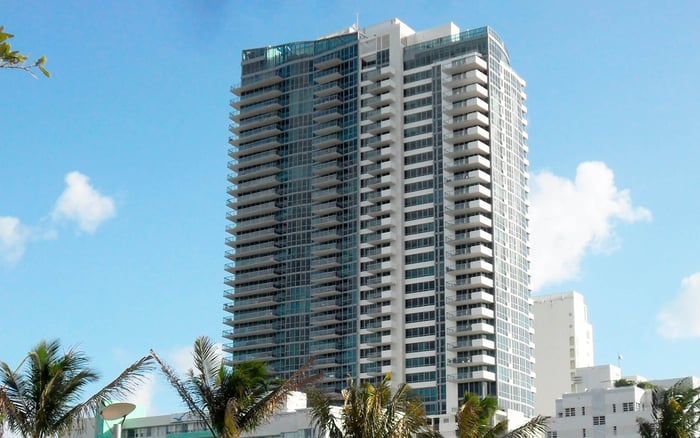
Buyers who plan to entertain at Setai Residences Miami Beach should verify guest eligibility, reservation procedures, fees, restrictions, and enforcement terms rather than infer hosting rights from amenity marketing alone.

Buyers considering Setai Residences Miami Beach should evaluate entertaining as an operating question, not merely an amenity question. An appealing shared space does not, by itself, establish who may enter, whether seating can be reserved, or what type of gathering is permitted.
The practical objective is to understand how a buyer’s preferred hosting style fits the current rules. Informal visits from family, small social gatherings, and organized private events may be treated differently, so each intended use should be examined separately.
A useful review divides entertaining into three categories: entry to an amenity, access to furniture or service, and authorization to hold a gathering. Buyers should not assume that approval in one category automatically grants rights in another.
Ask whether an owner must accompany guests, whether advance registration is required, and whether guest limits apply by residence or by amenity. For seating, request the booking window, priority rules, cancellation terms, and any limits during high-demand periods. For gatherings, determine whether the rules distinguish ordinary social use from a private event.
Guest policies can be examined separately for pools, beach areas, wellness facilities, fitness spaces, lounges, and other shared settings. A clear written response should address eligibility, accompaniment, hours, capacity, reservation procedures, and any temporary restrictions.
Buyers should also ask whether operating terms differ for owners, family members, personal guests, tenants, or other occupants. The goal is not to rely on a broad description of access, but to identify the rule that applies to each person and each intended use.
For any reservable space, request the current fee schedule and reservation form. Relevant items may include deposits, cancellation charges, staffing costs, security requirements, cleanup obligations, damage responsibility, and vendor restrictions.
The review should also address music, noise, photography, filming, catering, deliveries, event hours, and outside service providers. Buyers who entertain regularly should determine whether a reservation provides exclusive use or only designated access within a shared setting.
A disciplined comparison can include other Miami Beach residential options already under consideration, such as Shore Club Private Collections Miami Beach, The Ritz-Carlton Residences® South Beach, and The Perigon Miami Beach. The same document request should be used for each property so that the comparison remains consistent.
Focus on the buyer’s actual pattern of use: typical party size, frequency of visitors, preferred spaces, desired notice period, and tolerance for fees or restrictions. This approach makes the comparison more useful than ranking properties by amenity imagery alone.
Request the current declaration, bylaws, house rules, applicable shared-facility agreements, reservation forms, and schedules of charges. Ask the appropriate professionals to identify which document controls if marketing materials, summaries, or informal explanations differ.
The file should record guest limits, booking priority, event approval procedures, fees, cancellation terms, enforcement authority, notice procedures, and any available review process. Buyers can then test those written terms against their expected use of the residence.
A visit during a busy period can provide additional context. Observe how shared spaces function, but treat the visit as practical due diligence rather than a substitute for reviewing controlling documents.
Does amenity access automatically include a right to entertain? No automatic conclusion should be drawn. Buyers should verify guest access and gathering permissions in the current documents.
Should pool entry and seating be reviewed separately? Yes. Entry, seating, service, and event authorization should each be confirmed rather than treated as a single privilege.
What guest information should a buyer request? Ask about eligibility, advance registration, accompaniment, guest limits, credentials, permitted hours, and high-demand restrictions.
How can a buyer determine whether a gathering is considered an event? Request the written definition and ask how group size, catering, music, vendors, or reserved space affect classification.
Which possible charges deserve review? Request current details for deposits, cancellations, staffing, security, cleanup, damage, vendors, and any other reservation-related costs.
Should each shared space be evaluated independently? Yes. Buyers should obtain the applicable access and booking terms for every space they expect to use.
Why compare properties with the same document request? A consistent request makes it easier to compare guest rules, reservation procedures, costs, and restrictions on equal terms.
Which documents should be collected before closing? Request the current declaration, bylaws, house rules, applicable shared-facility agreements, reservation forms, and fee schedules.
Can a property visit replace document review? No. A visit offers practical context, while the relevant documents should be reviewed to understand applicable rights and restrictions.
What should an entertaining buyer organize in writing? Create a file covering guest limits, booking priority, event approvals, charges, cancellation terms, enforcement procedures, and applicable review processes.
For a discreet conversation and a curated building-by-building shortlist, connect with MILLION.
If branded residences are on your mind — as a home or as an allocation — we would be glad to share what we are seeing, privately.
Begin a quiet conversation