A discreet buyer’s guide to interpreting flood-zone exposure, insurance, building resilience, and long-term value when purchasing luxury real estate in Miami Beach and Bal Harbour.
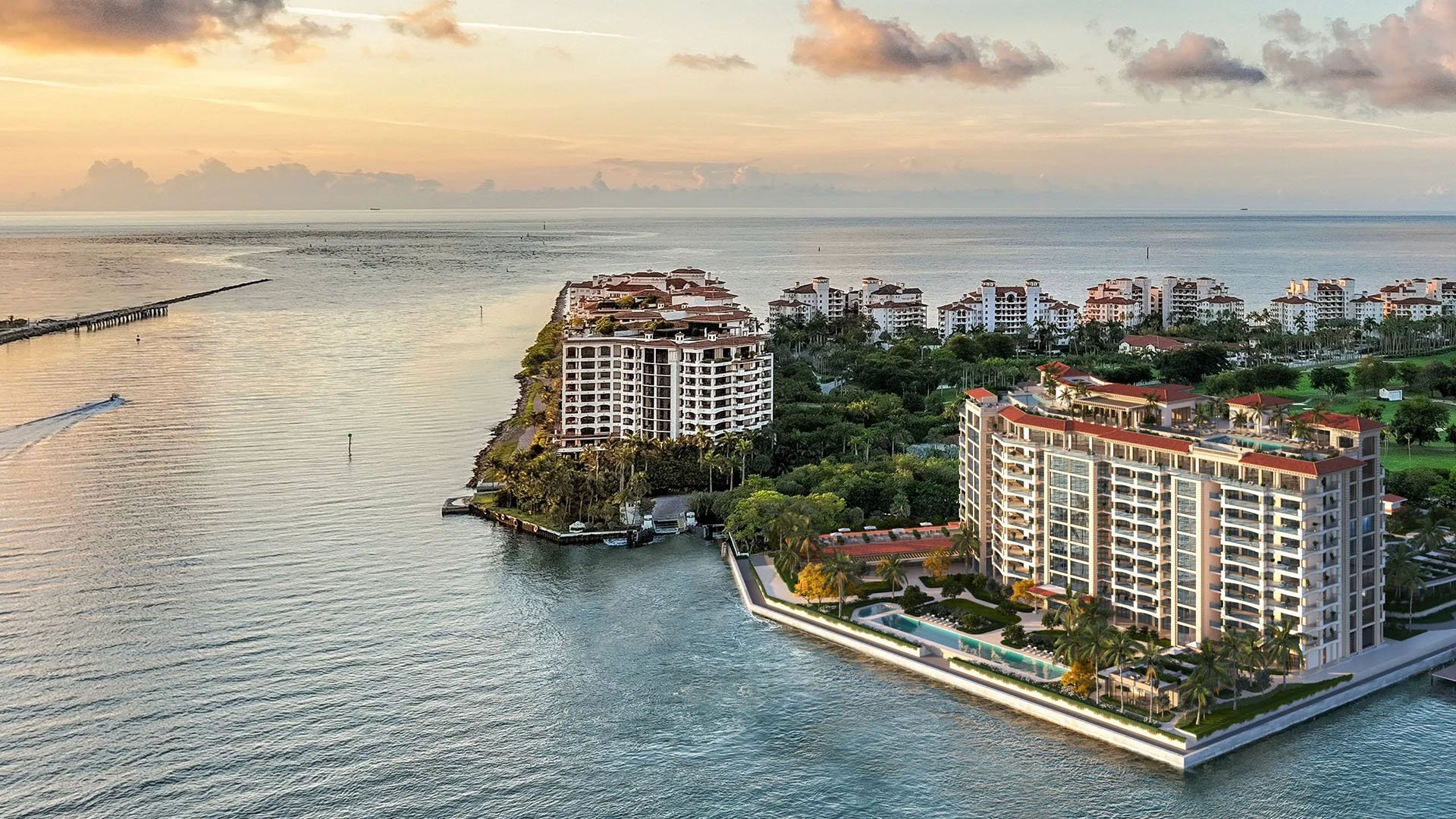
In Miami Beach and Bal Harbour, water is both the defining amenity and the central diligence item. The view, the breeze, the walk to the sand, and the sense of privacy all come with a need to understand how a property relates to elevation, drainage, storm exposure, insurance, and access. For high-net-worth buyers, the question is rarely whether waterfront living is desirable. It is how intelligently a particular home or condominium has been planned for the realities of coastal ownership.
Flood zones are best read as risk signals, not simple yes-or-no judgments. They help frame the conversation, but they do not replace property-specific review. Two residences within the same broad neighborhood can have very different profiles depending on finished-floor elevation, garage design, mechanical placement, lobby configuration, site grading, seawall condition, and the route a buyer must use to reach the property during heavy weather.
Within listing shorthand, Miami Beach and Bal Harbour are often treated as distinct luxury micro-markets, yet both require the same disciplined lens: understand the map, inspect the building, price the carrying costs, and consider future liquidity. For MILLION clients, the question cuts across new construction, resale, oceanfront, and second-home decisions, especially when the residence is intended to serve both lifestyle and capital preservation.
A flood-zone review begins with the property’s elevation and continues through the building envelope. In a condominium, buyers should ask where critical systems are located, how parking levels are protected, what flood-mitigation measures are in place, and whether the association has a clear capital plan for resilience. In a single-family home, the conversation expands to site elevation, seawalls, drainage, landscape grading, generator placement, ground-level enclosures, and any prior water-intrusion history disclosed during the transaction.
The most sophisticated buyers separate perceived risk from actual property performance. A direct oceanfront tower may have a highly engineered podium and well-protected systems, while an inland low-lying property may face nuisance flooding from rain events or poor drainage. Conversely, a beautifully renovated older residence can still carry legacy design assumptions that deserve close review.
This is why legal, insurance, inspection, and financing teams should be coordinated early. Waiting until the final days of a contract period to price flood coverage or review building documents can create unnecessary friction. A stronger strategy is to treat flood diligence as part of the first round of underwriting, alongside title, tax exposure, association reserves, and lifestyle fit.
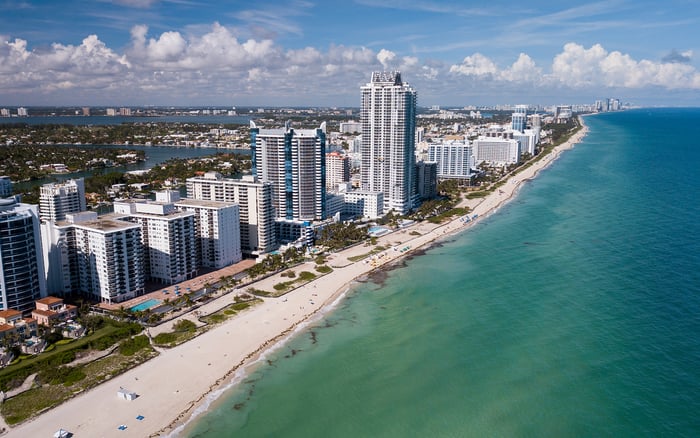
Miami Beach is not one uniform risk profile. South of Fifth, Mid-Beach, North Beach, and the quieter oceanfront stretches each present different lifestyle advantages and due-diligence questions. Buyers comparing boutique buildings with larger resort-style towers should look beyond amenities and study how each property meets the ground, how vehicular access is organized, and how services continue during disruptive weather.
In newer luxury developments, resilience is often integrated into the architecture in ways that are both practical and discreet. A buyer considering The Perigon Miami Beach, for example, may be drawn first to design language and beachfront presence, but the deeper inquiry should include structure, building systems, maintenance planning, and insurance posture. The same applies to branded or hospitality-driven residences such as Shore Club Private Collections Miami Beach, where service expectations are elevated and continuity of operations matters.
For resale condominiums, buyers should request association materials with a focus on risk management. Minutes, budgets, reserve planning, insurance history, and recent capital work can reveal whether a building is being maintained with a long-term coastal mindset. The most desirable address is not simply the one with the best view. It is the one where beauty and stewardship align.
Bal Harbour’s appeal rests on a rare combination of privacy, oceanfront living, refined retail proximity, and a more contained village feel. That scarcity supports enduring interest, but it does not remove the need for technical review. In a market where buyers often compare a small number of elite options, flood-zone diligence can become a meaningful differentiator between otherwise similar residences.
At the ultra-luxury end, buyers may evaluate new offerings such as Rivage Bal Harbour alongside established oceanfront properties like Oceana Bal Harbour. The lifestyle comparison is only one part of the decision. A buyer should also weigh building age, physical plant, service infrastructure, association governance, parking configuration, and the ease of insuring the residence at the desired coverage level.
For many Bal Harbour purchasers, the residence is not a primary commuter home. It may be used seasonally, held as a family asset, or maintained for extended winter stays. That makes operational reliability especially important. Remote ownership requires confidence that the building has responsive management, clear storm protocols, and a maintenance culture suited to absentee owners.
Flood-zone status can influence insurance requirements, lender review, closing timelines, and annual carrying costs. Cash buyers may have more flexibility, but they are not exempt from economic reality. Insurance availability, deductibles, association master policies, and special assessments can all affect the true cost of ownership.
Luxury buyers should avoid looking only at the premium. Deductibles, exclusions, coverage limits, loss-assessment exposure, and the relationship between individual coverage and the association’s policy can matter just as much. In a condominium, the master policy may not cover what an owner assumes it covers. In a single-family home, the scope of coverage should be matched against the actual replacement value and the buyer’s risk tolerance.
Financing adds another layer. Lenders may request flood-related documentation, association insurance details, or elevation information. A clean process depends on having the right documents assembled early. For a high-value transaction, the best outcome is not merely obtaining coverage. It is knowing how that coverage behaves under stress.
New-construction properties often benefit from contemporary code compliance, modern structural planning, elevated systems, and a design vocabulary that anticipates coastal conditions. Yet buyers should still review delivery timelines, construction quality, warranty structure, association formation, and the long-term maintenance obligations that will emerge after turnover.
Resale properties offer a different advantage: performance history. A well-managed building or home has lived through seasonal rain, king tides, wind events, and the ordinary wear of a marine environment. Buyers can study how the property has actually performed, not only how it was designed to perform. That history is valuable when interpreted by the right professionals.
The strongest acquisitions are rarely driven by one factor. They combine desirable location, architectural quality, sensible insurance economics, transparent governance, and a plan for future capital needs. In Miami Beach and Bal Harbour, that combination is what separates a trophy purchase from a merely expensive one.
Does being in a flood zone mean I should avoid the property? No. It means the property deserves more careful underwriting, especially around elevation, insurance, drainage, and building systems.
Are newer luxury buildings automatically safer from flooding? Not automatically. Newer buildings may include modern resilience features, but buyers should still review systems, design, management, and insurance.
What should condominium buyers ask the association? Ask about insurance, reserves, recent capital projects, water-intrusion history, storm procedures, and where critical systems are located.
Do cash buyers need flood insurance? They may not face the same lender requirements, but insurance can still be central to protecting a high-value coastal asset.
Can flood-zone status affect resale value? Yes. Buyers increasingly consider resilience, carrying costs, and insurability when comparing luxury waterfront properties.
Is oceanfront always riskier than inland property? Not necessarily. Elevation, engineering, drainage, and building management can be more important than distance from the water alone.
What matters most in a single-family waterfront home? Site elevation, seawall condition, drainage, generator placement, mechanical systems, and disclosure history should all be reviewed.
Should flood diligence happen before or after making an offer? Ideally, it begins before the offer and continues during the inspection period with insurance, legal, and technical advisors aligned.
How should seasonal owners think about flood risk? They should prioritize management quality, remote monitoring, storm protocols, and reliable access to local service providers.
What is the best mindset for buying in Miami Beach or Bal Harbour? Treat water as both an amenity and an underwriting variable, then buy the property where lifestyle and resilience work together.
For a tailored shortlist and next-step guidance, connect with MILLION.
If branded residences are on your mind — as a home or as an allocation — we would be glad to share what we are seeing, privately.
Begin a quiet conversation