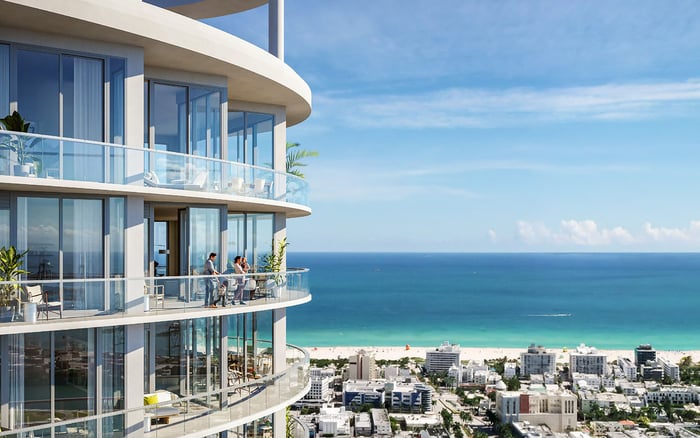
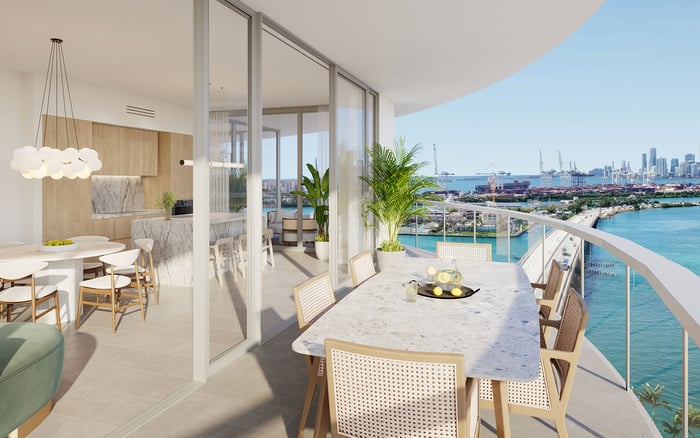
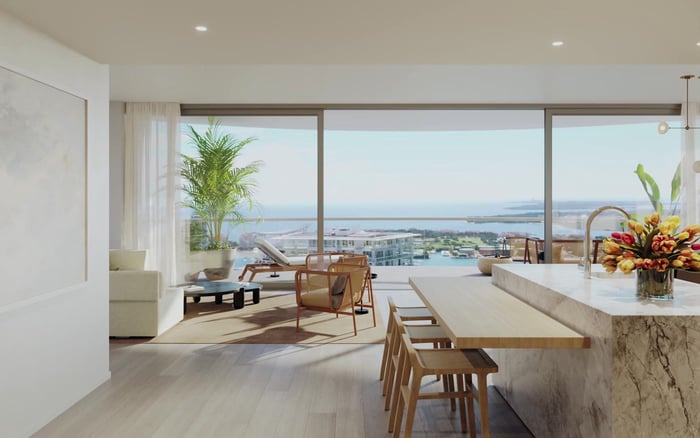
A buyer-focused editorial on how Five Park Miami Beach can be evaluated as a design-forward, highly serviced, infrastructure-rich base for internationally mobile owners.
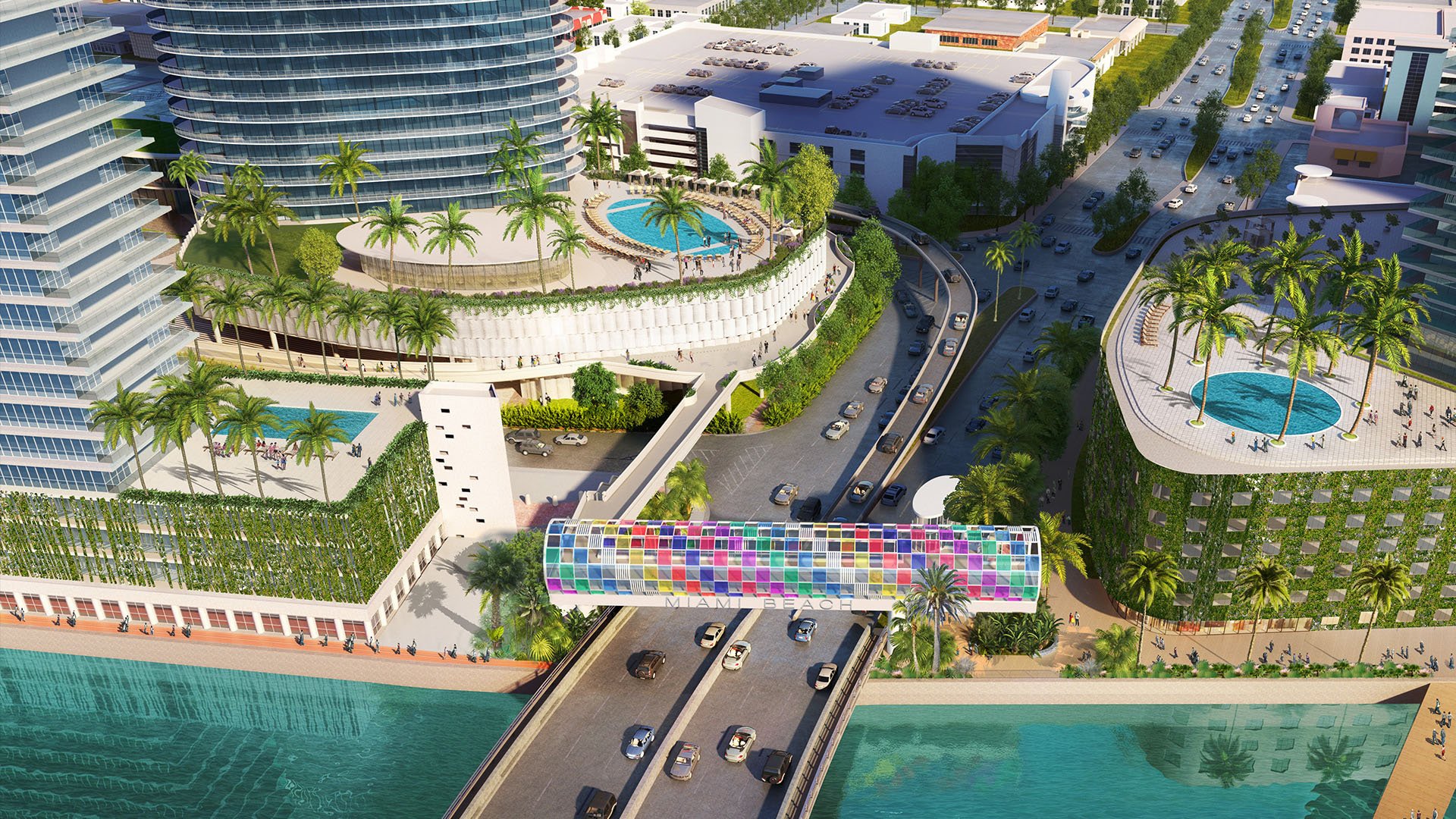
For the buyer who moves between continents, a residence is not simply a place to admire. It is a private operating base. The building must receive the owner gracefully after long-haul travel, maintain continuity during absences, and preserve calm when the calendar is moving faster than the household. In that context, Five Park Miami Beach deserves attention not only as a design-forward tower, but as a building presented around service, infrastructure, and practical residential function.
This distinction matters. International buyers often begin with architecture, views, finishes, and reputation. Those elements are important, but they do not fully answer the travel question. A globally mobile owner needs to know whether the residence can remain ready while they are away, feel intuitive when they return, and support a lifestyle that may shift among Miami, New York, London, São Paulo, Madrid, Dubai, or other recurring points on a private map.
Five Park Miami Beach is positioned as highly serviced and infrastructure-rich. For this audience, those words carry specific weight. They point to a building that should be evaluated through the lens of continuity: staffing, maintenance philosophy, owner support, privacy, arrival experience, vertical circulation, security posture, storage logic, and the ease of moving from one mode of life to another.
A conventional second residence can be evaluated around seasonality. A travel-intensive residence is different. It must function during short stays, longer periods of occupancy, and unpredictable transitions. The buyer may arrive late, leave early, host family with little notice, or need the home to remain polished while unoccupied.
For this reason, the essential question is not only whether Five Park Miami Beach looks refined. It is whether the building’s service culture and physical systems support a lock-and-leave rhythm without making ownership feel remote or impersonal. The ideal outcome is quiet reliability. Doors open, routines resume, and the owner does not feel penalized for being absent.
The Miami Beach buyer in this category is often disciplined. They compare buildings less by surface glamour than by how each property reduces friction. The residence should protect time, simplify re-entry, and preserve privacy. This is where a design-forward building becomes more than aesthetic. When successful, design choreographs movement, anticipation, and ease.
Service is sometimes discussed as luxury language, but for frequent travelers it is a practical matter. A highly serviced building can shape how a buyer experiences arrival, departure, deliveries, guest coordination, maintenance, and the subtle handoff between personal life and building operations. The best service environments are neither theatrical nor intrusive. They are precise, discreet, and consistent.
At Five Park Miami Beach, the service proposition should be understood as part of the purchase rationale. Buyers should ask how the building is intended to support owners who are not always present. They should study how communication works, how staff access is governed, what protocols exist for residences during extended absences, and how privacy is protected when an owner’s schedule is complex.
This is especially important for principals whose households include assistants, advisors, family offices, household staff, or rotating family members. The home must be elegant, but the building must also be legible. Everyone with a legitimate role should understand how the residence functions, while the owner’s privacy remains intact.
Infrastructure-rich residential towers appeal to international buyers because the most valuable luxury is often what does not go wrong. Behind the visible architecture are the systems, procedures, and building standards that determine whether ownership feels effortless over time.
For a frequent traveler, infrastructure can mean the difference between a beautiful apartment that requires constant intervention and a residence that supports a composed lifestyle. Buyers should look closely at the building’s operational logic. How resilient does the property feel? How well organized are the common areas? How does the building handle movement, service, access, and owner requests? How is the experience designed when multiple residents arrive during peak periods?
None of these questions requires spectacle. In fact, the most persuasive answers are usually quiet. The building feels ordered. Staff interactions feel natural. Private and public zones are clearly understood. The owner senses that the property has been conceived for real life, not only for presentation.
The strongest case for Five Park Miami Beach is the combination of design ambition with day-to-day utility. A globally mobile buyer does not have to choose between beauty and function, but the balance must be examined carefully. A dramatic residence that fails operationally can become burdensome. A practical residence without emotional resonance can feel temporary. The best international base offers both.
For this reason, buyers should tour with a different eye. They should imagine arriving with luggage, returning after weeks away, coordinating family visits, receiving guests, managing wardrobe needs across climates, and shifting from work mode to leisure mode within minutes. The architecture should help that transition. The service model should make it easier. The building’s infrastructure should create confidence.
This is where Five Park Miami Beach can be read as more than a local address. It is a possible platform for owners whose Miami life is deeply connected to elsewhere. The value is not merely in occupying the residence, but in knowing it is ready when the owner is not.
A serious buyer should define the purchase brief before falling in love with the residence. Is the goal a primary Miami base, a second home, a family gathering point, a seasonal residence, or a long-term hold with personal use? Is the buyer prioritizing design, service, privacy, simplicity, or future flexibility? The sharper the brief, the more useful the showing becomes.
Some buyers may internally classify the opportunity under new construction, investment, ultra-modern, or top project criteria. These labels can help organize a search, but they should not replace deeper diligence. A building that works for international travel must be judged by its ability to reduce friction repeatedly, not merely by its launch narrative.
The buyer should also consider how the residence will be used by others. A spouse, children, parents, guests, assistants, or household team may interact with the building in different ways. The best purchase will make those interactions feel intuitive while preserving the owner’s control.
The right questions are practical. What is the expected owner experience when away for extended periods? How are service requests handled? What procedures govern access to the residence? How does the building support privacy? How are deliveries, guests, and maintenance coordinated? What is the approach to common-area upkeep and operational consistency?
Financial diligence also matters. A buyer should review association documents, ongoing obligations, rules affecting use, and any restrictions that may influence how the residence can be occupied. For a globally mobile owner, the issue is not only cost. It is predictability. The residence should not introduce surprises when the owner is several time zones away.
Legal, tax, estate, and ownership-structure advice should be handled with appropriate professionals. International buyers often need clarity on title, entity use, succession planning, insurance, and cross-border implications. A polished building can still be the wrong fit if the ownership structure is not aligned with the buyer’s broader life.
Five Park Miami Beach should be approached as a lifestyle infrastructure decision. Its appeal for frequent international travelers lies in the way it is presented: design-forward, highly serviced, and infrastructure-rich. Those characteristics are especially relevant for owners who value the ability to arrive, depart, and return without friction.
The most discerning buyer will not stop at the surface. They will test the building against lived scenarios: a late arrival, a sudden departure, a month away, a family visit, a service request, a private dinner, a quiet morning after an overnight flight. If the building supports those moments with discretion and competence, it moves from being attractive to being genuinely useful.
For global buyers, that is the standard. The residence must be beautiful enough to inspire, organized enough to trust, and service-oriented enough to remain steady when life is in motion.
Is Five Park Miami Beach suitable for frequent international travelers? It is presented as a design-forward, highly serviced, infrastructure-rich tower, making it relevant for buyers who need a practical Miami Beach base.
What should a travel-focused buyer evaluate first? Start with service, privacy, access protocols, maintenance support, and how the building handles arrivals and absences.
Is design the main reason to consider the building? Design matters, but frequent travelers should weigh it alongside operational reliability and day-to-day ease.
Can Five Park Miami Beach work as a second home? It may suit a second-home strategy if the buyer’s due diligence confirms that the service model and building rules match their use pattern.
Why is infrastructure important in a luxury residence? Infrastructure supports consistency, privacy, and confidence, especially when an owner is often away from the property.
Should international buyers review ownership structure before purchasing? Yes. Cross-border buyers should obtain professional guidance on legal, tax, estate, and insurance considerations.
What makes a building practical for lock-and-leave living? Clear procedures, dependable communication, privacy controls, and maintenance support all contribute to a stronger lock-and-leave experience.
Is Five Park Miami Beach only about seasonal use? No. The stronger lens is flexibility, including short stays, longer occupancy, and repeated transitions between travel and residence.
How should buyers compare it with other luxury buildings? Compare the lived experience, not just the presentation: arrival flow, service quality, privacy, rules, and operational calm.
What is the best way to shortlist comparable options for touring? Start with location fit, delivery status, and daily lifestyle priorities, then compare stacks and elevations to validate views and privacy.
For a confidential assessment and a building-by-building shortlist, connect with MILLION.
If branded residences are on your mind — as a home or as an allocation — we would be glad to share what we are seeing, privately.
Begin a quiet conversation