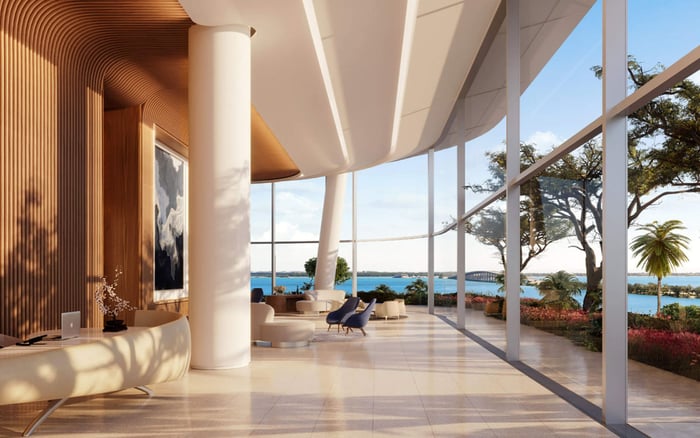
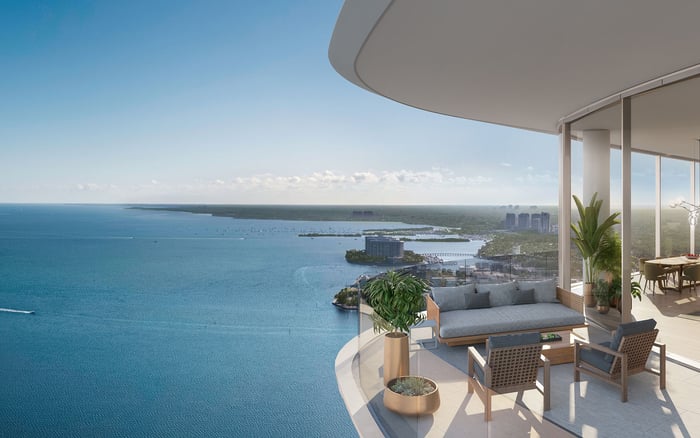
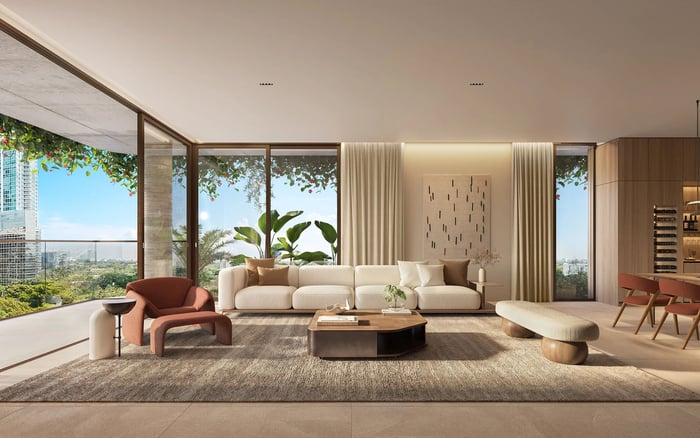
A discreet buyer’s guide to evaluating privacy in glass-wall residences, with practical attention to sightlines, lighting, shades, terraces, and daily household routines.
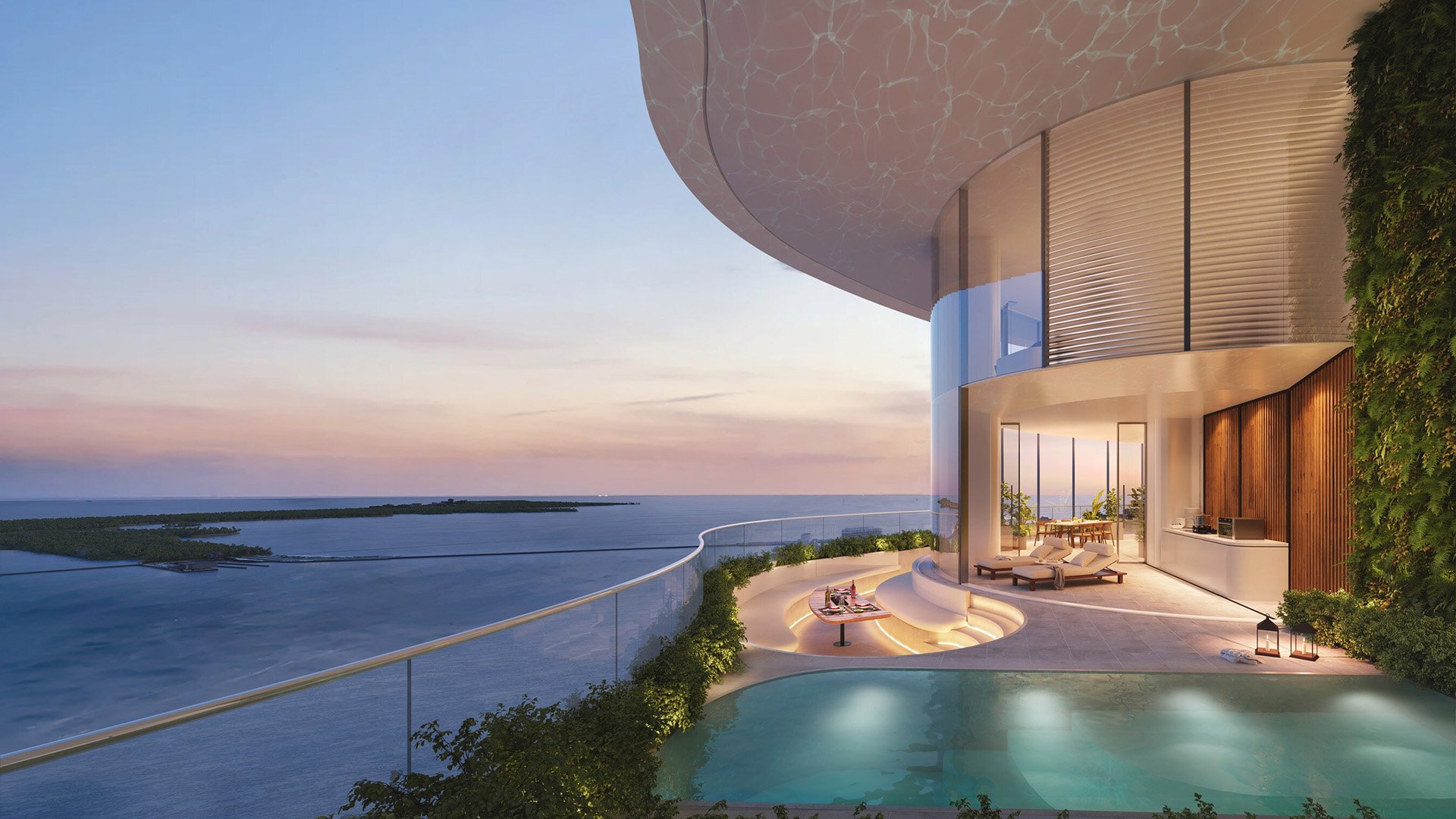
The question behind 619 Residences by Foster + Partners + Nobu Hospitality: How Households Should Think About Glass-Wall Privacy is ultimately one of lifestyle discipline. Glass is seductive because it makes a residence feel larger, brighter, and more connected to the city, the water, or the horizon. Yet the same transparency that creates drama can also expose daily life when a household has not studied how the home will be used from morning through evening.
For South Florida buyers, the issue is rarely whether glass walls are desirable. They often are. The more refined question is whether the residence offers enough control. Privacy in a transparent home comes from layered decisions: floor height, setback, glazing orientation, terrace depth, interior planning, shade systems, landscape screening, lighting design, and the angles from which neighbors, streets, boats, or adjacent towers may look toward the home.
A well-composed glass residence should feel expansive from inside and calm from outside. It should allow an owner to host with confidence, retreat without ceremony, and move through daily routines without feeling staged. That is the standard buyers should apply, whether they are evaluating a Brickell tower, a waterfront second home, or an ultra-modern residence designed around sweeping views.
Privacy is best evaluated by standing where other people stand. A buyer should look from the elevator approach, amenity deck, neighboring tower line, marina edge, street level, and any nearby terrace. The question is not simply what the residence sees. It is who can see back, at what distance, and at what hours.
Glass-wall homes often change character throughout the day. In daylight, reflections can protect interiors. At night, illuminated rooms can become more visible, particularly when the exterior is dark and the interior lighting is bright. A living room that feels discreet at noon may feel exposed after dinner unless lighting scenes, window treatments, and furniture placement have been considered together.
High floors can help, but height alone is not a privacy plan. Some elevated residences face other elevated residences. A penthouse may enjoy exceptional openness, yet still require thoughtful treatment in bedrooms, baths, closets, and family rooms. The most private home is not always the highest one. It is the one whose exposures, angles, and routines align.
The primary suite deserves special scrutiny. A bed placed directly against a full-height glass wall may look spectacular in a rendering, but the household should test nighttime visibility, morning sun, shade pockets, and the path between bed, bath, and closet. Bathrooms require even more precision. Frosted zones, interior partitions, motorized treatments, and careful fixture placement can preserve the spa effect without sacrificing discretion.
Kitchens and dining rooms raise a different concern. These are active spaces, with staff, family, deliveries, and guests moving through them. If the kitchen is visible from an adjacent building or terrace, buyers should ask whether millwork, island orientation, or lighting can soften the view. Privacy is not only about hiding. It is about controlling what feels public and what remains domestic.
Living rooms and media rooms benefit from flexibility. A transparent room may be ideal for entertaining, then need a more cocooned feeling for a quiet evening. Balcony depth can make a meaningful difference, creating a buffer between interior life and the outside gaze. When terraces are deep enough to hold furniture and planting, they can function as both outdoor rooms and privacy filters.
Window treatments should be discussed early, not treated as an afterthought. In a serious glass-wall residence, shades are part of the architecture. Buyers should ask how pockets are concealed, whether treatments are motorized, how blackout and sheer layers work, and whether controls can be programmed by room or scene. A single shade solution rarely suits every exposure.
Lighting is equally important. Bright ceilings and exposed interiors can flatten a room against glass at night. Softer lamps, cove lighting, directional art lighting, and dimmable scenes create depth, allowing the residence to glow rather than announce itself. The goal is atmosphere, not glare.
Materials can also manage visibility. Textured stone, warm wood, soft drapery, sculptural screens, and layered planting give the eye places to rest. Waterview homes often lean heavily on openness, but the most elegant ones still include moments of enclosure. New-construction buyers should ask how much of this has been resolved by the design team and how much will be left to the owner after closing.
A privacy review should be practical and unromantic. Visit at different times if possible. Ask how the home performs at sunrise, midday, sunset, and late evening. Study the view from seated positions, not only from the center of the room. Consider children, guests, staff, pets, remote work, wellness routines, and entertaining patterns.
For households that value discretion, the best glass-wall residence is not the one with the most glass. It is the one with the most intelligent control. Transparency should be a privilege, not a burden. When architecture, interiors, technology, and daily life are aligned, glass becomes liberating rather than revealing.
Is a glass-wall residence automatically less private? No. Privacy depends on orientation, distance, height, lighting, shades, and how the floor plan is organized.
What is the first privacy issue to test? Start with sightlines. Determine who can see into the home, from where, and at which times of day.
Do higher floors always solve privacy concerns? Not always. High floors can help, but nearby towers, amenity decks, and angled exposures may still matter.
Are motorized shades essential in a glass residence? They are often highly valuable because they let owners adjust privacy, glare, and mood with precision.
Should buyers evaluate privacy during the day or at night? Both. A home that feels private in daylight may become more visible after dark when interiors are illuminated.
Which rooms need the most privacy planning? Bedrooms, bathrooms, closets, family rooms, and workspaces usually deserve the closest review.
Can terraces improve privacy? Yes. A well-planned terrace can create distance, soften sightlines, and add planting or furniture as a visual buffer.
Does darker glass guarantee privacy? No. Glass tone may help in some conditions, but lighting, angle, and nighttime visibility remain important.
What should families consider beyond views? Families should consider routines, children’s rooms, guest flow, staff movement, and how often the home is used for entertaining.
What defines a successful transparent home? It should feel open, calm, and controllable, with privacy available whenever the household needs it.
For a tailored shortlist and next-step guidance, connect with MILLION.
If branded residences are on your mind — as a home or as an allocation — we would be glad to share what we are seeing, privately.
Begin a quiet conversation