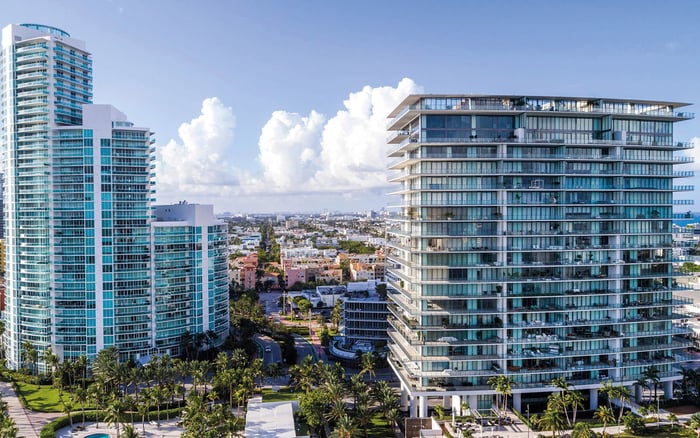
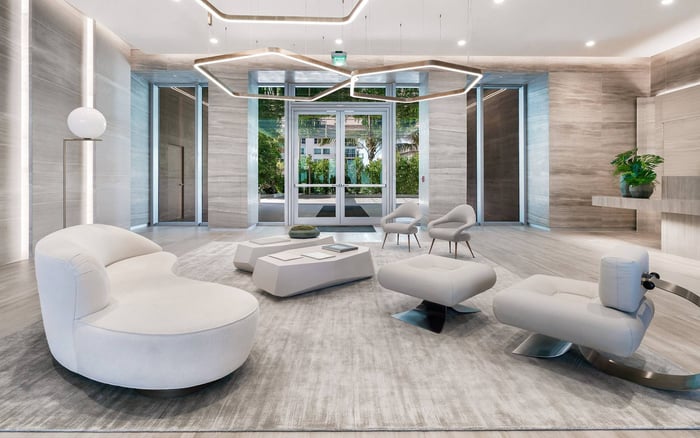
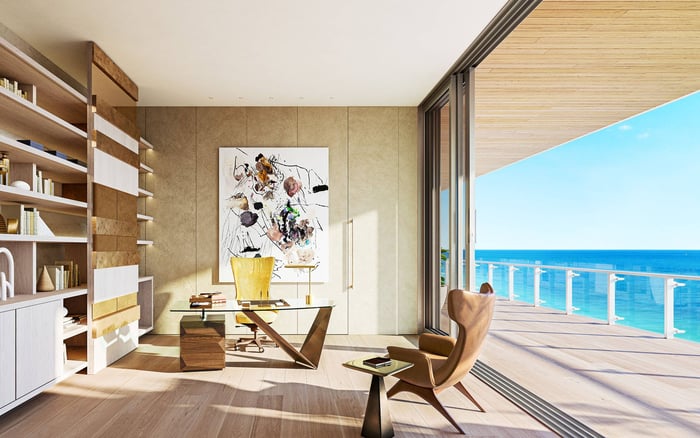
A lifestyle-focused guide to Five Park Miami Beach for luxury buyers moving from large waterfront estates into a more service-rich, managed residential environment.
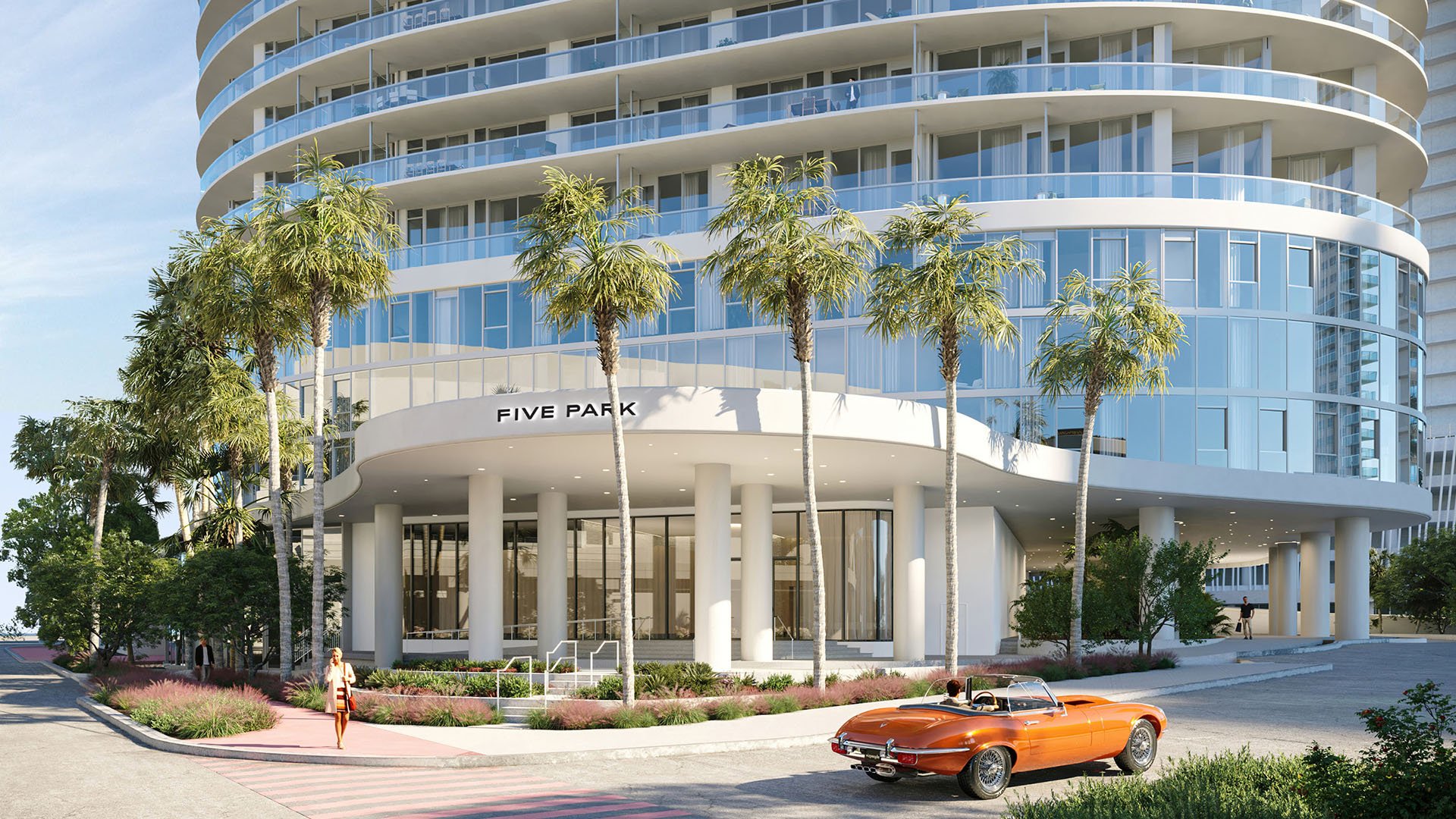
For many high-net-worth owners, leaving a waterfront estate is not a retreat from luxury. It is a recalibration of how that luxury should function day to day. The private lawn, dock-centered routine, systems oversight, household staffing, and constant property coordination can become less compelling when travel, time efficiency, privacy, and convenience matter more than acreage.
That is the lens through which Five Park Miami Beach should be understood. It is a high-service, vertically organized alternative for buyers who still want Miami Beach, but no longer want the operational weight of a large standalone estate. The appeal is not simply smaller square footage. It is the move from personal management to curated access, from owning every function privately to living within a professionally maintained residential ecosystem.
For the right buyer, Five Park Miami Beach is a lifestyle decision before it is a real estate decision. The question is not whether a tower can replicate an estate. It cannot, and it should not try to. The more relevant question is whether a service-rich building can preserve the parts of estate living that still matter, while quietly removing the parts that no longer do.
Waterfront estates give owners direct control: private grounds, private outdoor areas, private entertaining space, and often a direct relationship to the water. That control is meaningful, especially for buyers who use the full scale of their property and value land as part of their identity.
Five Park proposes a different equation. Its model centers on curated services, managed amenities, shared spaces, and reduced responsibility for the physical property. Instead of coordinating grounds, systems, staff, and maintenance, the resident enters a building environment designed to absorb much of that friction.
The tradeoff is clear. Buyers coming from waterfront estates surrender private land and dock-oriented living. In exchange, they gain professionally maintained settings for wellness, entertaining, outdoor relaxation, and everyday convenience. The value shifts from exclusive ownership of every component to dependable access within a managed environment.
That distinction matters. A buyer who still wants a private dock, extensive land, or the ceremonial rhythm of estate ownership may remain better suited to single-family living. A buyer who travels frequently, uses only a portion of a large property, or wants to preserve Miami Beach access without daily oversight may find the vertical model more intentional.
The strongest Five Park buyer is not necessarily downsizing for financial reasons. This is a buyer with options, choosing less operational complexity because time has become the more precious asset. The private residence remains important, but the broader lifestyle field expands to include amenity spaces, park access, beach-related facilities, service touchpoints, and the convenience of South Beach proximity.
This is where the project’s urban park integration becomes central. Rather than relying solely on a private lawn, Five Park frames green space as part of a broader residential proposition. For someone leaving a large property, that can change the emotional calculation. Outdoor life is not eliminated; it is reorganized.
The same applies to entertaining. A waterfront estate may offer highly personal hospitality, but it also requires planning, staffing, setup, maintenance, and cleanup. A managed residential environment can replace some of those functions with shared spaces designed for use without the same level of personal coordination. The result is not less luxury, but a different delivery system for it.
Miami Beach remains the anchor. Former estate owners often do not want to leave the island’s cultural rhythm, dining access, social energy, or beach lifestyle. They may simply want to stop managing a standalone property as if it were a private operating company.
Five Park’s positioning is especially relevant for buyers who still want privacy, security, refined design, and social access, but prefer those qualities delivered through a building ecosystem. That mindset also explains why buyers may compare it with other Miami Beach condominium choices such as 57 Ocean Miami Beach, The Perigon Miami Beach, or Apogee South Beach when evaluating how different buildings interpret the island lifestyle.
The broader market context is the rise of branded residences and full-service luxury towers that combine hospitality, wellness, residential privacy, and managed convenience. Five Park sits within that larger movement, but its estate-to-tower appeal is more specific. It speaks to owners who know what scale feels like, and who are now asking whether scale still serves the way they live.
Estate owners often measure value through land, frontage, interior scale, and private outdoor areas. In a vertical residence, the calculation changes. Usable lifestyle space can include the private home, shared amenity environments, green space nearby, beach-related access, and the service infrastructure that makes those elements easier to enjoy.
This does not mean deeded square footage becomes irrelevant. It means the buyer should evaluate the full pattern of use. How often are the formal rooms used? How often is the lawn used? How much of the property requires attention simply because it exists? How much time is spent coordinating the residence instead of inhabiting it?
For a frequent traveler, the answer may point toward a building like Five Park. Lock-and-leave simplicity, fewer personally managed assets, and a more predictable service structure can become central advantages. For a buyer who hosts constantly on private land or bases life around boating, the calculus may differ.
As a buyer’s guide framework, the most useful exercise is to map estate functions into three categories: what must remain private, what can be shared if executed well, and what can disappear entirely. Five Park is compelling when many former estate functions migrate comfortably into the second and third categories.
Luxury real estate decisions are rarely only practical. A waterfront estate carries identity, privacy, memory, and a sense of arrival. Moving into a tower can feel like a psychological shift, even when the building is highly refined.
That is why Five Park should not be framed as a compromise. It is better understood as a lifestyle edit. The owner is not giving up Miami Beach. The owner is reducing the number of assets that require personal oversight and increasing the number of experiences delivered through a managed setting.
The most successful transitions are made by buyers who are honest about how they actually live now, not how they lived when they acquired the estate. If family patterns have changed, travel has increased, or the property’s scale is no longer fully used, a service-rich residence can feel more aligned with the current chapter.
Is Five Park Miami Beach best described as downsizing? Not necessarily. For many buyers, it is more accurate to call it lifestyle recalibration, with less property oversight and more curated access.
What is the main tradeoff for a waterfront estate owner? The core tradeoff is less private land and dock-oriented living in exchange for professionally maintained shared spaces and building services.
Who is the strongest buyer profile for Five Park? The strongest fit is a high-net-worth buyer who travels often, values Miami Beach access, and wants lower operational friction.
Does Five Park replace every function of an estate? No. It replaces some functions, including managed entertaining, wellness, outdoor enjoyment, and convenience, but not private acreage or direct estate control.
Why does the park setting matter? The park setting helps make green space part of the lifestyle proposition, rather than relying only on private lawns.
Is Five Park only for buyers leaving large homes? No. Its service-rich model can also appeal to buyers who want Miami Beach with a more managed, flexible residential structure.
How should buyers evaluate amenity value? Buyers should consider how often they will use private residence areas, shared spaces, green access, and beach-related facilities together.
What should estate owners be cautious about? They should be honest about whether they still need private land, boating convenience, and full control over outdoor areas.
How does Five Park relate to the broader luxury market? It reflects a broader preference for full-service residential environments that combine hospitality, wellness, privacy, and convenience.
What is the best way to shortlist comparable options for touring? Start with location fit, delivery status, and daily lifestyle priorities, then compare stacks and elevations to validate views and privacy.
If you'd like a private walkthrough and a curated shortlist, connect with MILLION.
If branded residences are on your mind — as a home or as an allocation — we would be glad to share what we are seeing, privately.
Begin a quiet conversation