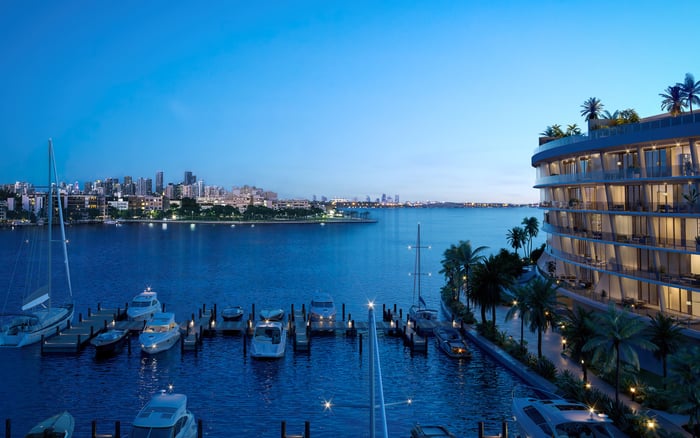
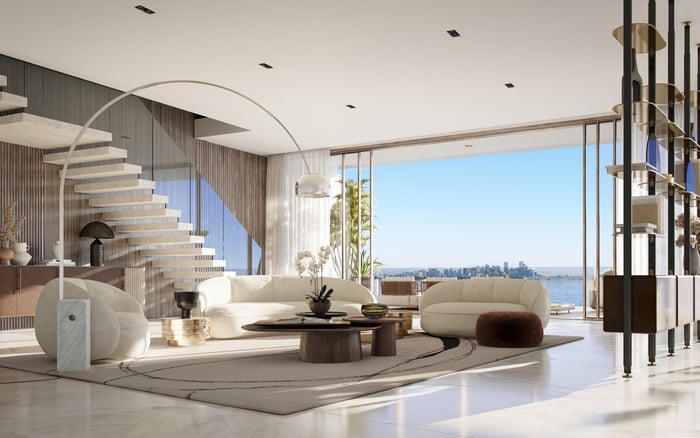
A collector-centered due-diligence framework for assessing display walls, daylight exposure, environmental stability, security, deliveries, and installation planning before choosing a residence at Vita at Grove Isle.
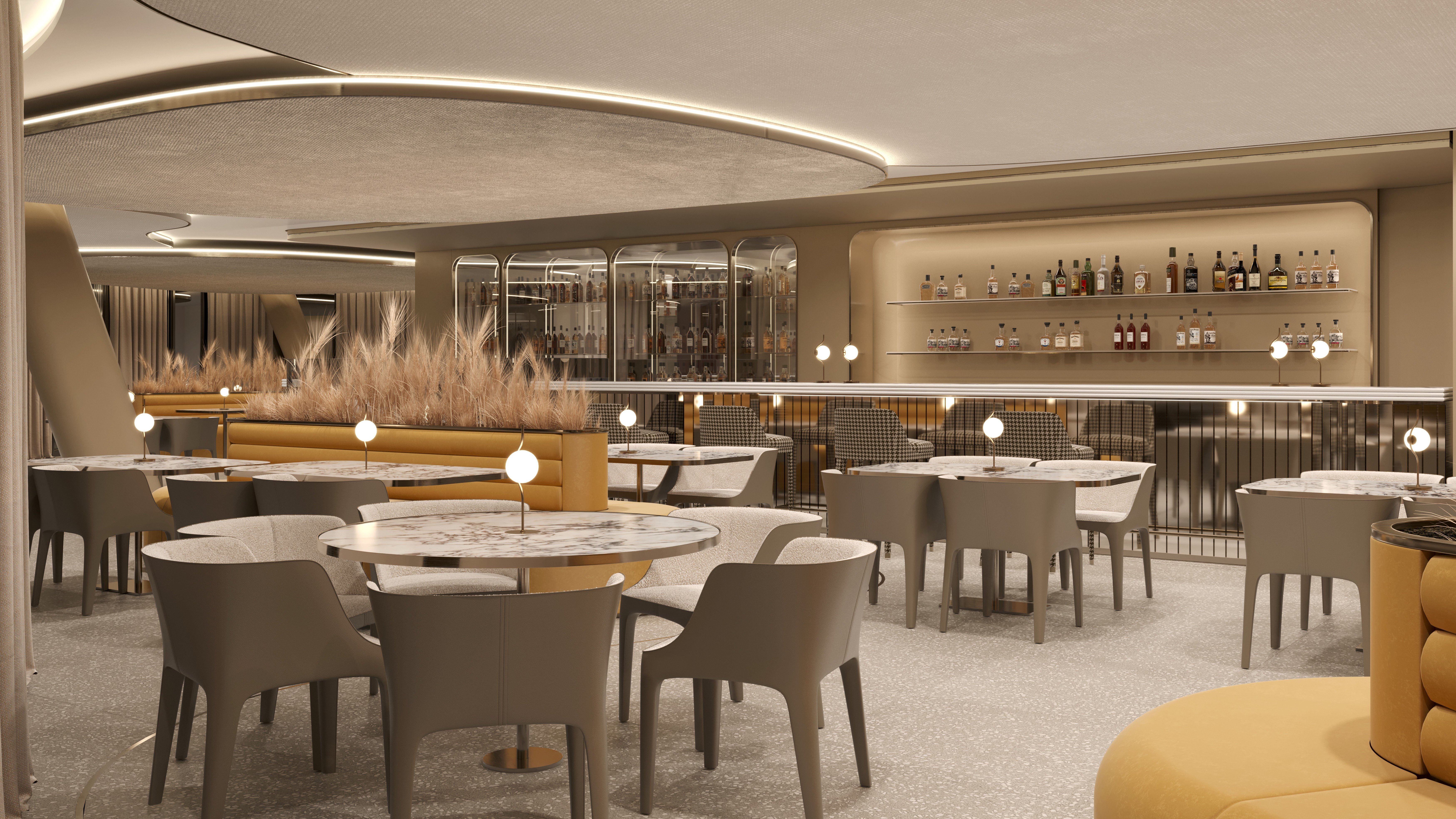
For an art collector, a beautiful residence is not necessarily a suitable one. At Vita at Grove Isle, the essential question is whether a particular home can accommodate the collection’s scale, media, conservation requirements, movement, and insurance protocols without compromising daily life.
That inquiry should precede furniture plans and decorative finishes. Prepare an inventory organized by size, weight, medium, framing method, light sensitivity, and environmental needs. Then map those requirements onto the exact residence under consideration. Renderings and broad descriptions cannot replace a measured plan, a technical walk-through, and written confirmation from the appropriate building and project representatives.
This diligence is especially important in a lifestyle purchase, where views and openness may command attention while the collection requires restraint, shade, stable conditions, and uninterrupted walls.
Request a room-by-room daylight study for the specific orientation and elevation under consideration. Evaluate direct sun, reflected glare, seasonal shifts, and the duration of exposure on every potential display surface. Review window treatments for coverage, side gaps, automation, power supply, and integration with lighting controls.
Ask whether glazing performance, including ultraviolet filtering, has been independently documented. Do not assume tinted or high-performance glass provides conservation-grade protection. A conservator or lighting designer can help establish suitable exposure limits for individual works.
Artificial lighting warrants equal scrutiny. Confirm fixture locations, beam control, dimming range, color rendering, heat output, and whether ceilings can accommodate additional tracks or recessed equipment. The objective is not simply dramatic illumination, but flexible, low-impact lighting that can adapt as the collection rotates.
A floor plan may suggest long walls that are interrupted in practice by doors, controls, millwork, air returns, switches, sprinklers, or sightlines. Commission field measurements and prepare elevations for every candidate wall. Record clear width and height, nearby glazing, furniture depth, viewing distance, and circulation around sculpture.
The design and architecture review should also establish what lies behind each finished surface. Ask about stud type, backing, utilities, acoustic assemblies, allowable penetrations, and permitted anchoring systems. For heavy works, obtain written structural guidance rather than relying on a general contractor’s assumption.
Collectors comparing layouts might apply the same wall-by-wall analysis to Four Seasons Residences Coconut Grove. The useful comparison is not which presentation appears most expansive, but which exact residence offers the best ratio of display surface to daylight, circulation, and service constraints.
Residential security is only one layer of collection protection. Request a confidential discussion covering arrival procedures, visitor screening, service access, camera coverage, key and credential management, incident response, backup power, and coordination with private security or insurers. Sensitive details should be shared through appropriate channels rather than circulated casually.
Within the residence, determine whether dedicated alarm zones, discreet sensors, secure storage, and independent monitoring can be installed. Confirm who may access system data and how contractors are credentialed. Security must remain effective during unpacking, installation, maintenance, and private events, when normal routines are most likely to change.
Temperature alone is not an adequate measure of environmental performance. Ask about the intended approach to humidity control, zoning, sensor locations, filtration, condensate management, fresh air, and expected performance during vacancy or power disruption. Then compare those answers with the tolerances specified by the collection’s conservator and insurer.
Portable readings taken during a brief tour provide only a snapshot. A more meaningful review examines stability over time, variation between exterior and interior walls, conditions near glazing, and recovery after doors open. Request clarity on whether supplemental dehumidification, monitoring, or backup systems may be added-and who is responsible for maintenance.
Waterfront ownership makes this diligence particularly consequential, but no location label can substitute for measured performance. Evaluate the residence as an environmental envelope composed of interacting systems, not simply as a thermostat setting.
Map the entire route from vehicle arrival to final wall position. Confirm loading procedures, advance-notice requirements, permitted hours, insurance documentation, elevator dimensions and capacity, door clearances, turning radii, floor protection, staging areas, and rules governing crates or rigging.
Large works may fit within a room yet fail to clear an elevator door or corridor turn. Sculpture raises additional questions about concentrated loads, vibration, anchoring, and balcony or terrace placement. Obtain approvals before purchase whenever an installation may affect structure, waterproofing, common areas, or exterior appearance.
The same discipline can guide a comparison with The Well Coconut Grove. Within Coconut Grove, the decisive distinction for a collector may be operational rather than aesthetic: which specific home and building process can receive, protect, and service the collection with the least friction.
Before committing, assemble a dossier containing measured plans, wall elevations, daylight analysis, environmental targets, security requirements, delivery diagrams, installation approvals, and relevant correspondence. Include contingencies for vacancy, storms, power interruption, leaks, and emergency removal.
The buyer’s-guide principle is straightforward: convert attractive promises into testable requirements. At Vita at Grove Isle, the strongest collector decision will emerge from alignment among the residence, building procedures, conservation advice, insurance conditions, and the works themselves.
Should a collector rely on a sales floor plan for wall measurements? No. Commission field measurements and elevations for the exact residence before assigning works.
Does tinted glass eliminate ultraviolet risk? Not necessarily. Request documented glazing performance and have a conservator assess sensitive pieces.
What should a daylight study examine? It should assess direct sun, reflected glare, exposure duration, seasonal variation, and shade coverage.
How can a buyer confirm that a wall will support heavy art? Obtain details on wall construction, backing, utilities, anchoring permissions, and structural limits.
Which climate readings matter most for a collection? Monitor temperature and relative humidity for stability, variation, and recovery over time.
Can supplemental climate equipment be added later? Possibly, but feasibility, approvals, power, drainage, noise, and maintenance should be confirmed first.
What security questions should be asked discreetly? Privately review access control, service routes, monitoring, incident response, credentials, and in-home options.
Why measure the delivery path before buying? Elevator doors, corridor turns, clearances, and loading rules can determine whether a work can enter safely.
Who should join the technical review? Depending on the collection, include a conservator, art installer, lighting designer, insurer, and engineer.
What should be resolved before signing a contract? Resolve collection-critical conditions in writing, including installation feasibility, approvals, access, and environmental needs.
When you're ready to tour or underwrite the options, connect with MILLION.
If branded residences are on your mind — as a home or as an allocation — we would be glad to share what we are seeing, privately.
Begin a quiet conversation