A discreet buyer’s guide to evaluating wine cellar specifications, cold storage expectations, and long-term ownership value in Brickell’s luxury condominium market.
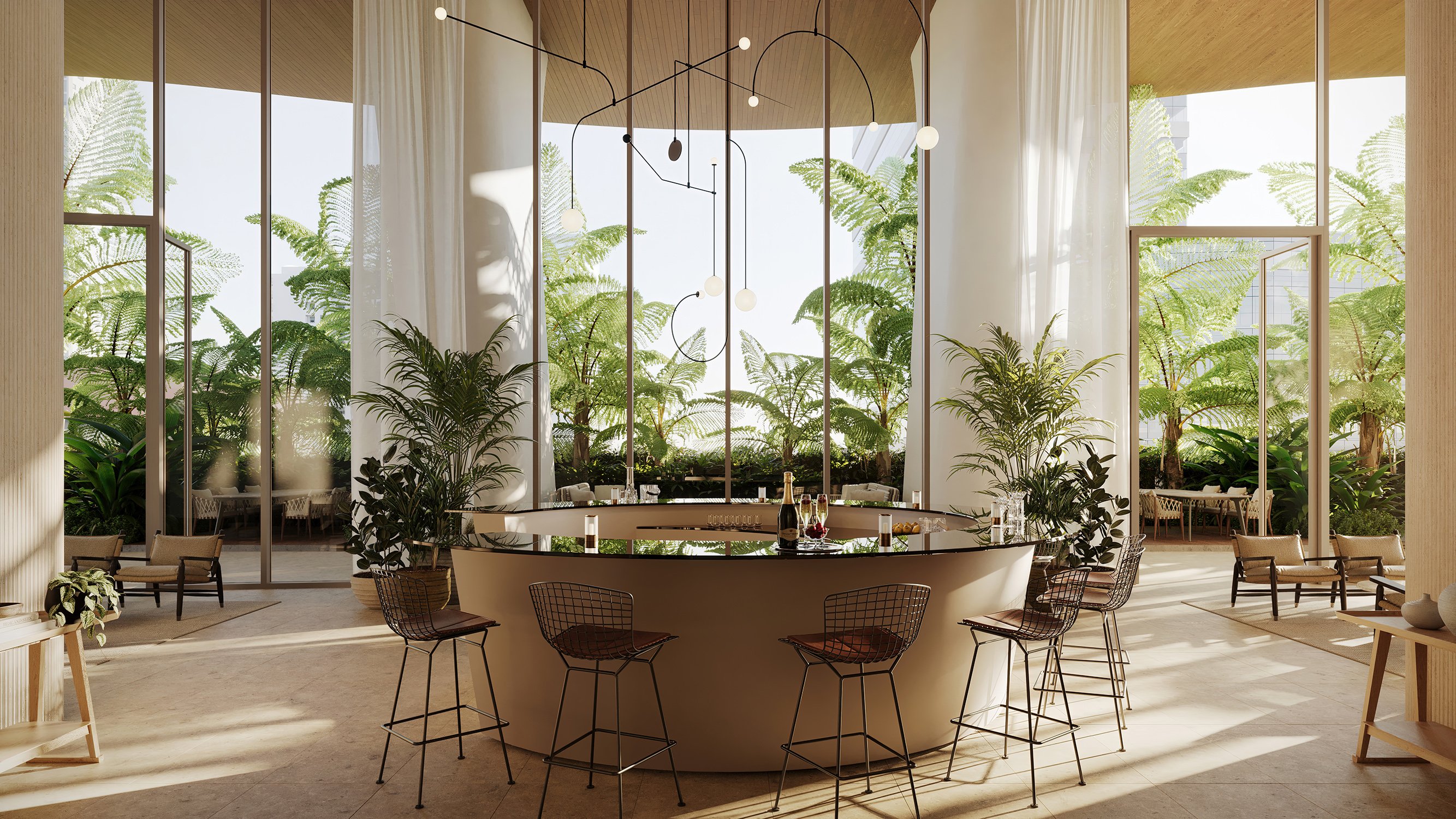
For South Florida’s most exacting condominium buyers, wine storage should be treated as more than a decorative amenity placed behind glass. It can be a technical environment, an ownership convenience, and a meaningful part of how a residence supports entertaining or collecting. In Brickell, where vertical living and private hospitality often intersect, the conversation around cold storage deserves careful review.
The topic is especially relevant for buyers comparing 1428 Brickell and SLS LUX Brickell. Both names sit within a neighborhood where residents often evaluate building services alongside parking, elevators, wellness amenities, and residence finishes. A wine feature may look romantic, but its practical value depends on how it performs and how clearly it is documented.
For a buyer considering The Residences at 1428 Brickell, the right approach is not to assume that every amenity described as wine storage performs the same way. For an owner reviewing SLS LUX Brickell, the question is similar: what exactly is included, how is access managed, and what obligations remain with the resident? In luxury real estate, the strongest answers are rarely generic.
Wine cellar specifications should begin with conditions, not aesthetics. Temperature consistency, humidity control, ventilation, insulation, lighting, vibration management, security, and backup protocols may all matter depending on the collection and the storage format. A beautiful room that cannot protect wine from heat, dry air, light exposure, or frequent temperature swings should not be treated as equivalent to a true storage solution.
In a high-rise condominium, the details can be more complex than in a single-family estate. Mechanical systems, common-area access, service corridors, staff permissions, insurance expectations, and building rules can influence how a cellar functions day to day. Buyers should ask whether wine storage is located inside the private residence, in a shared building environment, or within an amenity area. Each model carries different implications for privacy, convenience, and responsibility.
The language used in sales materials should also be read closely. “Wine room,” “wine display,” “private cellar,” “temperature-controlled storage,” and “owner wine lockers” can describe very different experiences. A collector should request written clarification before treating any phrase as interchangeable. In a pre-construction setting, this is especially important because amenity descriptions and operating details should be confirmed through current project materials.
Brickell luxury buyers increasingly evaluate a residence by how it operates, not only by how it photographs. Arrival sequences, acoustic comfort, wellness programming, service precision, and storage can all shape the ownership experience. Wine storage belongs in that same practical category when it is part of a buyer’s lifestyle.
A Brickell owner who entertains frequently may view wine storage as part of hosting. A resident who travels often may value secure, stable conditions while away. A collector may need capacity and access protocols that align with acquisition habits. A second-home buyer may be less concerned with daily display and more focused on preservation during extended absences.
This is why the specification conversation at 1428 Brickell and SLS LUX Brickell should remain practical. How many bottles can be accommodated? Are spaces assigned, leased, licensed, or included? Is access self-service or staff-assisted? Are there restrictions on deliveries? Are conditions monitored? These questions help determine whether the amenity supports occasional enjoyment or a more disciplined cellar strategy.
The first question is capacity. A resident who keeps a modest entertaining selection has different needs from a collector managing a more structured inventory. Capacity should be discussed in usable bottle terms, not simply square footage or cabinetry language.
The second question is control. A cellar should maintain stable conditions, and the buyer should understand who controls the system. If storage is inside the residence, the owner may be responsible for maintenance. If storage is building-managed, the association or operator may oversee the environment. Both structures can work, but they carry different responsibilities.
The third question is security. Luxury wine storage should address access, identification, staff handling, and guest permissions. An owner should know whether deliveries can be received by building personnel, where they are held, and how chain of custody is managed. These details can be especially important in new-construction buildings where service practices may still be taking shape.
Finally, buyers should ask about resilience. South Florida’s climate makes mechanical reliability a serious consideration for any temperature-sensitive storage. Backup power, system alarms, maintenance schedules, and response procedures are worth understanding before closing. The more important the collection, the less acceptable it becomes to rely on assumptions.
A well-designed wine storage program can enhance daily enjoyment, but it should also be viewed through an investment lens. It may not transform a residence on its own, yet it can reinforce the impression that a building is designed for sophisticated, high-touch living. In the ultra-premium segment, technical details often contribute to a broader sense of quality.
For resale, wine storage is most persuasive when it is clearly documented and easy to explain. Buyers respond better to specifics than to atmosphere. A listing that can identify capacity, location, access rights, system responsibility, and transferability will generally communicate value more effectively than one that simply references a wine feature.
There is also a lifestyle premium. In Brickell, the ability to keep wine properly stored within or near the residence can reduce friction and support more spontaneous entertaining. For the right buyer, that convenience is not ornamental. It is part of the residence’s operating logic.
The most refined comparison is not a contest of names. It is a review of documents. Buyers should request current offering materials, amenity descriptions, association documents when applicable, and any written specifications related to wine storage. If the cellar is private, confirm whether it is included in the residence or separately assigned. If it is shared, confirm access, capacity, and operational responsibility.
At 1428 Brickell, buyers should focus on what is actually delivered for the residence or building, not on assumed expectations created by the broader luxury category. At SLS LUX Brickell, existing conditions and association practices should be reviewed with equal care. In both cases, the strongest buyer is the one who treats wine storage as a system, not a photo.
A private advisor can help translate condominium and association language into practical ownership questions. The goal is simple: determine whether the cellar supports how the buyer will actually live, entertain, collect, travel, and eventually resell.
Should wine cellar specifications be reviewed before signing a contract? Yes. Buyers should confirm capacity, access, controls, and ownership rights before relying on a cellar as part of the purchase decision.
Is a wine display the same as a temperature-controlled cellar? Not necessarily. A display may be primarily visual, while a true cellar should address stable temperature, humidity, lighting, ventilation, and security.
What matters most for wine storage in Brickell? Climate control, system reliability, access protocols, and clear documentation are the most important practical considerations.
Can a shared wine room work for serious collectors? It can, if capacity, access, monitoring, and handling procedures are strong enough for the collection’s value and use pattern.
Should second-home owners pay special attention to cold storage? Yes. Owners who travel frequently should understand backup systems, staff access, and response procedures during absences.
Does wine storage automatically increase resale value? Not automatically. It is most valuable when it is well specified, transferable, easy to explain, and aligned with buyer expectations.
What should buyers ask about private in-residence cellars? They should ask who maintains the system, what capacity is practical, and whether any building rules affect installation or operation.
Why is pre-construction wine storage due diligence different? Specifications may evolve before delivery, so buyers should seek current written details rather than rely on general amenity language.
How should new-construction buyers compare projects? Compare documented performance, service structure, access rights, and long-term maintenance responsibilities, not only renderings.
Is Brickell a relevant market for wine-focused luxury living? Yes. Brickell buyers who value private entertaining and service-oriented condominium living should evaluate wine storage as part of broader due diligence.
For a discreet conversation and a curated building-by-building shortlist, connect with MILLION.
If branded residences are on your mind — as a home or as an allocation — we would be glad to share what we are seeing, privately.
Begin a quiet conversation