Cash can simplify an Armani/Casa purchase, but informed buyers also assess portfolio credit, condominium underwriting, association records, liquidity, and the future financed resale pool.

At Armani Casa Sunny Isles Beach, the distinction between being able to pay cash and choosing to do so is consequential. An all-cash offer remains a powerful signal of certainty. Yet for a sophisticated purchaser, financing is not merely a means of affording the residence. It can preserve liquidity, coordinate asset sales, and prevent an unnecessarily rigid closing strategy.
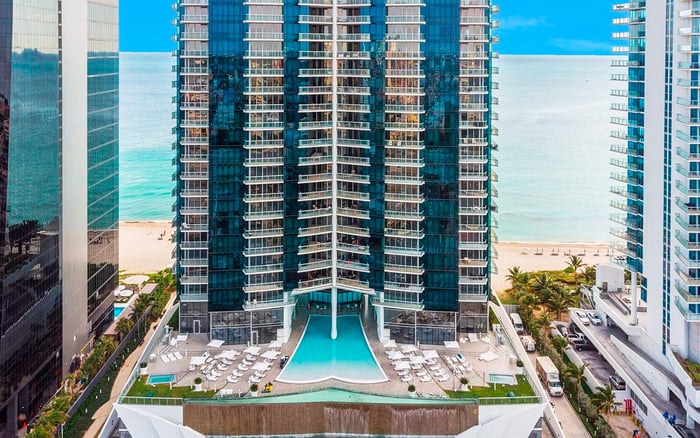
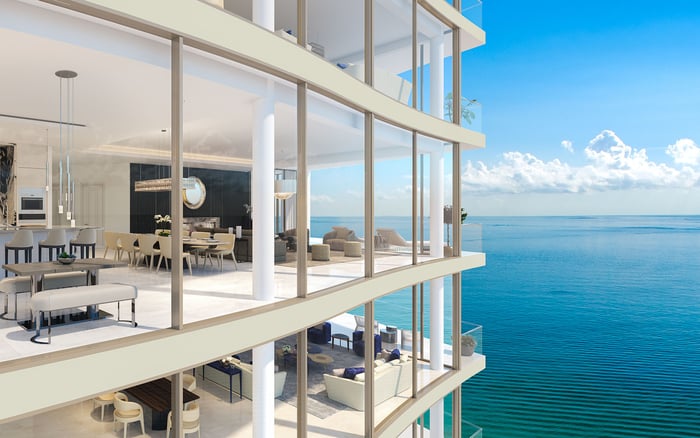
The oceanfront condominium at 18975 Collins Avenue was developed by Related Group and Dezer Development. The 60-story tower comprises 308 residences and was completed in 2019, pairing interiors directed by Giorgio Armani and Armani/Casa with architecture by César Pelli. Residences generally range from approximately 1,500 to more than 3,000 square feet, though dimensions vary by home.
This combination of scale, design authorship, and oceanfront positioning places the property firmly within South Florida's branded-residence landscape. It also makes financing diligence more nuanced than a simple review of personal net worth.
A portfolio lender generally retains a loan within its own lending book rather than relying solely on a standardized secondary-market path. That structure may allow the lender to evaluate a complex borrower, concentrated assets, or an unusual condominium residence with greater context. It is not, however, a guaranteed Armani/Casa program. Eligibility and terms depend on the borrower, the specific unit, the lender, and current condominium underwriting.
Even buyers intending to close without debt can benefit from maintaining a fully evaluated financing alternative. Credit may provide a bridge when investment holdings should not be sold on an unfavorable timetable. It can also preserve capital for other acquisitions or obligations. The objective is optionality, not leverage for its own sake.
For purchasers comparing oceanfront options such as Bentley Residences Sunny Isles or The Ritz-Carlton Residences® Sunny Isles, lender discussions should be property-specific. Approval for one condominium does not establish approval for another.
Luxury condominium lenders evaluate two credits at once: the purchaser and the project. A borrower may present exceptional liquidity, income, and collateral, while the building still receives close scrutiny. Relevant considerations can include owner occupancy, ownership concentration within a single entity, association finances, reserve funding, and potential special assessments.
Before contracting, buyers should review the declaration, bylaws, rules, audited financial statements, operating budget, reserve study, and board minutes. Any gap between funded reserves and reserve-study recommendations deserves attention. These records can influence lender acceptance and the owner's future cost profile, whether the acquisition is financed or paid in cash.
The essential principle is straightforward: cash eliminates a financing contingency, not the economic relevance of condominium health.
The tower's development history illustrates how capital events can alter marketability. Its construction financing began with a $305 million loan from Wells Fargo and Blackstone. At that point, more than 70 percent of the 308 residences were under contract for over $700 million.
A $315 million construction loan to Wells Fargo was later repaid. These distinct historical figures should not be treated as interchangeable. The payoff followed the temporary certificate of occupancy by several weeks, as move-ins and closings approached. Closings beginning in December generated proceeds used to retire the construction debt. At the time, approximately $800 million in contracts were expected to close against a planned $1 billion sellout.
Debt-free status offered an advantage, particularly for mortgage-dependent purchasers. The transition from construction debt to occupancy, closings, and repayment marked a meaningful liquidity milestone. It does not, however, establish today's reserve adequacy or guarantee present mortgage eligibility. Current documents remain indispensable.
A cash buyer can often move decisively, but speed should not displace diligence. The more durable approach is to run three tracks concurrently: legal review of condominium documents, financial review of association records, and preliminary lender analysis. If credit becomes useful, the buyer is less likely to begin underwriting under deadline pressure.
Financed purchasers can strengthen credibility by selecting a lender experienced in jumbo condominium loans and securing fully underwritten approval. Cash purchasers may use the same preparation as a fallback while keeping their contract strategy distinct from their capital strategy.
That discipline is especially useful when evaluating multiple Sunny Isles Beach opportunities, including Turnberry Ocean Club Sunny Isles. Each association, residence, and transaction calendar requires its own analysis. A broad lending indication is no substitute for unit-level and project-level clearance.
Cash does not insulate an owner from the future mortgage market. When the property is eventually offered for resale, the size of the qualified buyer pool may depend partly on whether lenders will finance the building and unit. A narrower financed pool can affect marketability and transaction timing, even when the seller originally purchased without debt.
Asking prices can vary materially by residence. One market snapshot ranged from $650,000 to $15.9 million, but such figures are neither stable nor appraisals. The investment question is therefore broader than entry price: buyers should consider liquidity at acquisition, ongoing association exposure, and the conditions a future purchaser may face.
Before making an offer, determine whether the preferred outcome is cash, financing, or cash with a post-closing credit option. Ask a qualified lender to assess both the borrower and the condominium, then confirm that approval applies to the selected residence. Review current association records with legal and financial advisers, focusing on reserves, budgets, minutes, and possible assessments.
Finally, coordinate the financing calendar with document review, appraisal requirements, and closing deadlines. The objective is not to complicate a cash purchase. It is to ensure that apparent simplicity does not conceal avoidable constraints.
Does a cash buyer need to speak with a lender before making an offer? Not necessarily, but an early lender review can preserve liquidity options and reduce pressure if the preferred funding plan changes.
Is portfolio lending a guaranteed program at Armani/Casa? No. Availability and terms depend on the borrower, residence, lender, and current condominium underwriting.
Why does the condominium's financial condition matter to a wealthy borrower? Lenders assess the project as well as the buyer, while reserves and assessments can also affect ownership costs.
Which association records deserve review? Review the declaration, bylaws, rules, audited financial statements, operating budget, reserve study, and board minutes.
Does historical debt repayment prove the building is financeable today? No. The construction-loan payoff was historically significant, but current lender acceptance requires current information.
Can cash improve an offer's credibility? Yes. Cash can signal certainty, while a financed buyer can compete more effectively with an experienced jumbo lender and fully underwritten approval.
Why obtain financing approval if the plan is to close in cash? It creates a fallback and may help the buyer avoid selling other assets on an unfavorable schedule.
Will approval for another Sunny Isles condominium transfer to Armani/Casa? Not automatically. Each project and selected residence can receive its own underwriting review.
How can financing conditions affect a future sale? Mortgage availability can expand or narrow the next buyer pool, influencing marketability and transaction timing.
Are current asking prices equivalent to appraised value? No. Asking prices are changing market snapshots and should not be treated as appraisals.
For a tailored shortlist and next-step guidance, connect with MILLION.
If branded residences are on your mind — as a home or as an allocation — we would be glad to share what we are seeing, privately.
Begin a quiet conversation