A discreet buyer’s guide to family governance, privacy planning, ownership conversations, and household protocols before acquiring a South Florida luxury home.

For families buying in South Florida, privacy is not only a matter of architecture, landscaping, elevator access, or a guarded entry. It is a governance question. The most discreet purchase begins before the first showing, when the family decides who will own the home, who may use it, how decisions will be made, and what level of visibility is acceptable.
This subject belongs in a buyer’s guide because ultra-prime homes in South Florida often become more than residences. They can function as seasonal headquarters, family gathering places, legacy assets, wellness retreats, entertainment venues, and, in some cases, the emotional center of a multigenerational estate plan. Without a clear framework, even a beautifully chosen property can create friction.
The most private buyers tend to treat the residence as both a lifestyle acquisition and a family system. That means evaluating the address, building, neighborhood, household staff, guest flow, digital exposure, and ownership structure together, not in separate conversations.
A South Florida home may be bought for winter residence, school-year convenience, boating access, a parent’s primary base, adult children’s use, or a long-term family compound. Each purpose creates different privacy needs.
A family seeking a lock-and-leave condominium may prioritize controlled arrival sequences, private elevator access, staff coordination, and building culture. A buyer considering The Perigon Miami Beach may think differently from a family focused on a low-profile single-family residence with a deep setback, dense landscaping, and private service access.
The essential question is not simply, “Do we like the home?” It is, “Can this property support how our family actually lives?” Families should discuss holiday use, overnight guests, adult children, caregivers, security personnel, private chefs, wellness practitioners, drivers, and visiting friends before contract. A home that feels private for two people may feel exposed when three generations arrive for a long weekend.
Privacy-minded buyers often begin with confidentiality, but governance should go further. The family should decide who has authority to approve a purchase, sign contracts, fund capital improvements, engage advisors, and determine when to sell. Those decisions can become delicate when siblings, spouses, adult children, or family offices are involved.
The ownership structure should be reviewed by appropriate legal and tax advisors before a contract is signed. This article cannot substitute for that advice, but the practical point is clear: the name on the contract, the funding path, the insurance profile, and the long-term succession plan should align. Changing the structure later can be more difficult than setting it correctly at the start.
For properties intended as legacy holdings, governance should also address who may stay at the home, whether use is scheduled, how expenses are shared, and what happens if family priorities change. A residence can be emotionally valuable, but emotion alone is not a management system.
South Florida offers several distinct versions of discretion. A boutique oceanfront building may offer controlled access and a smaller resident environment. A branded tower may offer hospitality-level service, but also more operational touchpoints. A private island residence may offer separation, while a mainland estate may provide autonomy and land control.
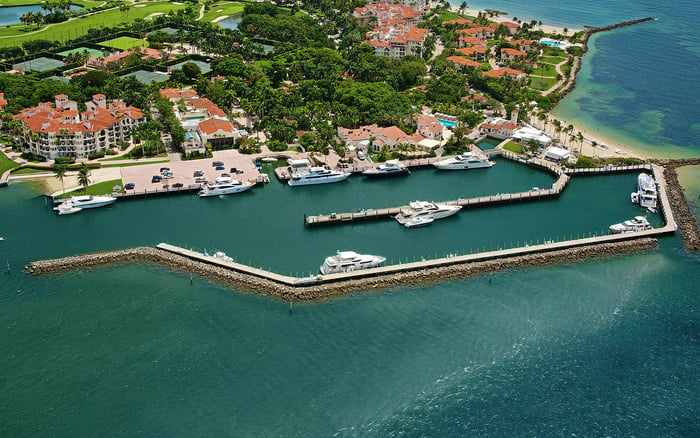
In a condominium or managed residential setting, privacy depends in part on building procedures. Buyers should understand how guests are announced, how vendors enter, how deliveries are handled, how security teams coordinate, and whether staff can access service corridors without moving through social spaces. In a building such as The Residences at Six Fisher Island, the broader expectation of privacy may be part of the lifestyle appeal, but family governance still determines how discreetly the home is used.
For Estates & Single-Family properties, the analysis shifts. The family has more control over gates, cameras, landscape screening, service entries, parking, and household staffing. Yet autonomy brings responsibility. The household must create its own protocols for vendors, maintenance, guest access, and emergency planning.
The most elegant families are often the clearest. They know when guests are welcome, whether staff may host family members, whether adult children may invite friends, and how long visitors can stay. These are not minor issues in a Florida home designed for leisure.
Without a written or clearly understood guest policy, privacy can erode gradually. A friend posts a pool image. A vendor shares a behind-the-scenes detail. A guest brings another guest. A driver learns a recurring schedule. None of these moments may be dramatic alone, but together they can compromise the quiet a family thought it had purchased.
A good governance plan addresses photography, social media, deliveries, boat days, private dining events, charitable gatherings, and children’s guests. It should be gracious, not severe. The goal is to preserve the atmosphere that made the home worth buying.
For privacy-focused families, the staff plan should be discussed alongside the floor plan. Where does a house manager work? Where do vendors park? Can groceries, luggage, florals, wine, and wardrobe trunks move without crossing formal arrival areas? Is there a separate service entrance? Can security personnel operate discreetly without making the home feel guarded?
In Coconut Grove, for example, buyers may be drawn to residential texture, canopy, and a quieter daily rhythm. A property search that includes Four Seasons Residences Coconut Grove should still consider the family’s operating style: private chef frequency, housekeeping schedules, wellness appointments, and extended family visits.
In Boca Raton, the conversation may include club life, school proximity, grandparents, and year-round living. A residence such as Alina Residences Boca Raton may appeal to buyers who want refinement and convenience, but governance remains essential if several family members will share use of the home.
Waterfront property is deeply desirable in South Florida, but it changes the privacy equation. Sightlines may come from the water as well as the street. Outdoor entertaining, dock activity, staff movement, and lighting design become part of the discretion plan.
A family considering Rivage Bal Harbour may evaluate privacy through the lens of arrival, views, amenities, and building culture. A buyer considering a private estate may evaluate seawall exposure, dock access, landscape maturity, and neighboring properties. In both cases, the family should decide how visible it wants to be and when.
Privacy is not the same as isolation. Many buyers want a residence that supports entertaining, philanthropy, wellness, and family celebrations. The art is to create a governance framework that allows life to unfold beautifully without making the household porous.
Before signing, families should hold one focused meeting with the key decision-makers and advisors. The agenda should be practical: ownership, funding, tax review, estate planning, use rights, renovation authority, staffing, security, insurance, guest rules, rental restrictions if relevant, and exit strategy.
This meeting can prevent years of confusion. It also helps the buyer’s representatives evaluate properties with greater precision. A home that seems perfect on paper may fail the family’s governance needs. Another property may appear understated yet offer the right balance of access control, livability, and discretion.
The best South Florida purchase is not only the most beautiful residence. It is the one the family can own peacefully.
When should family governance be discussed? Ideally before the purchase contract, so ownership, funding, use, and privacy expectations are aligned from the beginning.
Is governance only for large families? No. Even a couple buying a second home benefits from clear decisions about guests, staff, vendors, and future succession.
Does a private building eliminate the need for governance? No. Building procedures help, but the family still controls guest behavior, staff instructions, and household protocols.
What is the most common privacy mistake? Treating privacy as a property feature rather than a daily operating discipline involving people, access, and information.
Should children be included in the rules? Yes, in an age-appropriate way. Children and adult children should understand guest, photography, and posting expectations.
Can a home be both social and private? Yes. Clear event protocols, staffing plans, and guest expectations allow entertaining without sacrificing discretion.
Are condos or single-family homes better for privacy? Neither is automatically better. Condos may offer managed access, while single-family homes offer more direct control.
What advisors should be involved early? Buyers often coordinate legal, tax, insurance, security, household staffing, and real estate advisors before finalizing a purchase.
Should governance address future sale decisions? Yes. A clear exit framework can reduce family tension if priorities, finances, or lifestyle needs change later.
How should buyers compare privacy between neighborhoods? They should consider access, visibility, service logistics, guest flow, building culture, and the family’s daily rhythm.
If you'd like a private walkthrough and a curated shortlist, connect with MILLION.
If branded residences are on your mind — as a home or as an allocation — we would be glad to share what we are seeing, privately.
Begin a quiet conversation