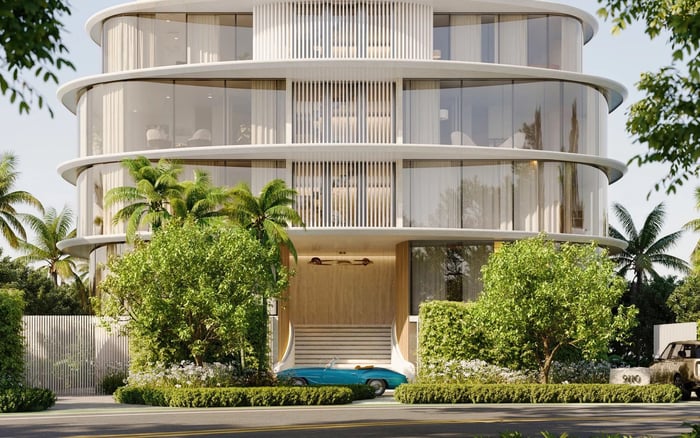
A practical luxury buyer’s guide for Buenos Aires households evaluating Fort Lauderdale homes through the lens of schools, staff, waterfront use, privacy, and daily routines.

For a Buenos Aires household considering Fort Lauderdale, the most elegant purchase is rarely defined by the view alone. It is defined by how easily the family can live on a Tuesday morning, receive guests for a long weekend, manage staff access, store sports equipment, reach appointments, and maintain the residence without constant intervention.
That is the distinction between buying a beautiful property and buying a home that performs. In a private family brief, the priorities may be as direct as Fort-lauderdale, Broward, Marina, Private-school, New-construction, and Second-home. The craft lies in translating those priorities into a property that feels effortless after closing, not merely persuasive during the tour.
For many South American buyers, Fort Lauderdale offers a quieter counterpoint to Miami while remaining firmly within South Florida’s luxury orbit. The decision should be approached as an operating plan: who uses the home, how often, with which staff, with which vehicles, on what school or club calendar, and with how much privacy from day one.
Before comparing towers, waterfront estates, or pre-construction residences, map the household week. A family with school-age children will evaluate morning departures differently from a couple using the residence as a seasonal base. A buyer with frequent visiting relatives will scrutinize guest separation, elevator flow, service corridors, parking, and the ability to host without turning the home into a hotel lobby.
The most useful questions are practical. Can the residence absorb luggage after an international arrival? Is there a comfortable place for a nanny, driver, chef, or house manager to work discreetly? Are deliveries simple, or will the family spend its first season managing loading-dock friction? Does the building culture feel residential rather than transient?
These details are not secondary in the ultra-premium market. They are the framework that allows luxury to remain private.
Fort Lauderdale is not a single residential mood. A buyer may prefer a beachfront condominium with resort services, a river-oriented residence with urban convenience, or a quieter waterfront setting calibrated for boating and privacy. The correct lane depends on the family’s daily pattern.
For buyers who value hospitality-style ease, Four Seasons Hotel & Private Residences Fort Lauderdale can be considered within a broader search for serviced living, where maintenance, arrival experience, and amenity access matter as much as the residence itself. A buyer focused on waterfront rhythm may also compare Riva Residenze Fort Lauderdale when evaluating how a home relates to water, everyday movement, and privacy.
For households that imagine a more nautical or beach-adjacent lifestyle, St. Regis® Residences Bahia Mar Fort Lauderdale belongs in a conversation about branded residential expectations, guest experience, and long-term ease of ownership. The point is not to chase a logo. It is to decide which residential ecosystem best supports how the family actually lives.
When Buenos Aires buyers discuss South Florida, the conversation often turns quickly to lifestyle. The more important conversation is coordination. If children are part of the plan, school runs, activities, tutoring, and weekend commitments should be tested against the property’s location. If the residence will be maintained while the owners are abroad, property management access and building communication become critical.
Staff logistics deserve the same attention as finishes. A house manager needs clear procedures. A chef needs functional receiving and storage. A driver needs practical parking. A family office may need predictable documentation from the building or association. These are not glamorous questions, but they protect the family’s time.
In a condominium, ask how visitors, vendors, packages, and maintenance are handled. In a single-family home, ask how security, landscaping, pool care, and storm preparation would be coordinated during absences. A residence should reduce the number of decisions the owner must make from overseas.
Water is central to the Fort Lauderdale fantasy, but waterfront ownership should be studied with discipline. The buyer should separate the romance of a view from the realities of access, storage, insurance discussions, maintenance, and security. If boating is part of the household’s identity, the residence must be evaluated around that use. If water is primarily visual, then privacy, orientation, and interior calm may matter more than direct access.
Condominium buyers should consider how often they will use the beach, pool, fitness areas, spa spaces, and private dining or club rooms. A feature used weekly has a different value than one used once per season. Single-family buyers should consider how outdoor areas will function during family visits, children’s gatherings, and extended stays.
The best waterfront residence is not always the most dramatic one. It is the one where the family’s habits and the property’s operating demands remain in balance.
New development can be compelling for buyers who want fresh design, modern systems, and a residence shaped around current luxury expectations. It also requires patience, interim planning, and careful review of what is included, what is upgradeable, and what must be handled after delivery.
A buyer comparing pre-construction options should ask how the family will live before completion, where furnishings will be sourced, who will manage design decisions, and whether the final residence will be used immediately or treated as a staged second base. Sixth & Rio Fort Lauderdale can be reviewed as part of a Fort Lauderdale search where timing, lifestyle fit, and a more urban residential rhythm are all being weighed.
Ready-now residences offer a different advantage: the household can test the building, the light, the arrival sequence, and the surrounding routine in real time. For a family relocating or spending longer seasons in South Florida, that certainty can be valuable.
Many Argentine households entertain across generations. Grandparents, adult children, friends, and business guests may arrive at different times, sometimes for extended stays. A Fort Lauderdale residence should be able to host elegantly without sacrificing the owner’s privacy.
Look for bedroom separation, generous but not performative social spaces, and a kitchen strategy that matches how the family actually eats and entertains. Some households want an open kitchen as the heart of the home. Others prefer a more discreet service flow. Neither is inherently superior. The right choice depends on the culture of the household.
Security should be approached quietly. The ideal property makes privacy feel natural, not defensive. Elevator access, lobby control, garage circulation, staff entry, and sightlines from neighboring residences all deserve attention.
The strongest buying brief is simple: identify the sources of friction the family refuses to tolerate. Long internal walks from parking to residence, insufficient storage, complicated pet policies, weak guest parking, difficult vendor procedures, noisy amenity areas, or unclear rental rules can all diminish an otherwise beautiful home.
A disciplined buyer ranks these issues before falling in love with finishes. In South Florida luxury real estate, marble, glass, and water views are abundant. Seamless household logistics are rarer. The most successful purchase is the one that lets the family arrive from Buenos Aires and feel that the residence is already working on their behalf.
What should a Buenos Aires buyer prioritize first in Fort Lauderdale? Start with the household calendar: school, staff, airport rhythm, guests, pets, cars, and waterfront use.
Is a condominium easier than a single-family home for an overseas owner? Often it can be simpler operationally, but the building’s rules, service culture, and privacy standards must fit the family.
When does a single-family home make more sense? It may suit buyers who want greater control over outdoor space, staff routines, storage, and family gatherings.
How important is building management? It is essential for owners who will be abroad, because daily communication and vendor access shape the ownership experience.
Should buyers choose waterfront property automatically? No. Waterfront appeal should be balanced against maintenance, privacy, insurance discussions, and actual boating plans.
Is pre-construction a good fit for a relocating family? It can be, but only if the family has a clear interim housing, design, and delivery plan.
What makes a residence suitable for multigenerational guests? Bedroom separation, practical parking, quiet common areas, and intuitive service flow are especially important.
How should buyers evaluate branded residences? Focus less on the name and more on service standards, privacy, maintenance, and how the building will function daily.
Can a second home become a primary base later? Yes, if it is chosen with full-time logistics in mind rather than only seasonal comfort.
What is the most overlooked purchase factor? Friction: the small daily inconveniences that become expensive in time, attention, and household coordination.
For a discreet conversation and a curated building-by-building shortlist, connect with MILLION.
If branded residences are on your mind — as a home or as an allocation — we would be glad to share what we are seeing, privately.
Begin a quiet conversation