A buyer-focused look at Faena House Miami Beach through the lens of lock-and-leave ownership, service staffing, seasonal arrivals, and the hidden operating platform behind luxury condominium value.
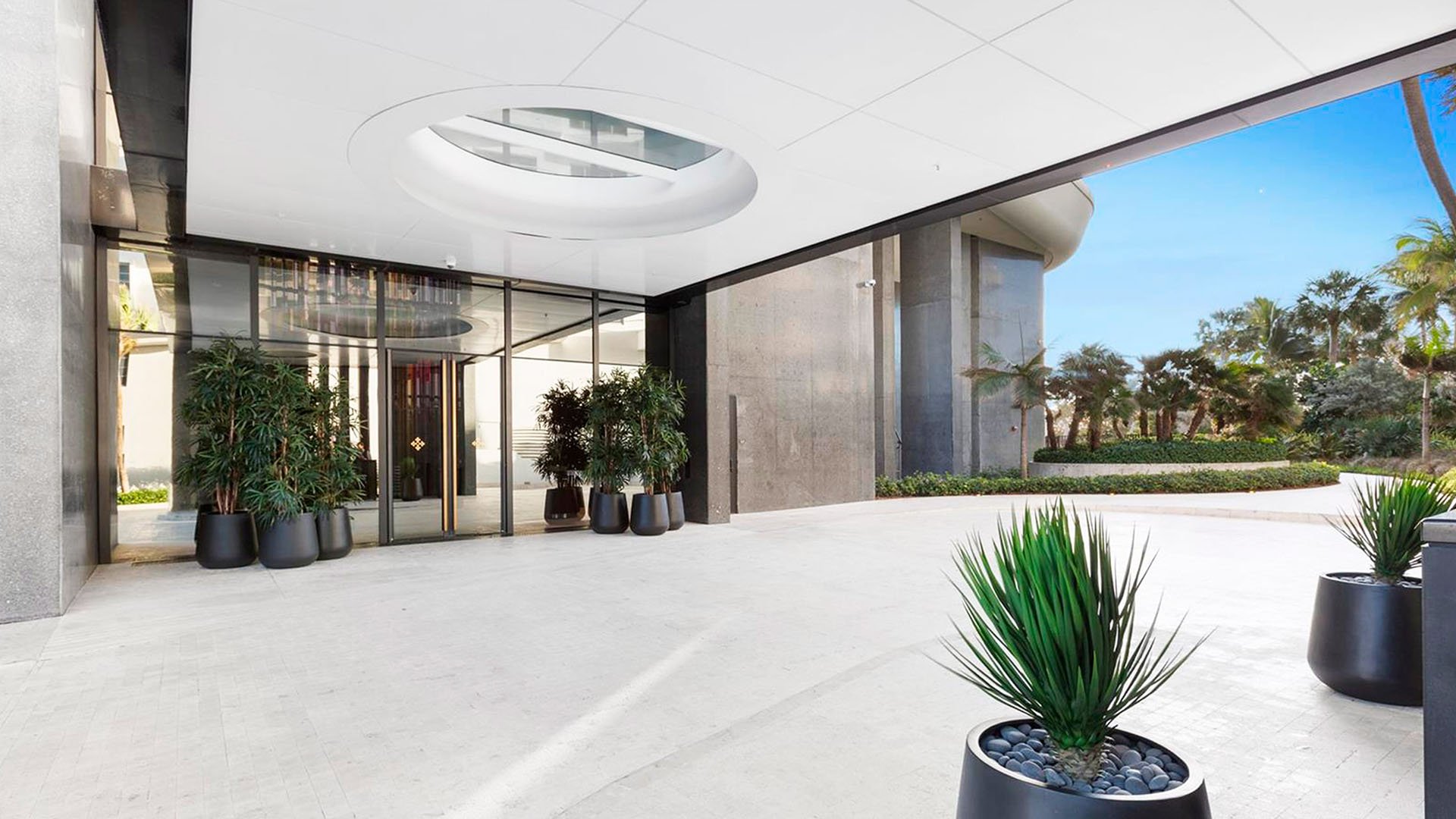
Faena House Miami Beach occupies a distinct place in the Miami Beach luxury conversation: not merely as a residential address, but as part of a broader lifestyle ecosystem where service is central to the buyer proposition. That distinction matters because the lock-and-leave buyer is not simply purchasing square footage, architecture, or proximity to the water. The buyer is purchasing confidence.
For owners who divide time among multiple homes, the central question is not whether the building impresses on arrival day. It is whether the residence, the common areas, the security posture, and the service layer continue to perform after a long absence. In that context, Faena House Miami Beach becomes a useful case study in a broader Miami Beach issue: how much operating depth does a full-service condominium need to support owners whose arrival windows are intermittent, seasonal, and often unpredictable?
This is where staffing ratios enter the conversation, but not in the simplistic way buyers sometimes expect. A luxury condominium is not a hotel with a public staff-to-guest metric. In many residential buildings, the precise employee count is less transparent, and the more revealing question is how staffing categories, operating budgets, management responsiveness, and after-hours protocols work together.
A staffing ratio sounds objective. It suggests that a buyer can compare one building against another by dividing employees by residences and arriving at a clean answer. In practice, the ratio is only a starting point.
Visible staffing is easy to notice. Front desk, valet, concierge, and security shape the first impression of service. They set the tone when an owner arrives from the airport, when guests need access, or when a car is requested at a peak hour. Less visible staffing can be just as important: engineering, maintenance, housekeeping availability, building administration, and management response.
For a second-home owner, the less visible layer may carry the greatest weight. If a residence has been vacant for several weeks or months, the owner needs more than a polished greeting. The building must be able to manage access, respond to maintenance concerns, support vendors, keep common areas composed, and maintain security discipline without relying on the owner’s constant presence.
That is the real staffing question at Faena House Miami Beach. Not simply how many employees are scheduled, but whether the operating platform is designed around peak-season surges, average daily occupancy, or a constant luxury baseline.
Miami Beach luxury ownership often follows a seasonal rhythm. Many buyers maintain homes elsewhere and use their condominium intermittently, especially during winter, holidays, major cultural weeks, or family visits. The building may be relatively calm one week and highly active the next.
For part-time owners, fixed staffing can create an understandable value question. Monthly assessments support service availability even when the unit is vacant. That can feel abstract until the owner returns and finds the building ready, the access process controlled, and service operating without friction.
For full-time or frequent-use residents, the same staffing base is part of the core value proposition. They expect immediate service whether the building is fully occupied or quiet. The tension between those two ownership profiles is what makes the lock-and-leave issue so important in ultra-luxury condominiums.
Buyers comparing Faena House Miami Beach with other Miami Beach addresses such as Setai Residences Miami Beach or The Perigon Miami Beach should study the service promise with discipline. The question is not which name sounds more luxurious. The question is which operating model best suits the way the owner will actually live.
The most useful due diligence questions are operational rather than decorative. Is there 24/7 coverage? How are after-hours requests handled? What are the expected response times for maintenance issues? How does guest access work when an owner is away? What protocols apply to vacant residences? How does the building adapt during peak season?
A buyer should also ask how concierge coverage, security, engineering, maintenance, valet, housekeeping availability, and management responsiveness are represented in the operating budget. The budget does not reveal every nuance of service culture, but it can show whether the building is structured to support the promises made at the ownership level.
It is also important to distinguish between service availability and personal staffing. A condominium may offer a high-touch building platform without replacing the private staff an owner may use inside the residence. Owners who expect housekeeping, vendor coordination, arrival preparation, refrigerator stocking, or private maintenance oversight should clarify which services are building-supported, which are arranged separately, and which require outside vendors.
This is especially important for oceanfront buildings, where exposure, weather, balcony conditions, and common-area presentation can affect the owner experience after an absence. Lock-and-leave convenience depends less on the architecture alone and more on whether the management platform remains consistent when no one is watching.
Part-time ownership can make monthly assessments feel more complicated. If an owner is away for long stretches, the immediate use of staff may appear limited. Yet the value of staffing is not measured only by daily interaction. It is measured by readiness.
Readiness is the quiet luxury of a building that functions whether the owner is present or not. It is security that does not loosen because the season is slow, engineering that can respond before a small issue becomes larger, and management that treats intermittent occupancy as a normal ownership pattern rather than an exception.
This is why a lower-service building is not automatically more efficient for a lock-and-leave buyer. If an owner must privately solve every arrival, access, and maintenance issue, the apparent savings can become a burden. Conversely, a richly staffed building must still prove that its staffing base is allocated intelligently. The buyer’s task is to determine whether the assessment supports a service culture that is both visible and durable.
Faena House Miami Beach sits in a market where service is increasingly inseparable from identity. Buyers are not just comparing residences; they are comparing how buildings anticipate absence, arrival, privacy, security, and daily friction.
That broader market includes South Florida projects with different service languages and ownership patterns. A buyer considering Miami Beach may also look at The Ritz-Carlton Residences® Miami Beach for another expression of branded residential service, or look beyond Miami Beach toward The Surf Club Four Seasons Surfside when evaluating how hospitality-influenced ownership translates into residential life.
The point is not to rank these addresses by a public staffing number. The better exercise is to ask how each building performs when the owner is absent, when the owner returns without much notice, and when seasonal demand compresses expectations into the same few weeks.
For the right buyer, Faena House Miami Beach’s service-rich positioning may be precisely the answer. For another, the monthly cost of maintaining that readiness may require deeper review. Either way, the staffing-ratio conversation should be treated as an invitation to examine the building’s operating reality, not as a shortcut.
The most refined buildings are often judged by what does not go wrong. The gate works, the lobby is composed, the valet is prepared, the engineer is reachable, the manager responds, and the owner’s return feels effortless. None of that is accidental.
For Faena House Miami Beach, the lock-and-leave question is ultimately about alignment. Does the service model align with the buyer’s usage pattern? Does the budget support the level of readiness expected? Does management have clear procedures for after-hours needs, guest access, vacant residences, and seasonal intensity?
A staffing ratio may begin the inquiry, but it should never end it. Luxury condominium ownership in Miami Beach is increasingly defined by the reliability of the invisible systems behind the view.
What is the lock-and-leave issue at Faena House Miami Beach? It is the question of whether the building’s service platform can support owners who use the residence intermittently while keeping the experience seamless.
Should buyers expect a public staffing ratio? Not necessarily. Luxury condominium staffing is often less transparent than hotel staffing, so buyers should review budgets, roles, and service protocols.
Which staff categories matter most? Buyers should look at concierge, security, valet, engineering, maintenance, housekeeping availability, and management responsiveness.
Why does seasonal ownership matter in Miami Beach? Seasonal arrivals can create sudden demand for service, access, valet, maintenance, and guest coordination within short windows.
Is Faena House Miami Beach suitable for second-home ownership? It may be, but the buyer should confirm how the building manages vacant residences, after-hours needs, and owner arrivals.
How should a buyer evaluate monthly assessments? Assessments should be viewed partly as payment for readiness, not only for services used while the owner is physically present.
What does Miami Beach ownership require from management? It requires disciplined access control, responsive maintenance, and the ability to handle intermittent occupancy without reducing service quality.
How does oceanfront ownership affect the service question? Oceanfront conditions can make maintenance, inspection, and common-area presentation especially important when owners are away.
How do Setai Residences Miami Beach and The Perigon Miami Beach fit the comparison? They are relevant comparison points for buyers studying how different Miami Beach residential buildings frame service and ownership experience.
What is the most important takeaway for buyers? The lock-and-leave promise depends less on architecture alone and more on the consistency of the building’s operating platform.
For a discreet conversation and a curated building-by-building shortlist, connect with MILLION.
If branded residences are on your mind — as a home or as an allocation — we would be glad to share what we are seeing, privately.
Begin a quiet conversation