A discreet 2026 diligence guide for family buyers weighing branded hotel-residence energy in Pompano Beach against Bay Harbor Islands waterfront privacy.
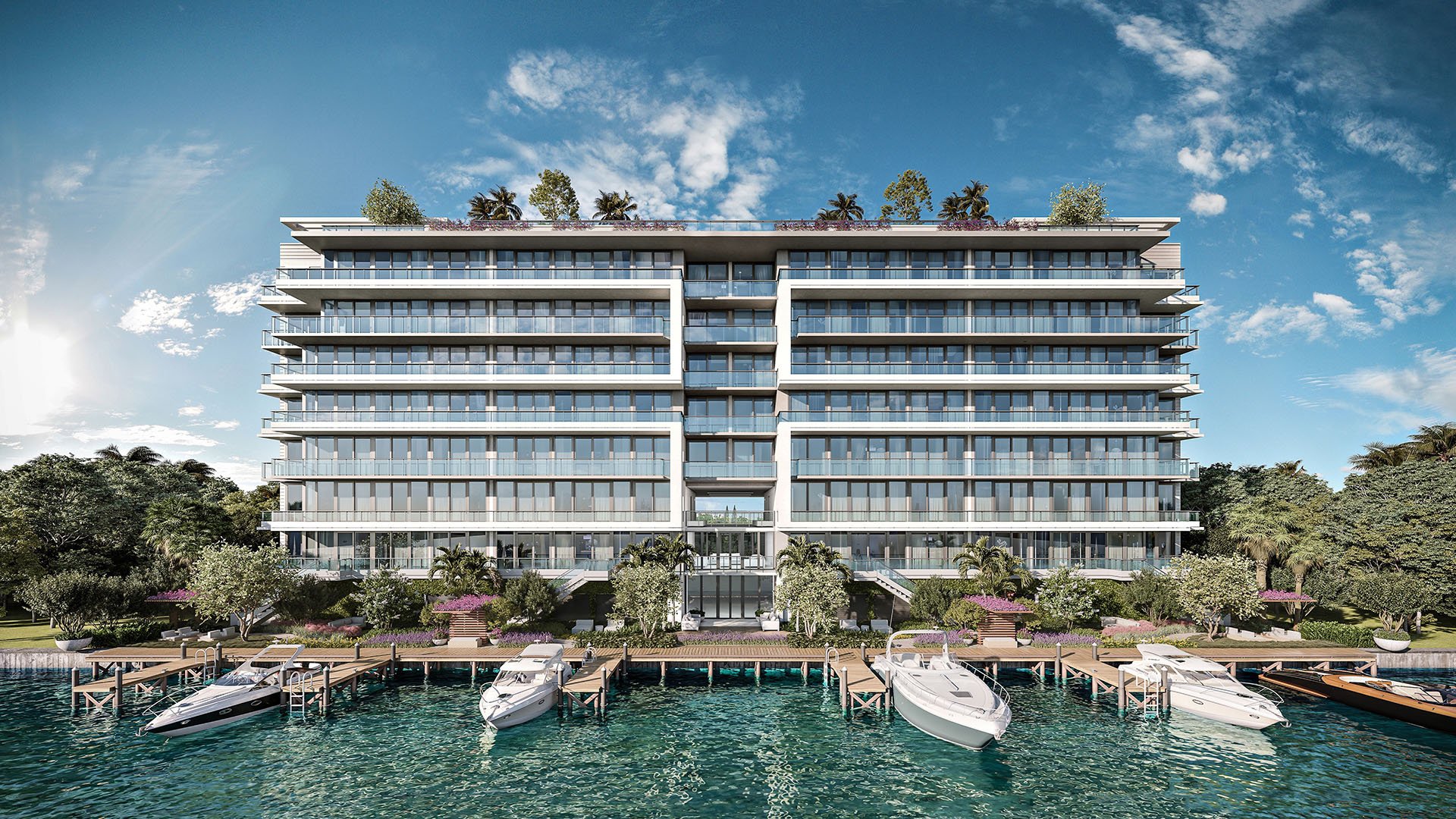
For affluent families choosing between W Pompano Beach Hotel & Residences and La Baia North Bay Harbor Islands, the conversation should begin well before finishes, views, or amenity photography. The more consequential question is how each building behaves on an ordinary school morning.
That is where luxury becomes practical. A residence may feel serene during a private tour, then reveal a different personality at 7:35 a.m., when children are leaving, house staff are arriving, deliveries are being processed, and valet demand is compressed into a short window. The buyer who studies those moments closely will learn more than the buyer who only compares pools, lounges, and lobby materials.
The core contrast is clear. W Pompano Beach should be evaluated as a branded hotel-residence environment, where hospitality energy is part of the proposition. La Baia North Bay Harbor Islands should be evaluated as a residential waterfront project in an island setting, where access, privacy, and controlled circulation become the family buyer’s primary lens.
The name W Pompano Beach Hotel & Residences signals the essential diligence issue: hotel and residential uses may operate side by side. For some families, that energy is an advantage. A hotel-residence format can feel animated, serviced, and socially connected. It may suit owners who want a resort atmosphere rather than a purely private residential cadence.
Yet that same vitality requires careful scrutiny. Buyers should ask how hotel guest arrivals, valet activity, concierge flow, and residential access are separated during school-morning peak periods. If children are moving through the same arrival sequence as hotel guests with luggage, ride-share pickups, and visitor traffic, convenience can quickly become friction.
This is not an argument against the format. It is a reminder that condo-hotel diligence is different from conventional condominium diligence. The family buyer should request current floor plans and circulation diagrams, then trace the route from residence to vehicle during the exact periods when children leave for school and return from after-school activities.
Staff movement is equally important. The most relevant questions concern dedicated residential elevators, back-of-house service routes, loading access, screened staff corridors, and procedures that keep housekeeping, maintenance, deliveries, and residential family movement from colliding. In a hospitality environment, elegance is not only what the owner sees. It is also what the owner does not have to see.
For a Pompano Beach buyer comparing nearby coastal alternatives, Armani Casa Residences Pompano Beach may also enter the conversation as a reference point for how different branded or design-led projects frame residential life. The key is not to assume that brand presence answers the privacy question. It simply changes the questions that must be asked.
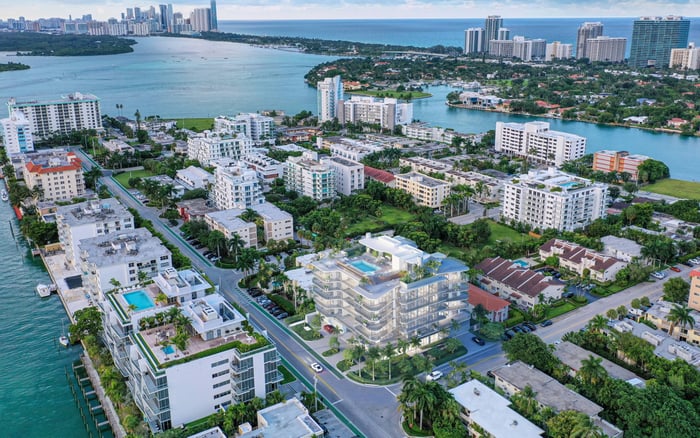
La Baia North’s Bay Harbor Islands setting shifts the family test. Here, the buyer is not primarily evaluating a hotel-residence operating model. The more pressing lens is Miami-area island access, mainland routing, and morning-drive consistency to preferred schools.
That does not mean buyers should make unsupported assumptions about exact school routes or commute times. It means a serious buyer should perform school-day simulations. Test the drive on a weekday morning. Study bridge and island access. Ask how arrivals and departures are handled when several households are moving at once. For private-school families in particular, the question is not whether a map looks convenient. It is whether the route feels reliable when the calendar is full and the household cannot afford surprises.
Privacy at La Baia North should be studied through controlled access, waterfront exposure, elevator and core design, terrace sightlines, and separation from neighboring residences. Waterfront living can feel deeply private, but exposure varies by orientation, adjacent buildings, terrace configuration, and how residents, guests, service providers, and deliveries move through the property.
Staff-circulation diligence should focus on residential service access, delivery paths, parking or valet procedures, and whether staff movement is kept away from family living zones. For families with children, privacy is not only about visual screening. It is also about predictable boundaries between the household, service teams, building personnel, and other residents.
Bay Harbor buyers often compare several island-scale options before deciding what version of waterfront privacy feels correct. A project such as Onda Bay Harbor can be useful in that broader mental exercise, not as a substitute for diligence, but as a reminder that buildings in the same area may solve access and privacy differently.
A 2026 family buyer should separate lifestyle marketing from daily operations. For W Pompano Beach, the essential school-day question is how hotel activity is buffered from residential departures. For La Baia North, the essential question is how island access performs during real morning conditions.
Before signing, request current floor plans, circulation diagrams, school commute estimates, access-control details, and HOA or service rules. Then ask the sales team or ownership representative to walk through the household’s actual routine: wake-up, elevator call, child departure, staff arrival, grocery delivery, tutor arrival, afternoon pickup, guest access, evening return.
The right residence will make that routine feel calm. The wrong one will make a beautiful home feel like a logistical negotiation.
Families should also ask whether residential owners have a distinct arrival identity. Is there a dedicated residential lobby or controlled access point? Are guest-facing amenities positioned so they do not pull public energy through private corridors? Are service elevators and loading areas organized to reduce encounters between children, staff, and transient visitors?
These questions are especially important when comparing a hotel-residence like W Pompano Beach with a residential waterfront project like La Baia North Bay Harbor Islands. The buildings are not simply different addresses. They represent different operating philosophies.
In ultra-premium South Florida real estate, service is often celebrated. But the best service circulation is quiet, precise, and almost invisible. Nannies, drivers, housekeepers, chefs, tutors, dog walkers, maintenance teams, and delivery personnel should be able to do their work without turning family living zones into passageways.
At W Pompano Beach, staff-circulation review should focus on whether hospitality back-of-house systems reinforce residential privacy or complicate it. At La Baia North, the review should focus on residential delivery paths, parking procedures, access control, and the distance between service movement and family spaces.
For families considering other coastal branded environments, The Ritz-Carlton Residences® Pompano Beach may provide another point of comparison in how buyers think about service identity. But the underlying principle remains the same: the stronger privacy candidate is likely the property with clearer separation between guests, staff, deliveries, and residents, not simply the project with the more luxurious amenity list.
W Pompano Beach is likely to appeal to families that welcome hospitality energy, appreciate branded service, and are comfortable conducting a deeper review of shared operations. The question is whether that energy enhances family life or adds too much public movement to the household’s daily routine.
La Baia North is likely to appeal to buyers who prioritize a residential waterfront feel and are prepared to evaluate bridge access, terrace exposure, controlled entries, and service flow with precision. Its Bay Harbor Islands setting makes the school-day lens different from Broward coastal living, because the family is evaluating island-to-mainland patterns rather than a Pompano Beach coastal routine.
Neither choice should be reduced to a universal winner. For one family, hotel-residence vitality may feel like a daily privilege. For another, the more compelling luxury may be quieter circulation, fewer mixed-use touchpoints, and a more controlled residential rhythm.
The correct 2026 test is not, “Which has better amenities?” It is, “Which property protects our mornings, our children’s routines, our staff choreography, and our privacy with the least friction?”
Is W Pompano Beach Hotel & Residences a hotel-residence environment? The project name signals a hotel-and-residences format, so buyers should review how hospitality and residential operations are separated.
Why is school-day convenience central to this comparison? Morning departures reveal how valet flow, elevator access, staff movement, and traffic patterns actually work for families.
What should buyers ask about W Pompano Beach? Ask how hotel guest arrivals, concierge flow, valet activity, and residential access are separated during peak family hours.
What should buyers ask about La Baia North Bay Harbor Islands? Ask about bridge and island access, mainland routing, controlled entries, service paths, terrace sightlines, and parking procedures.
Is La Baia North automatically more private? Not automatically. Privacy depends on access control, elevator design, staff movement, waterfront exposure, and neighboring sightlines.
Is hospitality energy a drawback for families? Not always. It can be an amenity advantage, but families must decide whether the added activity supports or disrupts daily life.
What documents should a 2026 buyer request? Request current floor plans, circulation diagrams, commute estimates, access-control details, and HOA or service rules.
How should staff circulation be evaluated? Study whether service providers, deliveries, and building personnel can move without passing through family living zones.
Does the better amenity list determine the better family choice? No. The stronger fit is usually the building with clearer separation between guests, staff, deliveries, and residents.
Should buyers visit during a typical morning period? Yes. A school-morning visit can reveal operational details that a quiet afternoon presentation may not show.
For a tailored shortlist and next-step guidance, connect with MILLION.
If branded residences are on your mind — as a home or as an allocation — we would be glad to share what we are seeing, privately.
Begin a quiet conversation