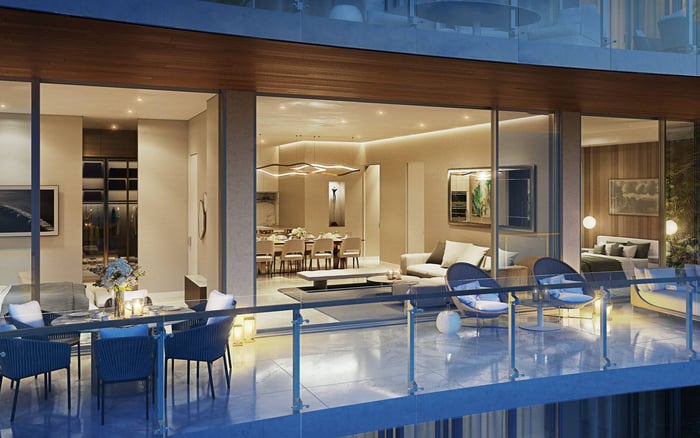
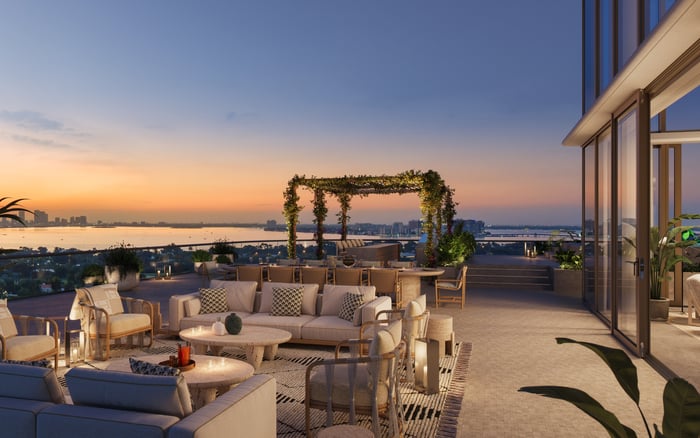
A lower-floor residence at Faena House can suit buyers who value a more immediate relationship with the beach landscape. The decision rests on the individual Alero’s dimensions, outlook, privacy and everyday usability, not floor number alone.
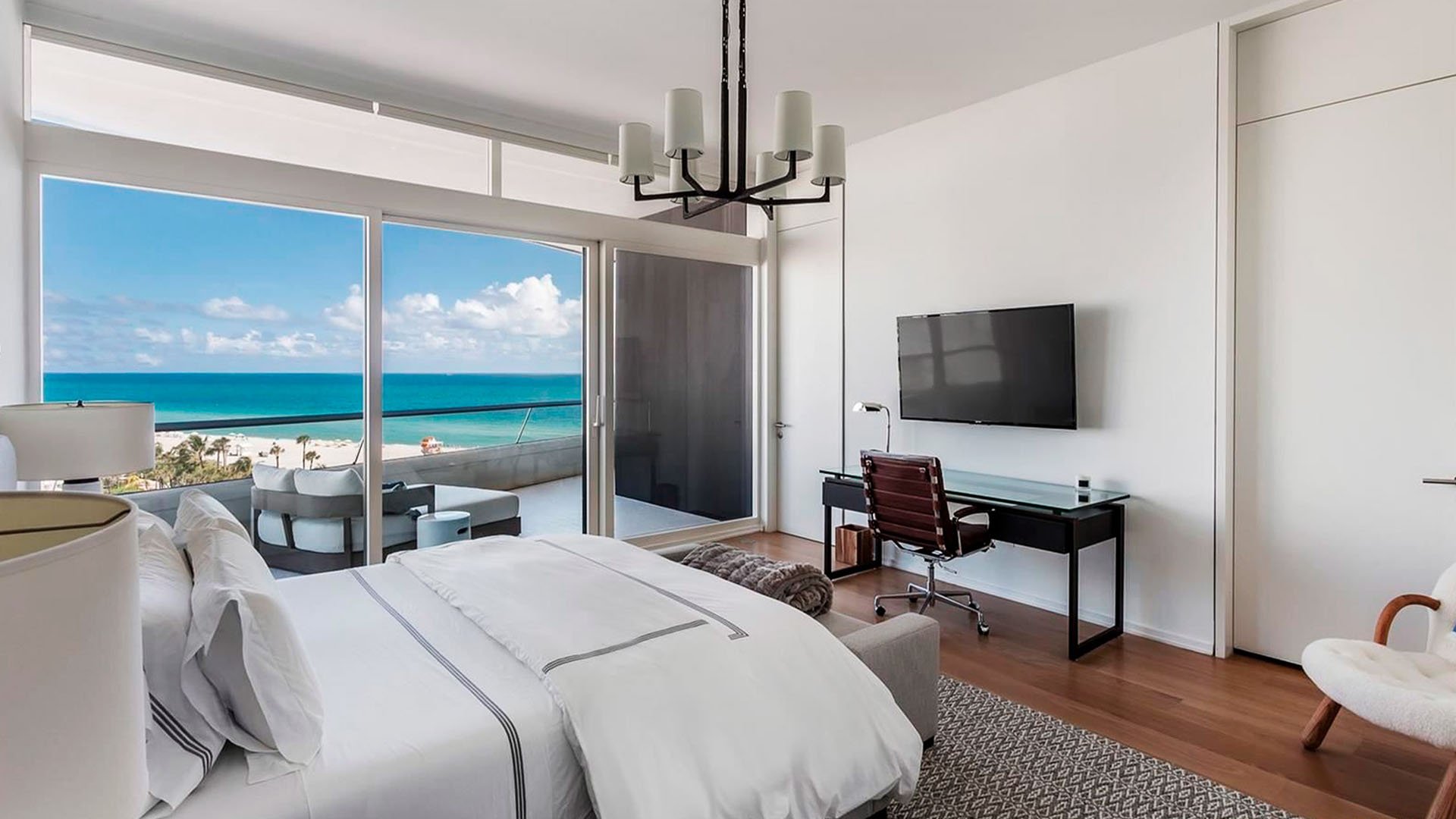
For some oceanfront buyers, the most compelling view is not the widest. It is the outlook that keeps the beach landscape visually present from a favorite chair, a dining table or the threshold between indoors and out. At Faena House Miami Beach, choosing a lower residence can begin with that preference rather than an automatic pursuit of altitude.
The distinction is personal, not categorical. A lower floor does not guarantee a view of vegetation, sand or the pool, and a higher floor does not guarantee an unobstructed horizon. What matters is the composition visible from the residence and how comfortably its terrace supports daily life.
At 3201 Collins Avenue in Miami Beach’s oceanfront Faena District, the building offers a setting in which to test that preference. The right lower Alero should earn its place through a viewing, not an assumption about how lower-floor living must feel.
An Alero is the signature wraparound terrace associated with each residence. It is an architectural feature, not a documented category reserved for lower floors. In practical terms, choosing a “lower Alero” means choosing a lower-floor residence whose terrace and outlook suit the buyer.
Faena House is a 19-floor condominium with approximately 47 residences, a count buyers should confirm against condominium records. Multiple floor plans make the individual residence more important than its floor number alone.
Residence dimensions range from roughly 1,300 square feet to just under 5,000 square feet, subject to verification for the specific home. That range reinforces the need to compare like with like. A lower residence with a different layout is not a direct substitute for an upper residence simply because both offer wraparound outdoor space.
Alero depths range from approximately 4 to 37 feet. That substantial variation makes “wraparound” an insufficient description of usability. A narrow passage and a generous seating zone may belong to the same terrace but serve very different purposes.
Start with your intended outdoor routine. If breakfast is the priority, test the dining location and the path around occupied chairs. If reading or conversation matters most, identify where seating can sit without constricting circulation. Check how columns, corners and doors affect the arrangement rather than relying on total exterior area.
Measure the zones you intend to furnish, then look outward from seated height. A view that feels compelling while standing at the glass may feel quite different from a lounge chair. For a buyer seeking closeness to the landscape, that seated perspective deserves particular attention.
Floor-to-ceiling glass makes the relationship between interior rooms and the Alero central to the purchase decision. Assess the view from the places where you would spend time: the principal living area, dining position and bedroom, as applicable to the layout.
Typical ceilings are approximately 10 feet 6 inches, with 11-foot ceilings on floors 14 and 15. Verify the dimensions of any candidate residence. Height can contribute to interior proportion, but it should not become a shortcut for evaluating the outlook.
Atlantic Ocean, bay and city panoramas are part of the building’s range of views, not a guarantee that every home offers every exposure. Ask for an orientation-specific floor plan, then reconcile it with what is visible through the glass and beyond the terrace edge. Separate the view you enjoy today from assumptions about permanent openness.
For a landscape-oriented buyer, visual immediacy is appealing only if it remains comfortable. Examine sightlines from neighboring terraces and any visible shared areas. Move between the interior and the terrace to understand where you feel screened and where you feel exposed.
Do not assume that a lower residence will be noisy or an upper residence quiet. Visit during daytime and evening, pause without conversation, and assess sound both outside and inside with doors closed. Judge whether the conditions suit your tolerance rather than relying on a description of tranquility.
Shade deserves the same scrutiny. Record the orientation, visit at the hours you expect to use the Alero, and distinguish comfortable outdoor space from areas you would rarely occupy. A beautiful terrace is most valuable to its owner when its usable hours match the owner’s habits.
A wider search can clarify whether you genuinely prefer landscape proximity or simply respond to one particular residence. If 57 Ocean Miami Beach is also on your shortlist, apply the same questions to each residence you inspect: what is visible while seated, how much terrace space is practically usable, and where does privacy need closer examination?
Likewise, a buyer considering The Perigon Miami Beach should compare verified residence details rather than treat a project name as a proxy for an outdoor experience. These are questions for the individual home, not claims that different buildings offer equivalent terraces, views or services.
The purpose of looking elsewhere is not to dilute the appeal of Faena House. It is to sharpen your brief. Returning with a clear preference for a particular outlook, seating arrangement and degree of exposure makes the next viewing more decisive.
There is no established lower-Alero premium or discount to apply mechanically. Begin with recent comparable closed sales and, where possible, compare lower and upper residences within the same line or orientation. Account separately for layout, verified dimensions, condition and the actual outdoor experience.
A fully finished designation should not replace an assessment of present resale condition. Inspect finishes and alterations individually. Similarly, do not assume that services or access associated with Faena Hotel accommodations belong to condominium ownership; confirm any entitlement in the applicable documents.
The strongest lower-floor choice meets a precise brief without requiring excuses about privacy, sound or furniture placement. If the landscape feels present from the rooms and terrace you will use most, and the verified terms support the purchase, a lower Alero can be a deliberate expression of preference rather than a compromise on height.
For a discreet conversation about selecting a residence around the way you want to live, connect with MILLION.
If branded residences are on your mind — as a home or as an allocation — we would be glad to share what we are seeing, privately.
Begin a quiet conversationAn Alero is the signature wraparound terrace associated with each residence. It is an architectural feature rather than a separate lower-floor residence category.
Faena House is at 3201 Collins Avenue, Miami Beach, on the oceanfront in the Faena District.
A buyer may prefer a more landscape-oriented outlook rather than maximum panoramic reach. The actual view must be assessed from the specific residence.
No. Orientation, terrace configuration and surrounding sightlines determine what is visible from an individual home.
Alero depths are described as ranging from approximately 4 to 37 feet. Verify the dimensions and usable furniture zones of the terrace under consideration.
Where possible, compare residences within the same line or orientation using verified floor plans and recent comparable closed sales. Evaluate condition and terrace usability separately.
No reliable lower-Alero premium or discount is established here. Valuation should rest on residence-specific evidence and comparable closed sales.
Visit during daytime and evening, assessing neighboring sightlines and sound both on the terrace and indoors. Neither lower nor upper floors should be assumed to offer a particular privacy or noise outcome.
Building-wide descriptions include those panoramas, but they do not establish all three exposures for every residence. Verify the outlook and orientation of the specific home.
Do not assume hotel services or access rights transfer to Faena House owners. Confirm any entitlement in the applicable condominium and ownership documents.