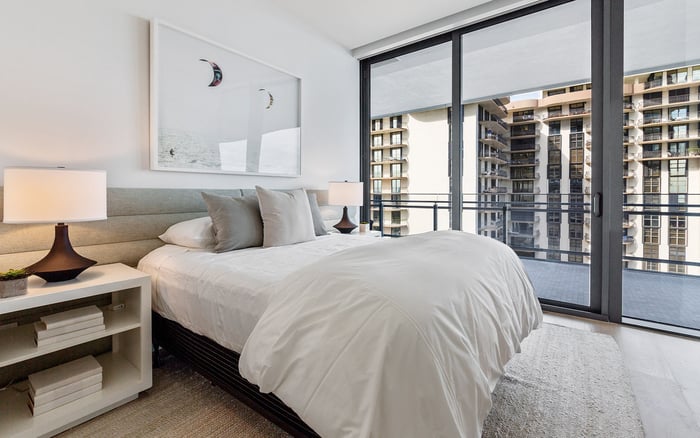
At The Surf Club Four Seasons Surfside, financed trophy acquisitions require a valuation strategy calibrated to highly individual residences, uneven comparable evidence and a closing schedule that may outlast a standard rate lock.
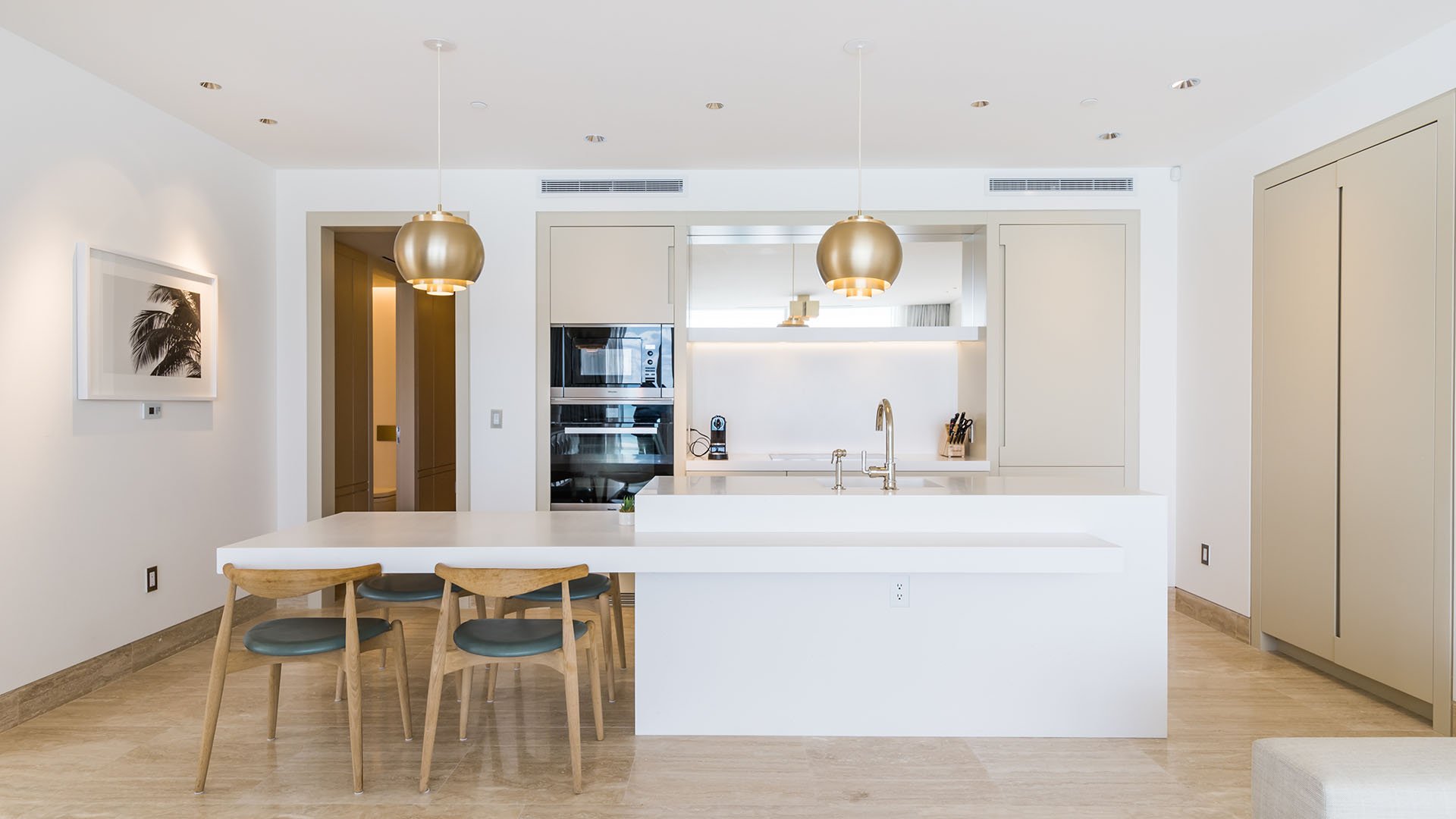
The Surf Club Four Seasons Surfside is an oceanfront Four Seasons hotel-and-residential property in Surfside, with private residences marketed at both 9111 Collins Avenue and 9001 Collins Avenue. That distinction matters: a lender is not simply financing an address or hospitality brand. It is underwriting a specific residence, its physical attributes, the available comparable sales and the condominium itself.
For a trophy buyer, the central financing question is not whether the property is exceptional. It is whether the appraiser can support the contract price under the lender's rules and within the closing timetable. When a singular residence trades above the most readily available closed-sale evidence, the difference may become an appraisal gap that the buyer must cover through additional equity, a revised loan structure or a renegotiated transaction.
At trophy scale, liquidity planning should begin before the lender delivers its opinion of value.
A snapshot of 9111 Collins Avenue placed the average asking price near $21.41 million, or $5,668 per square foot. Yet the individual offerings were far from uniform. Five-bedroom Penthouse NPH6, spanning 5,535 square feet, was offered at $55 million, or $9,937 per square foot. N313 was listed at $21.5 million, or $4,968 per square foot, while N317 was listed at $13.2 million, or $3,855 per square foot.
The other inventory pool was similarly varied. At 9001 Collins Avenue, one snapshot showed an average asking price of approximately $27.22 million, or $4,609 per square foot. S1011, a seven-bedroom residence spanning 7,387 square feet, was offered at $38 million, or $5,144 per square foot. S1003 was listed at $31.5 million, or $6,789 per square foot. S201 and S305 were offered at $24.9 million and $18.75 million, respectively, both near $4,300 per square foot.
These are asking prices, not appraisals or closed-sale comparables. Their value is diagnostic: they show how dramatically sellers may price distinct positions within a single branded property. A separate snapshot placed NPH6 at $49.9 million rather than $55 million, underscoring the need to reverify availability and pricing before relying on any listing presentation.
The recorded history includes 233 condominium sales dating to 2017, with a median sale price of $7.4 million and an average of approximately $2,910 per square foot. Those figures sit well below several current trophy asking metrics, but they should not be treated as a direct verdict on a specific residence.
A building-wide median combines different sizes, floors, views and sale periods. On its own, it cannot capture the scarcity or attributes of a singular penthouse. Even so, the contrast between broad historical figures and elevated current asks illustrates the underwriting challenge. The appraiser must build a supportable bridge from the available evidence to the subject residence, while the lender may apply its own review standards to that conclusion.
A buyer comparing the Surfside landscape may also review Arte Surfside, Fendi Château Residences Surfside and The Delmore Surfside. Such market context can sharpen an acquisition thesis, but it does not mean a lender will accept every nearby asking price as a comparable sale.
An appraisal gap arises when the lender's accepted value falls below the purchase price. Because lending proceeds are generally sized from the lender's valuation framework rather than the buyer's enthusiasm for the asset, a lower accepted value can reduce the available loan amount. The buyer may then need to contribute more cash to preserve the agreed price.
Before signing, the financed purchaser should model several valuation outcomes rather than rely on a single expected result. The analysis should identify the maximum additional equity that can be deployed without disturbing reserves, investment plans or post-closing obligations. It should also distinguish readily available cash from funds whose transfer, sale or documentation could introduce delays.
Contract structure deserves equal attention. Appraisal and financing protections, deposit timing, extension rights and the point at which contingencies expire can determine whether a valuation shortfall becomes a manageable capital decision or a pressured closing event. Legal and lending advisers should align these provisions with the buyer's actual financing path.
This is especially relevant in branded residences, where service, identity and scarcity may influence a buyer's willingness to pay but may not translate dollar for dollar into an appraiser's conclusion. The principle is simple: negotiate from conviction, but capitalize the transaction for a less generous valuation.
A favorable rate lock has limited value if it expires before closing. Trophy condominium financing can involve a property appraisal, lender review of that appraisal, condominium review and extensive borrower documentation. Any one of those steps can affect timing, particularly when ownership structures or financial records require additional scrutiny.
The buyer should work backward from the contractual closing date and determine whether the proposed lock period includes a realistic buffer. Relevant questions include when the lock begins, which events could delay approval, whether an extension is available and how an extension would affect cost or pricing. Those details are lender-specific and should be obtained in writing.
Publicly disclosed property-level debt offers context, not a consumer rate quote. In 2023, a $410 million refinancing covering Four Seasons properties in Surfside and Palm Beach was structured as a four-year, interest-only loan carrying an 8.7% rate. It was commercial financing across two assets, not a residential mortgage benchmark for an individual buyer. A previous $56 million refinancing for the Surf Club property was obtained in 2018, with records indicating that its loan period could extend as long as 20 years. Neither transaction determines current residence-level terms.
The strongest sequence begins with simultaneous diligence. Commission the appraisal early, start condominium review promptly and prepare the borrower's documentation before the rate-lock clock becomes restrictive. Ask the lender how it treats highly customized residences and whether an internal appraisal review could add time.
Maintain a live sources-and-uses schedule showing the purchase price, anticipated debt, required equity and an appraisal-gap reserve. Update it whenever the accepted value, loan amount or timing changes. If the residence is being acquired through an entity or trust, confirm that the contemplated ownership and guaranty structure is compatible with the loan before contract milestones pass.
Nearby properties such as Eighty Seven Park Surfside can help a buyer frame preferences and alternatives, yet the final credit decision remains residence-specific. At this level, the strongest protection is coordinated execution: valuation analysis, contractual flexibility, documented liquidity and a lock period designed around the actual closing process.
For discreet guidance on South Florida's most distinguished residences, connect with MILLION.
If branded residences are on your mind — as a home or as an allocation — we would be glad to share what we are seeing, privately.
Begin a quiet conversationAn appraisal gap is the difference between the purchase price and the lower value accepted by the lender. It can increase the cash a buyer must contribute at closing.
Residences differ by size, floor, view, layout and position within the property. Asking prices also reflect seller expectations and are not lender appraisals.
Private residences are marketed at both addresses, creating distinct inventory pools. A lender still evaluates the specific residence and relevant evidence.
No. The building-wide median combines different unit types, sizes, floors and sale periods, so it is not a direct valuation benchmark for a singular penthouse.
The lender may offer less financing than anticipated. The buyer may need additional equity, a different loan structure or a negotiated adjustment.
The appraisal should begin early enough to allow for completion, lender review and possible follow-up without putting the closing date or rate lock under pressure.
Appraisal review, condominium review and borrower documentation can all affect timing. Complex ownership or financial structures may also require additional scrutiny.
No. It applied to a commercial, property-level refinancing covering two Four Seasons assets, not an individual residence mortgage.
They should model multiple appraisal outcomes and reserve readily documented liquidity. Contract protections and financing milestones should also match that plan.
Separate snapshots placed the same penthouse at $55 million and $49.9 million. Current availability and pricing can therefore change materially.