Regalia's exceptionally low-density format makes its ownership economics unusually sensitive to operating costs, reserve contributions and any temporary support embedded in current assessments. Buyers should reconcile published fee estimates with the adopted budget, estoppel certificate and a realistic stabilized-cost model before treating the headline HOA as durable.
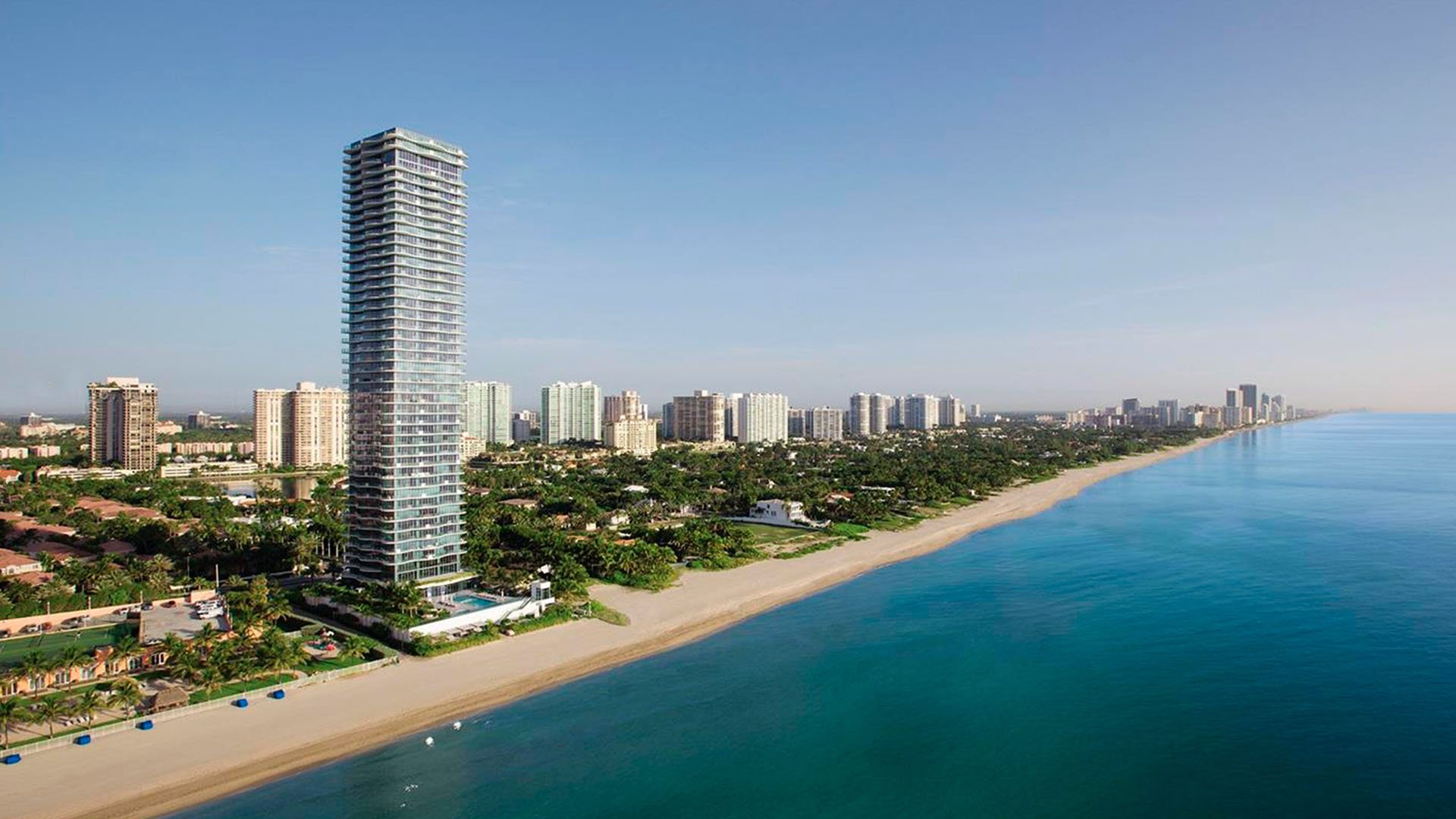
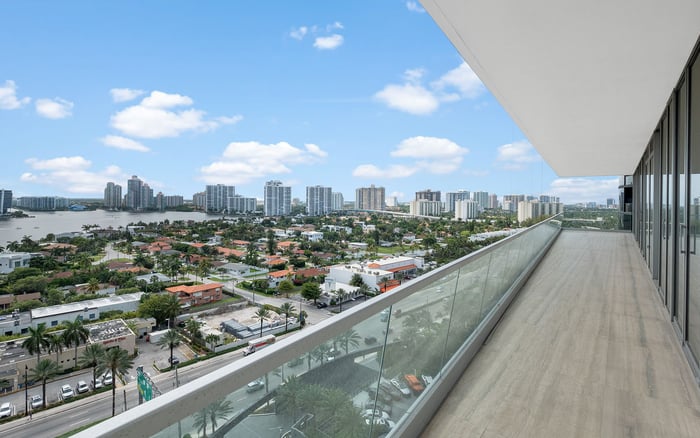
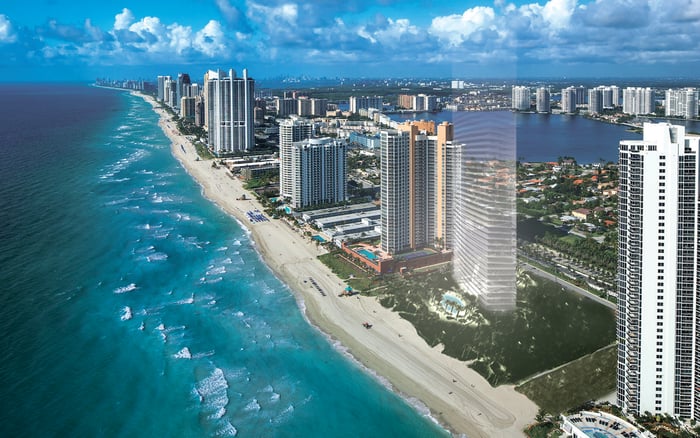
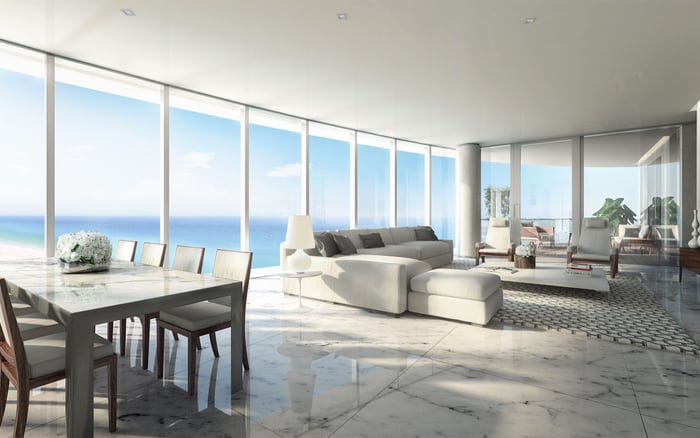
At Regalia Sunny Isles Beach, privacy is not simply an amenity; it is the building's organizing principle. The oceanfront condominium at 19575 Collins Avenue contains 39 residences, with approximately one home per residential floor. Standard full-floor residences span around 4,992 square feet, while the largest configurations exceed 10,000 square feet.
That scarcity creates a compelling residential experience, but it also reshapes the financial architecture of ownership. Insurance, staffing, utilities, service contracts and reserve contributions are divided among far fewer owners than in a high-density tower. When a major expense rises, each residence may absorb a meaningful share.
An HOA figure, therefore, should not be read as a fixed attribute of the property. It is a snapshot of how a particular budget allocates current costs. For an investment or personal acquisition, the more consequential question is whether that snapshot reflects the building's stabilized cost of service.
The relevant question is not whether today's assessment looks acceptable, but whether it is durable.
Two maintenance estimates illustrate the need for document-level review. One is approximately $0.91 per square foot per month, with the caveat that actual maintenance can vary by residence. Another is approximately $1.92 per square foot per month.
Those figures should not automatically be interpreted as evidence of a fee increase. They may reflect different dates, units, calculation methods or included charges. Yet the difference is too substantial to dismiss. Applied to a 5,000-square-foot residence, the range implies approximately $4,550 to $9,600 per month, or $54,600 to $115,200 annually, before any special assessment.
The same caution applies to basic building descriptions. Regalia is variously described as a 43-story building and a 46-floor tower. The discrepancy does not determine value, but it reinforces a larger point: marketing descriptions are no substitute for condominium documents, the adopted budget or the estoppel certificate.
A developer or related party can, in principle, support early operations through contributions, absorbed expenses, favorable contracts or temporarily reduced reserve funding. Such measures may make initial assessments appear lower than the amount ultimately required to sustain service. When that support ends, owners may face higher regular assessments, reduced services, special assessments or association borrowing.
However, Regalia's complete adopted budget, reserve funding, historical developer contributions and any current subsidy are not disclosed here. The existence and amount of a building-specific subsidy therefore cannot be established from published HOA estimates alone. A buyer should treat subsidy risk as a diligence question, not a presumed fact.
Regalia's developer history also included litigation that culminated in a court-ordered transfer of interests in companies holding prized unsold residences. Units involved in later proceedings were appraised at a combined $46 million. That history illustrates the economic significance of unsold inventory, but it does not by itself prove that association expenses were subsidized.
A sound analysis begins with recurring operating expenses at realistic market levels. Review insurance, payroll and staffing, utilities, management, maintenance contracts and other continuing obligations. Then normalize any line item that appears temporary, discounted, deferred or paid outside the association's ordinary budget.
Next, evaluate reserves as an economic cost rather than an optional accounting entry. In a coastal high-rise, future façade, elevator, mechanical, pool-deck, roofing and hurricane-related expenditures can be material. A low regular assessment may be less attractive if insufficient reserves shift those obligations into future special assessments or debt.
The stabilized pro forma should therefore combine market-rate operating expenses with credible reserve contributions. Divide the resulting requirement using the allocation applicable to the target residence, then compare that figure with the unit's current regular assessment. Any gap deserves an explanation grounded in the association's records.
It is also essential to separate regular dues from limited-common-element charges, special assessments, association loan obligations and potential exposure to insurance deductibles. Combining them into a single per-square-foot number may be convenient, but it can obscure when payments end, what they fund and whether they recur.
The adopted budget is the starting point, not the conclusion. Buyers should also examine reserve balances, the history of regular and special assessments, planned projects, association debt and recent meeting minutes. The estoppel certificate should be reconciled with the seller's payment record and the current obligations attached to the residence.
Financial statements or budget notes may identify developer contributions, expense reimbursements or contracts that do not represent arm's-length stabilized pricing. Minutes can reveal discussions of insurance renewals, deferred projects, staffing changes or proposed assessments before those matters become visible in a headline monthly fee.
For a resale purchaser, the inquiry should include several practical questions:
Which services and utilities are included in the regular assessment?
Are reserves being funded at a level consistent with anticipated capital work?
Are any expenses being paid by a developer, affiliate or individual owner?
Does the association have outstanding loans or approved projects?
Are special assessments pending, active or recently completed?
What insurance deductibles could be allocated to owners after a covered event?
These questions belong in every sophisticated buyer's guide, but they carry extra weight at a 39-residence property because relatively modest building-wide changes can become significant at the unit level.
Other oceanfront options in Sunny Isles Beach offer useful context, although their budgets and ownership structures must be assessed independently. Armani Casa Sunny Isles Beach, Muse Residences Sunny Isles Beach and Turnberry Ocean Club Sunny Isles can help a buyer compare residence scale, service expectations and the distribution of shared expenses within the same coastal market.
The comparison should not be reduced to which property advertises the lowest cost per square foot. A broader base of owners may distribute fixed costs differently, while variations in staffing, amenities, reserves and insurance can materially change the result. The goal is to compare like with like and distinguish genuine efficiency from temporary underfunding.
Regalia's appeal is clear: unusually large homes, direct oceanfront positioning and a degree of floor-by-floor privacy rarely found in Sunny Isles Beach. Its low-density structure is also why financial diligence must be unusually precise.
A well-advised buyer will verify the unit's actual assessment, identify every additional obligation and model the building without temporary discounts or deferred reserve assumptions. That process does not diminish the property. It clarifies the true price of maintaining its service standard over time.
For discreet guidance on evaluating South Florida's most distinctive residences, connect with MILLION.
If branded residences are on your mind — as a home or as an allocation — we would be glad to share what we are seeing, privately.
Begin a quiet conversationRegalia contains 39 residences, creating an exceptionally low-density ownership structure.
Insurance, staffing, utilities, contracts and reserve contributions are distributed across relatively few owners, increasing each residence's sensitivity to cost changes.
Public estimates include approximately $0.91 and $1.92 per square foot per month, but they may reflect different dates, units, methods or included charges.
They imply roughly $4,550 to $9,600 monthly, or $54,600 to $115,200 annually, before special assessments.
No. Public materials do not establish the existence or amount of any current building-specific subsidy.
It is a pro forma ownership cost using market-rate recurring expenses and realistic reserve contributions rather than temporary discounts or deferred funding.
Review the adopted budget, financial statements, reserve balances, estoppel certificate, assessment history, association debt and recent meeting minutes.
Adequate reserves help fund major capital work and reduce reliance on special assessments or association borrowing.
No. Regular assessments generally fund recurring operations, while special assessments address major repairs or costs not covered by the budget and reserves.
Yes, but comparisons should account for differences in residence count, staffing, amenities, insurance, reserves and included services.