At Continuum, resilience diligence should move beyond the existence of elevators or a generator. Buyers need tower-specific records showing elevator counts, emergency-power allocation, supported loads, fuel endurance, testing history, and transfer procedures before judging how an outage could affect daily life.
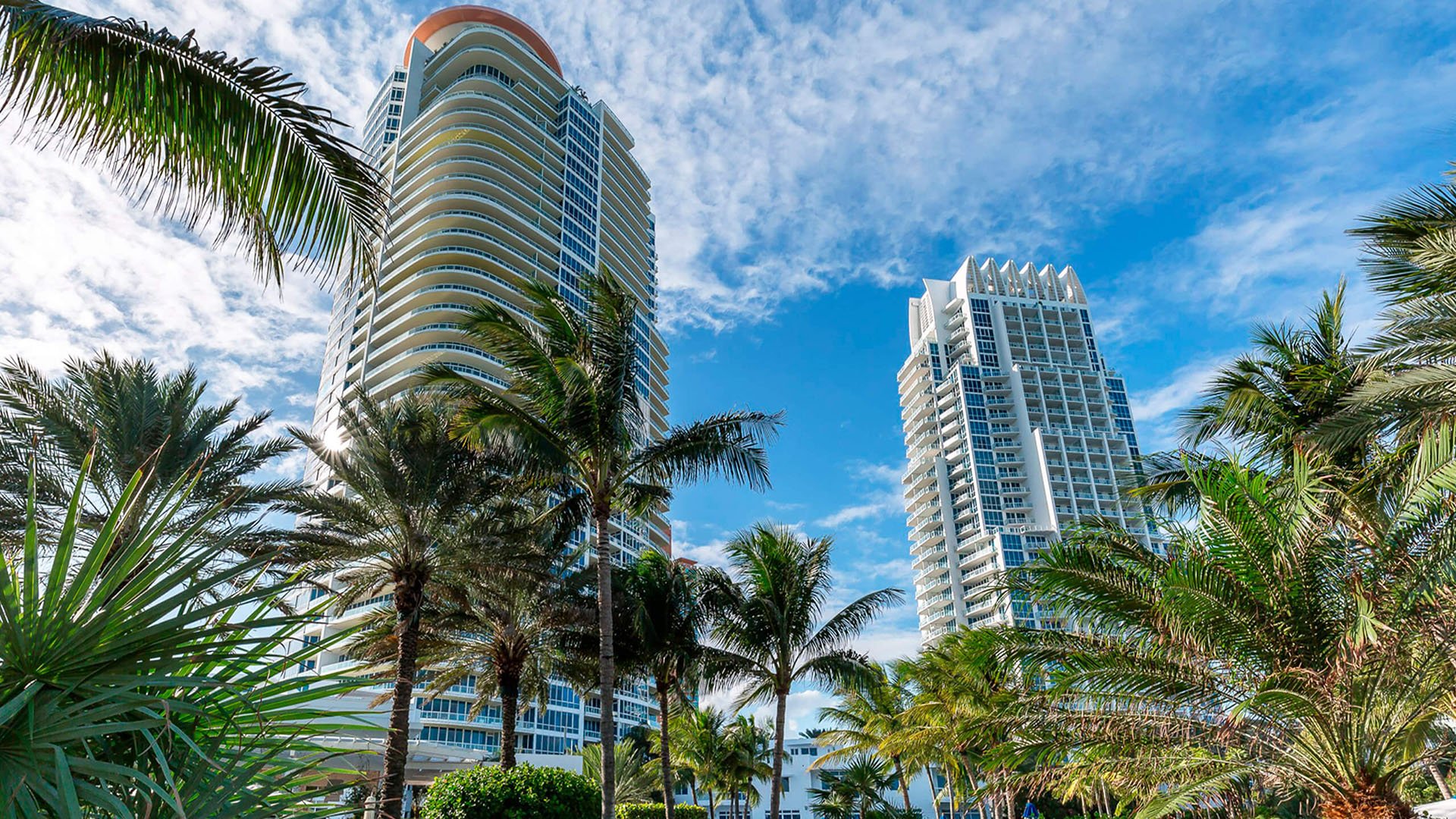
At Continuum on South Beach, the visible proposition is unusually complete: an oceanfront setting, beach access, pools, tennis courts, fitness and spa facilities, valet parking, concierge service, and 24-hour security. Yet for a buyer considering full-time occupancy or a high-floor residence, another dimension of quality matters just as much: the building’s ability to preserve movement, light, security, and essential operations when normal electrical service is interrupted.
Continuum is a two-tower condominium complex at 50 and 100 South Pointe Drive in Miami Beach. The South Tower, completed in 2002 and designed by Sieger-Suarez, rises 42 stories and contains 318 residences. The North Tower has 203 residences across 37 stories. Those differences make resilience a tower-specific question, not simply a community-wide amenity.
The meaningful question is not whether backup systems exist, but what they keep operating.
Computer-programmed, high-speed elevators serve private or semi-private residential foyers. Yet the total number of passenger and service cars is not disclosed. Nor are generator capacity, supported loads, fuel endurance, or the number of elevators that can operate during an outage. A polished arrival experience and extensive amenity program cannot answer those operational questions.
Elevator redundancy describes a building’s capacity to maintain useful vertical circulation when one or more cars are unavailable. On an ordinary day, it can affect wait times during maintenance, move-ins, deliveries, and service calls. During an electrical interruption, the issue becomes more consequential, especially for residents many floors above grade.
A buyer should first establish the complete elevator inventory for the relevant tower. The count should distinguish passenger cars from service or freight cars, identify the residential stacks each serves, and clarify whether every car reaches all necessary levels. The next question is how the system performs when one car is removed from service. A nominally large elevator bank may offer less practical redundancy if particular residences, parking levels, or service functions depend on a narrower subset of cars.
Emergency operation requires a separate analysis. Buyers should determine how many cars can be powered simultaneously, whether they operate continuously or in a managed sequence, and whether passenger and service elevators share limited backup capacity. If one emergency-powered car must support residents, staff, deliveries, and building operations, the lived result could differ materially from the simple statement that an elevator is connected to a generator.
This is particularly relevant to high-floor purchases. The South Tower’s 42 stories and 318 residences create a different operating context from the North Tower’s 37 stories and 203 residences. Neither scale alone establishes stronger or weaker performance, but records and protocols should be reviewed for the specific tower under consideration.
In South Florida condominiums, generator service for elevators and emergency lighting is increasingly expected during prolonged outages. Whole-building generation remains less common because of its greater cost. The presence of a generator, therefore, does not establish that a residence will retain full electrical service, air conditioning, refrigeration, or ordinary receptacle use.
The decisive document is the emergency-load schedule. It should identify the systems connected to backup power and the priority assigned to each. Buyers should look for elevator coverage, emergency lighting, fire and life-safety systems, security, access control, communications, pumps, and any essential common-area equipment. In-unit coverage, if any, must be confirmed rather than inferred.
Generator capacity is only one component. Fuel duration, refueling arrangements, testing history, maintenance records, automatic-transfer procedures, and operating protocols all shape real-world continuity. Buyers should also clarify whether the North and South towers use separate emergency-power equipment and whether their procedures differ.
For context, buyers comparing the broader SoFi market may also consider Apogee South Beach. The useful comparison is not which property sounds more luxurious, but which building can document elevator allocation, emergency loads, testing, and recovery procedures with the greatest specificity.
Technical details become meaningful when translated into daily routines. A single operating elevator may satisfy a basic emergency objective while still creating delays in a densely occupied tower. A service car unavailable on backup power could complicate building operations. Limited common-area generation might preserve lighting and access control without maintaining comfort inside residences.
Full-time residents, households with limited mobility, families with pets, and owners who regularly receive staff or deliveries may assign different weight to these scenarios. A second-home owner may focus more heavily on remote monitoring, security continuity, and procedures for an unoccupied residence. Investment and resale buyers should also consider how clearly the building can explain its systems to a future purchaser.
The same framework can sharpen comparisons elsewhere in Miami Beach. Five Park Miami Beach and The Ritz-Carlton Residences® South Beach may enter a buyer’s consideration set for different lifestyle reasons, but resilience should be tested with the same disciplined questions. Brand, age, design, and amenity breadth are not substitutes for an equipment schedule or operating record.
A serious diligence request should include the elevator schedule, emergency-load schedule, generator specifications, fuel arrangements, recent test logs, maintenance history, transfer procedures, and written outage protocols. Meeting minutes may provide further context on repairs, modernization planning, recurring service concerns, and prior operational discussions. Any ambiguity should be addressed by the association, property management, or an appropriately qualified engineer.
Parking and water management belong in the same continuity review. Elevated and secure parking, water-intrusion controls, backup power, and flood-mitigation measures can all support recovery after a storm. Residences have floor-to-ceiling sliding doors with tempered, tinted glass designed to meet South Florida Building Code hurricane standards, but envelope protection and electrical continuity remain distinct lines of inquiry.
For buyer’s-guide purposes, the strongest questions are concrete: Which elevators serve the residence? Which remain available on emergency power? Can passenger and service cars operate concurrently? What common-area and residential loads are supported? How long is fuel intended to last, how is it replenished, and when was the full system last tested under load?
Continuum’s scale, waterfront position, and extensive amenities give it enduring appeal, but daily resilience cannot be established through luxury positioning alone. A prudent evaluation is granular and tower-specific. It connects elevator inventory to emergency-power allocation, then tests both against fuel, maintenance, transfer, and staffing procedures.
For a high-floor purchaser, this diligence is not a peripheral engineering exercise. It is a direct assessment of access, comfort, and continuity. Clear records can turn a broad promise of backup capability into an informed understanding of how the building is expected to function when ordinary systems are under pressure.
To evaluate South Florida luxury residences with discreet, property-specific guidance, connect with MILLION.
If branded residences are on your mind — as a home or as an allocation — we would be glad to share what we are seeing, privately.
Begin a quiet conversationNo. It is a two-tower condominium complex at 50 and 100 South Pointe Drive, so resilience should be assessed for the specific tower.
The South Tower contains 318 residences across 42 stories and was completed in 2002.
The North Tower contains 203 residences across 37 stories.
No. Public descriptions identify high-speed elevators but do not itemize all passenger and service cars.
No. Public materials do not establish how many elevators operate during an outage or whether coverage differs by tower.
No. Generator presence alone does not confirm whole-unit electricity, air conditioning, refrigeration, or ordinary receptacle service.
Request capacity details, the emergency-load schedule, fuel arrangements, test logs, maintenance history, and transfer procedures.
Passenger and service cars may share limited backup capacity, which can affect residents, staff, deliveries, and building operations.
The association, property management, or an appropriately qualified engineer should address tower-specific equipment and operating details.
Buyers should examine parking security and elevation, water-intrusion controls, backup power, and flood-mitigation measures.