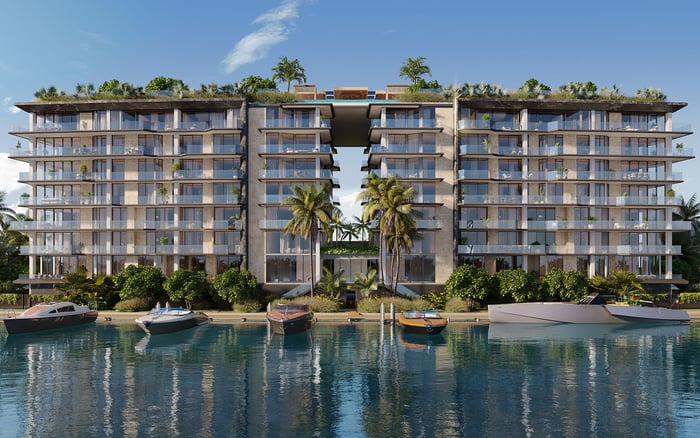
Seasonal ownership at Alma Bay Harbor Islands calls for careful operational due diligence. Buyers should seek written standards for residence inspections, controlled access, leak response, storm preparation, urgent repair authority and owner communication before closing.

At Alma Bay Harbor Islands, seasonal buyers should look beyond design and lifestyle positioning to examine how the residence will be cared for when no one is home. The essential questions concern monitoring, after-hours response, authorized entry and communication during an urgent event.
A private residential setting should not be assumed to provide hotel-style service. Buyers need to establish which services will be provided by the association or building manager, which will require a separate agreement and which remain the owner's responsibility. Marketing can introduce the lifestyle, but executed documents should define the operating reality.
Privacy is strongest when emergency access and accountability are precisely defined.
Before closing, buyers should review the final association rules, management arrangements, staffing information, insurance requirements and emergency procedures available for the property. Any service important to a seasonal owner should be documented rather than inferred.
A serious absence-care program should amount to more than an informal promise to monitor the home. The relevant agreement should identify the party responsible for scheduled inspections, explain how visits are arranged and describe the evidence provided afterward. A useful record should confirm that the agreed checks occurred, note exceptions and state what follow-up action was taken.
Scope matters as much as scheduling. Owners should ask whether the service addresses alarm notifications, visible water intrusion, HVAC performance, humidity concerns, package accumulation and other agreed conditions. They should also determine whether management supervises vendors inside the residence and how every entry is recorded.
If an issue requires immediate attention, the agreement should define who may authorize mitigation or repairs, any approval limits and the escalation sequence when the owner or designated contact cannot be reached. These terms should distinguish emergency measures intended to prevent further damage from nonurgent work that can await owner approval.
The cost structure also requires review. Absence care may be included in building services, offered separately or handled through a private residence-management agreement. Buyers should request a clear written explanation of what is included, what carries an additional charge and whether outside providers must satisfy building access or insurance requirements.
Any controlled residential entry system raises a practical question: how does an authorized person reach the home while the owner is away? A written protocol should maintain current owner contacts, identify authorized keyholders and explain the process for alarm events, suspected leaks, vendor access and emergency entry. It should also define how credentials are stored, updated and revoked.
The protocol should separate building response from owner communication. Someone must receive the alert, assess the situation and facilitate authorized access, while the appropriate owner contact should receive a prompt account of what occurred and what action was taken. The agreement should also establish backup coverage when the primary contact is unavailable.
Buyers comparing Alma with nearby options such as Mila Bay Harbor Islands and Alana Bay Harbor Islands should compare operating commitments rather than amenity lists alone. Relevant questions include staffing availability, security procedures, package handling, vendor supervision, after-hours response and the chain of command for unresolved events.
Every entry into the residence should have a defined purpose and an auditable record. Owners should know who entered, when access occurred, why it was necessary and whether any condition required further action. Access rights should be reviewed whenever household staff, ownership contacts or service providers change.
Outdoor living areas can create meaningful preparation duties during South Florida storm conditions. Seasonal owners should not leave the handling of furniture, planters or other exterior items to assumption. Responsibility should be assigned in advance and coordinated with applicable building rules.
A written storm plan should address preparation, pre-event checks, post-event access, condition documentation and owner communication. It should identify who performs each task and what happens if the designated person or vendor cannot attend. Owners should also verify whether the building team may enter individual residences after an event, what authorization permits that access and how observations are recorded.
The post-event sequence deserves as much attention as preparation. An owner needs to know who assesses the residence, who documents observed conditions under the agreed process and who coordinates urgent mitigation. Repair authority, vendor supervision and communication intervals are easier to settle before an emergency than during one.
Amenities used while an owner is present reveal little about the care provided during a prolonged absence. Operational continuity is the more useful measure. Buyers should request available staffing information in writing and clarify whether personnel are on-site, shared, scheduled or engaged through an outside provider.
Coverage may differ after hours, on weekends or during severe weather, so the agreement should explain who receives building and in-residence alerts during each period. It should also identify the response process and show how an unresolved event advances through the chain of command.
The same discipline applies when considering another Bay Harbor Islands address such as The Well Bay Harbor Islands. Project positioning should never substitute for reviewing final documents and service commitments. Dependable absence care rests on named responsibilities, clear standards, documented activity and redundant contacts.
Before committing, seasonal buyers should request the final condominium documents, management agreement, available staffing information, emergency plan and relevant insurance requirements. The review should resolve five core issues: inspection scope and scheduling, proof that checks occurred, authorized emergency access, repair and spending authority, and storm preparation with post-event reporting.
The owner file should contain current contact details, an authorized alternate, keyholder information and any access or alarm instructions required by management. Every change involving household staff, ownership contacts or access authorization should prompt an update. Package handling, vendor entry and prolonged HVAC or humidity concerns should be governed by explicit service standards rather than custom or goodwill.
Buyers should also ask how service failures are reported and corrected. A useful agreement identifies the contact for complaints, the documentation required, the escalation path and the process for updating procedures after an incident. Periodic review helps ensure that instructions remain current as ownership needs and building operations evolve.
For an absent owner, true luxury is confidence that a designated person will act within defined authority, document the response and communicate when the residence requires attention. For discreet guidance on evaluating Alma and other South Florida residences, connect with MILLION.
If branded residences are on your mind — as a home or as an allocation — we would be glad to share what we are seeing, privately.
Begin a quiet conversationIt should identify who inspects the residence, how visits are arranged, what evidence the owner receives and how urgent work is authorized.
The record should confirm that the agreed checks occurred, note exceptions and describe any follow-up action.
A written process helps authorized keyholders, management and responders access the home when necessary while preserving accountability.
No. Buyers should verify staffing availability, security procedures, package handling and after-hours response in writing.
A written plan should assign preparation, pre-event checks, post-event access, condition documentation and owner communication.
Yes. Buyers should determine whether services are included, offered separately or handled by a private residence manager.
Standards may address agreed checks for alarm notifications, visible water intrusion, HVAC performance, humidity concerns and package accumulation.
The agreement should define who may approve urgent mitigation, any approval limits and the escalation process when the owner is unavailable.
Records should identify who entered, when access occurred, why it was necessary and whether further action was required.
They should request final condominium documents, management arrangements, available staffing information, emergency procedures and relevant insurance requirements.