At Colette Residences Brickell, a simple HOA cost-per-square-foot figure cannot explain the economics of 24/7 service, an expansive amenity program and reserve exposure shared by only 38 residences. Buyers should examine the proposed budget, staffing plan, inclusions and reserve schedule before comparing carrying costs with other luxury condominiums.
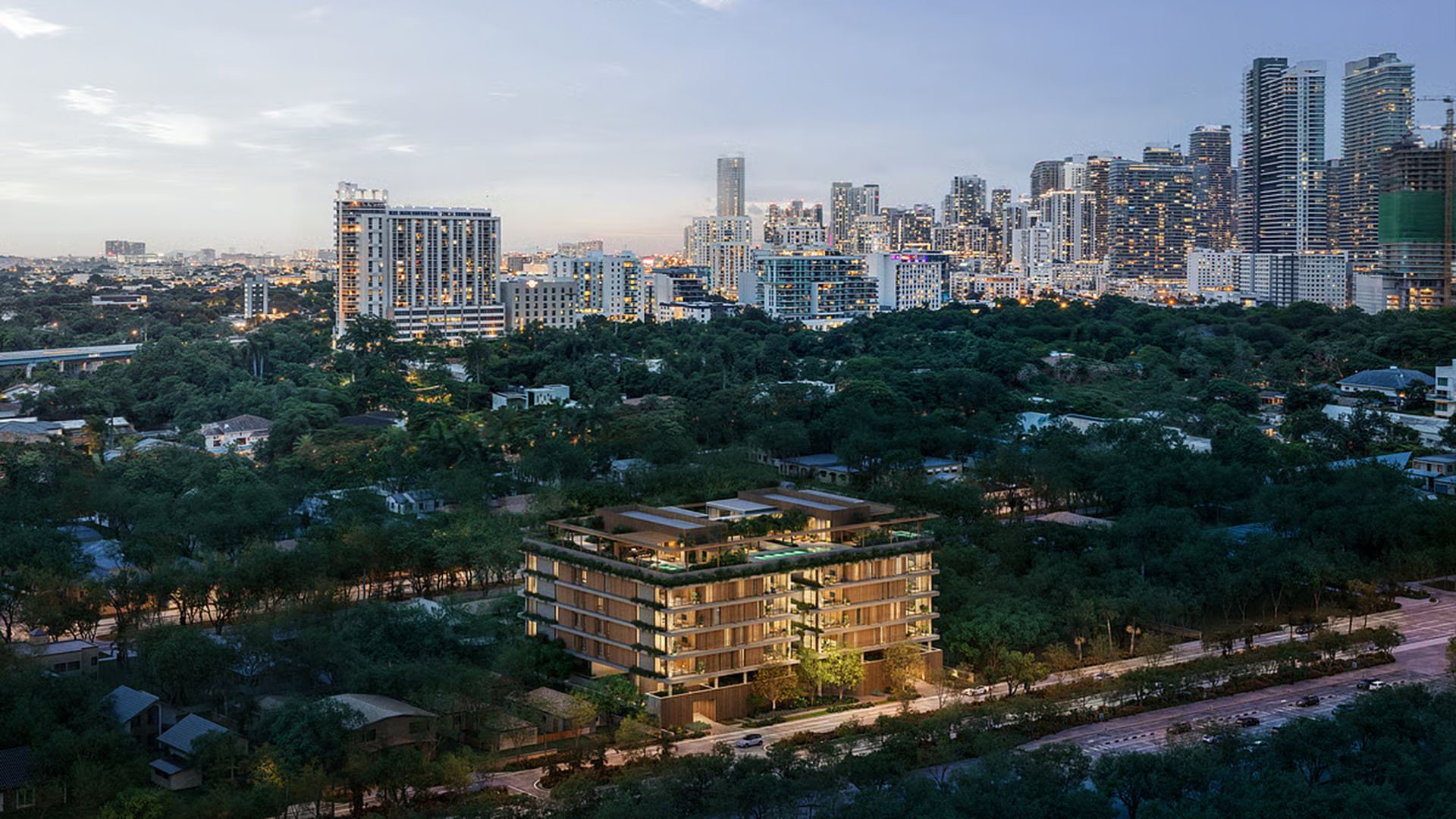
At Colette Residences Brickell, the defining luxury is intimacy. The planned five-story condominium at 1870-1880 Brickell Avenue will contain just 38 residences, complemented by more than 15,000 square feet of amenities. That ratio promises privacy and a distinctly boutique atmosphere. It also creates an operating model that warrants more scrutiny than a single association-fee figure can provide.
Colette is estimated at approximately $1.50 or more per square foot per month, within a broader Brickell range of roughly $0.80 to $2.50. Yet the apparent precision of that metric can obscure more than it reveals. Two buildings may quote similar rates while including markedly different combinations of staffing, insurance, utilities, connectivity, reserves and amenity operations.
This is where buyer’s guides, pricing and trends, and investment analysis converge. The meaningful question is not simply what the association charges per square foot. It is what the owner receives, what remains outside the fee and how future capital obligations are distributed.
The most useful comparison is total annual carrying cost matched against the services and risks it actually buys.
Colette’s service program includes 24/7 concierge coverage, property management, building maintenance, landscaping, insurance and amenity services. Concierge and management are largely fixed commitments. Whether all 38 homes are occupied or not, round-the-clock coverage still requires staffing, supervision and payroll.
A larger tower can spread comparable fixed expenses across many more households. At Colette, each residence may carry a more concentrated share. This is not inherently inefficient. Some buyers will gladly pay for discretion, lower density and a service team dedicated to a small ownership community. The fine print determines whether the cost structure matches that preference.
The same lens should guide comparisons with nearby alternatives such as 2200 Brickell or Una Residences Brickell. Rather than compare headline dues alone, request equivalent budget categories from every property under consideration. Payroll, management, security, insurance, utilities and reserve contributions should be separated wherever the documents permit.
The rooftop plan includes a 50-foot pool, private cabanas and a 5,200-square-foot sun deck. The wellness offering encompasses a TECHNOGYM fitness center, outdoor wellness deck, jacuzzi, sauna and massage or treatment room. A screening room, children’s playroom, meeting space, lounges, catering kitchen and barbecue areas broaden the common program.
These features are central to the proposition, but each introduces an operating or replacement obligation. Pool service, spa equipment, fitness equipment, roof surfaces, waterproofing, furnishings and mechanical systems all require recurring care. Some expenses belong in annual operations; others should appear in a reserve schedule designed to prepare for eventual capital work.
That distinction matters. A monthly fee can appear comprehensive while allocating relatively little to future replacement-or elevated because it builds reserves more deliberately. The existence of a reserve-fund contribution does not establish its adequacy. Buyers need the underlying schedule, component assumptions and annual funding amounts.
Unit 22 carries a monthly association fee of $5,209, while Unit 23 carries $5,814. These are unit-specific figures, not a universal schedule for every residence, but they illustrate the substantial absolute carrying cost before property taxes and unit-level insurance.
The Unit 22 inclusions extend beyond visible hospitality. They encompass landscaping, recreation facilities, security, common-area insurance, pool service, roof repairs, trash removal and air-conditioning maintenance. Amenities, hot water, management, parking, sewer, water, Internet/WiFi and reserve-fund contributions are also included.
This breadth is precisely why cost per square foot can mislead. A lower-fee building may bill connectivity or utilities separately, provide fewer staffed services or make a different reserve allocation. A higher figure can be rational when it replaces expenses an owner would otherwise pay directly. It can also reflect a cost base concentrated among relatively few homes. Only a line-by-line comparison resolves the difference.
Sales launched in October 2025, with pricing beginning at $3.3 million. The published dues therefore remain pre-construction-era figures rather than the product of a long operating history. Proposed budgets should be read as forecasts, with particular attention to assumptions for occupancy, insurance, staffing and amenity use.
Residences include covered self-parking, EV charging and two to three assigned spaces. Valet is optional. The operative question is how that option is funded.
Buyers should establish whether valet payroll and guest parking sit within common expenses, operate through direct user charges or combine both approaches. The same inquiry applies to spa treatments, private events, specialized fitness services and other hospitality-style offerings. “Available” and “included” are financially different concepts.
When comparing Colette with a more service-intensive proposition such as St. Regis® Residences Brickell, normalize the services rather than the labels. Ask which functions are staffed, during what hours, at whose cost and under what escalation assumptions.
The proposed operating budget explains current-year cash flow. The reserve schedule should reveal the longer horizon. Buyers should identify allocations for the roof, building envelope, waterproofing, elevators, pool, spa equipment and major mechanical systems. They should also determine whether projected contributions are embedded in regular dues and how assumptions may change before turnover.
With 38 residences, an unfunded capital requirement or special assessment may be divided among a relatively small ownership base. The exposure for any one owner can therefore be more concentrated than in a much larger condominium. That possibility does not predict an assessment. It simply makes reserve diligence unusually important.
Meta Development, also associated with Opus Coconut Grove, is developing Colette, with Porto Alegre-based OSPA as architect. Buyers considering Opus Coconut Grove can apply the same document discipline while recognizing that every condominium has its own budget and ownership structure.
The cleanest measure is total annual carrying cost. Add regular association dues, property taxes, HO-6 insurance, separately billed utilities and connectivity, à la carte services and a prudent view of potential assessment exposure. Then compare that total with the privacy, parking, amenity access and staffing the household actually values.
At Colette, cost per square foot is useful as an initial filter but inadequate as a verdict. The premium question is whether a 38-residence community’s service promise, operating assumptions and reserve preparation align with the buyer’s expectations for ownership in South Brickell.
For discreet guidance on South Florida's finest residences, connect with MILLION.
If branded residences are on your mind — as a home or as an allocation — we would be glad to share what we are seeing, privately.
Begin a quiet conversationColette is planned with 38 residences across five stories in South Brickell.
The project pairs its 38 residences with more than 15,000 square feet of amenities.
Unit 22 has been listed at $5,209 per month, while Unit 23 has been listed at $5,814 per month. These are unit-specific figures.
Buildings package insurance, utilities, connectivity, reserves and staffed services differently, so similar rates may purchase materially different coverage.
The marketed coverage includes 24/7 concierge, building maintenance, amenity services, landscaping, insurance and property management.
Reserve-fund contributions appear among the Unit 22 maintenance inclusions, but buyers still need the actual reserve schedule to assess funding.
Future capital projects or special assessments may be divided among fewer owners, potentially concentrating each residence's share.
Valet is described as optional. Buyers should confirm whether its costs are paid through common expenses, user charges or both.
Request the proposed budget, staffing plan, service inclusions, insurance and utility allocations, and the detailed reserve schedule.
Add association dues, property taxes, HO-6 insurance, separately billed services and utilities, plus a prudent view of assessment exposure.