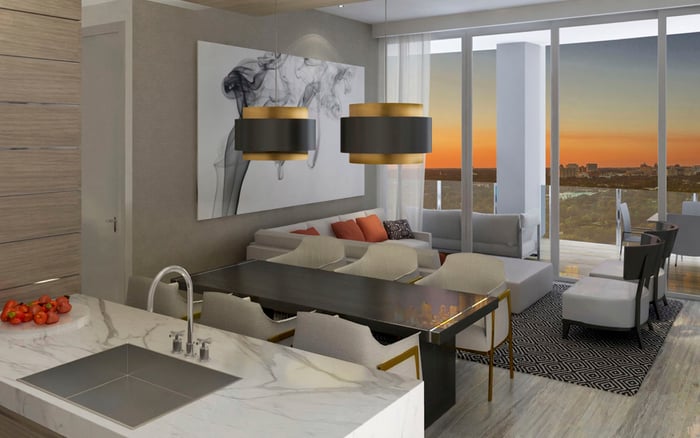
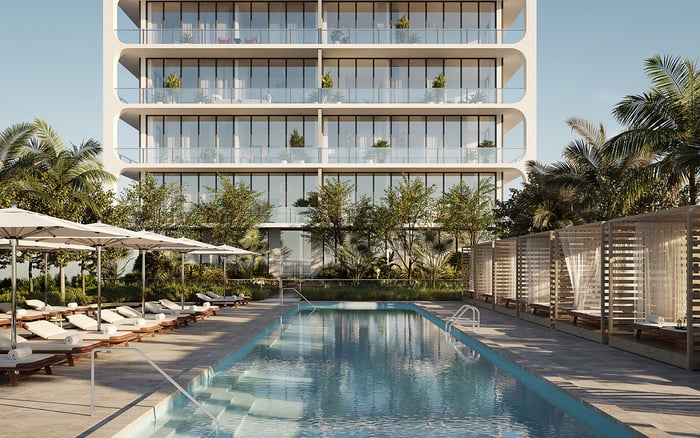
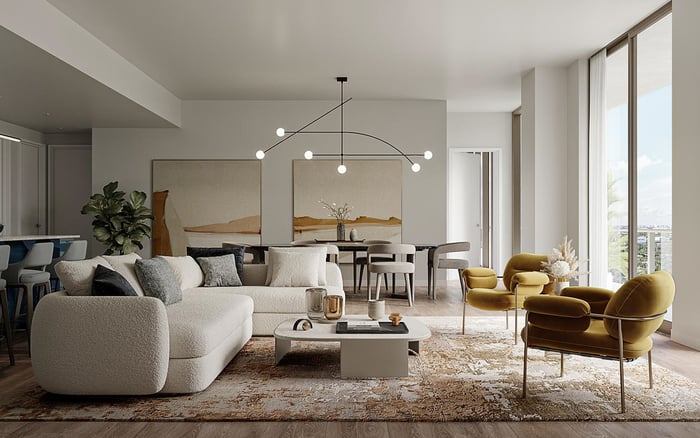
Private dining amenities deserve the same scrutiny as a residence’s floor plan. For buyers comparing Park Grove and THE WELL Coconut Grove, the essential questions concern access rights, catering arrangements, event costs and the written rules that shape entertaining.
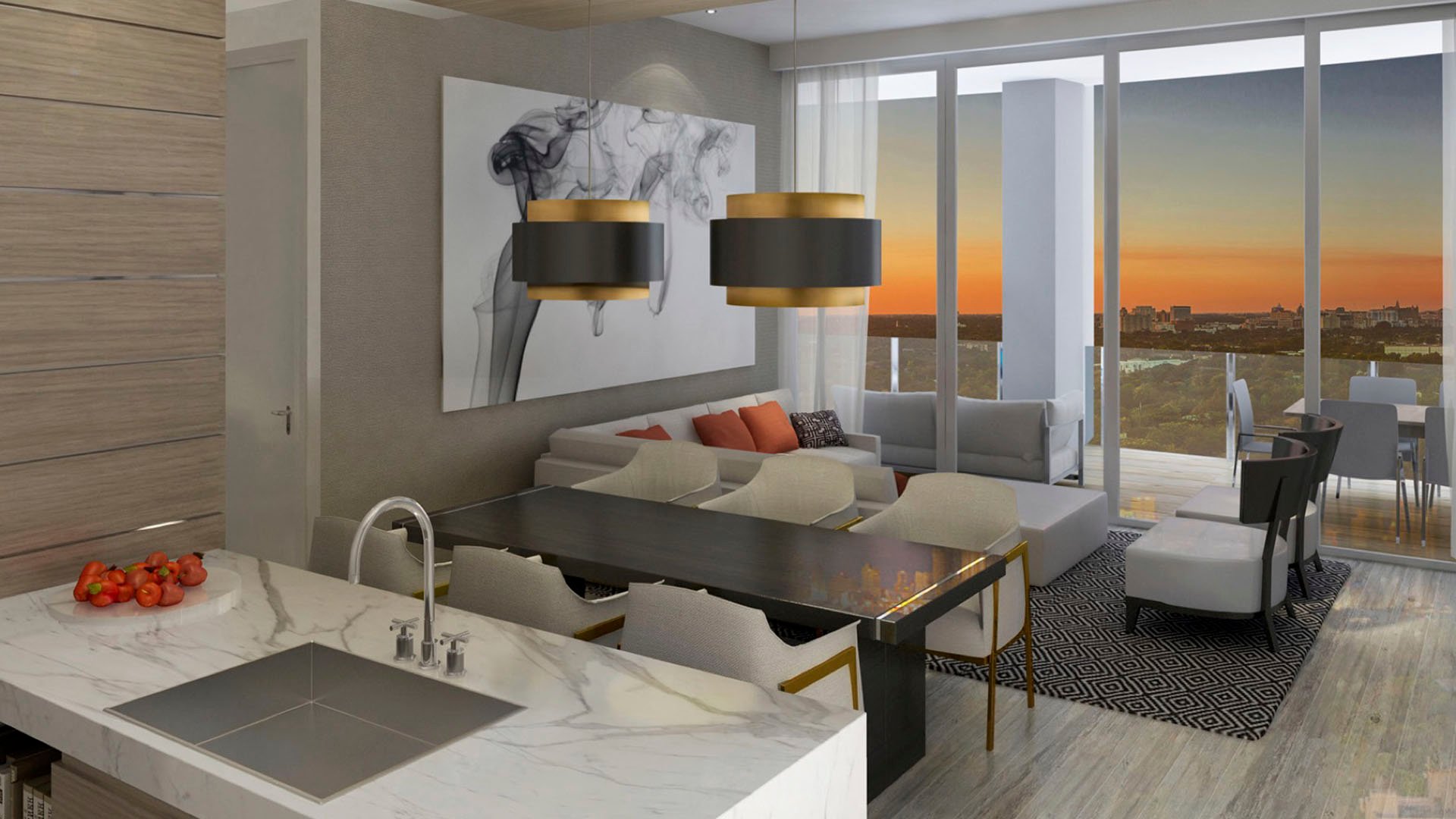
For buyers who entertain, a private dining room can matter as much as a generous terrace or a well-planned kitchen. The appeal is effortless hospitality: friends gathered around one table, discreet service, and a residence left undisturbed. Yet an advertised dining amenity does not establish the right to host an outside-catered event.
At Park Grove and THE WELL Coconut Grove, the useful comparison is not simply which spaces appear in the amenity descriptions. It is which spaces a buyer’s particular residence can access, on what terms, and with what support. Treat marketing descriptions as an introduction-not confirmation of completed facilities, current operations or enforceable reservation rights.
Begin with an occasion you would actually host. Ask management to walk through the gathering, from booking and vendor arrival to the final collection of glassware.
Park Grove Coconut Grove advertises private dining and event space alongside a full-service bar. Its advertised hospitality offering also includes a signature restaurant, bar and catering by Chef Michael Schwartz. Verify the current operator, available services and whether those arrangements apply to the residence under consideration.
At One Park Grove, the advertised offering includes catered lunch or dinner from Michael Schwartz’s restaurant, delivered and served through arrangements supported by the resident app or concierge/front desk. This suggests a route to coordinated dining, but does not establish that an independent chef or outside catering team may use shared facilities.
Ask whether restaurant catering can serve both an individual residence and a reserved amenity room. Confirm who supplies servers, tableware and beverage service, and whether menus or service hours differ by location. Establish whether coordination means booking assistance or full event management.
Wine-tasting rooms with private wine storage are also advertised as settings for residents to host tastings. Request the rules for outside wine, service staff and storage access. The advertised 28-person capacity belongs to the private screening room, not the dining room; obtain the dining space’s own written occupancy limits.
The Well Coconut Grove advertises a private dining room with a catering kitchen and bar among its resident-exclusive amenities. The key distinction is between equipment and permission: a catering kitchen does not, by itself, establish outside-vendor access.
Ask what food preparation the kitchen permits, who may operate its equipment and whether a designated provider must supervise service. Clarify whether vendors can cook, reheat or plate food, and whether refrigeration and storage are available during the reservation. These are questions to resolve, not capabilities to assume.
THE WELL also advertises a rooftop bar and dining area, a Lobby Library, and a quiet reading room and lounge for gathering. Its listed Children’s Room should not be treated as a reservable celebration space without confirmation. Request separate guidance for each setting: whether private use is possible, and whether adjacent areas remain available to other residents.
Before assigning value to either dining program, identify who has authority to approve a booking. Ask whether reservations are handled by management, an association, a restaurant operator or another service provider. Obtain the applicable written policy rather than relying solely on a tour conversation.
Confirm whether owners and tenants have equal eligibility, whether the resident host must attend, and which tower or residence has rights to each space. Ask about advance booking windows, blackout dates, peak-season limits and restrictions on recurring reservations. Determine whether a tentative hold carries any priority.
If your search also includes Four Seasons Residences Coconut Grove, apply the same questions independently rather than carrying assumptions from one property to another. Compare written access terms alongside the amenity descriptions.
Neither project’s advertised amenities establish outside-caterer permissions or comprehensive vendor procedures. Ask first whether food and beverages must be purchased in-house, whether an approved-vendor roster applies, and whether an exception can be requested for a preferred chef.
Extend that inquiry beyond the main caterer. A celebration may involve a cake delivery, florist, musicians, rental furniture or décor installation. Ask which participants need approval, what insurance documentation is required, and who submits it. Clarify whether approval covers the company alone or also the proposed equipment and service plan.
For alcohol, request rules on resident-supplied bottles, bartenders and service hours. Obtain written guidance on amplified music, candles, decorations and end times. A bar’s presence settles none of those questions, and permission to serve dinner should not be read as permission for a late-night reception.
Park Grove advertises poolside dining, cabanas and towel service. Those amenities do not establish permission to reserve pool areas for private events. Likewise, THE WELL’s advertised rooftop bar and dining area does not establish exclusive booking rights or event capacity.
Ask whether a gathering can occupy the entire space, a designated portion or neither. Confirm the relevant guest cap, food and glassware restrictions, music limits and any weather-related cancellation or relocation arrangements. Keep dining-room capacity separate from limits governing terraces, lounges and other shared areas.
Request a distinct policy for entertaining inside your residence. Do not assume that amenity-room catering permissions, delivery arrangements or quiet-hour provisions apply identically within a private home.
Request an itemized fee schedule covering room charges, minimum food-and-beverage spends, cleaning, damage deposits, insurance requirements, overtime and cancellation terms. Ask whether any charges are included in association dues and which services remain separately billable. A resident amenity should not be assumed to be a cost-free event venue.
Then walk through the service route. Confirm guest registration, vendor check-in, loading access, freight-elevator reservations, valet arrangements and delivery procedures. Establish setup and cleanup windows, including when rentals must leave the property. A reservation’s advertised duration is not enough unless those surrounding activities are addressed.
The City of Miami has a special-event permitting framework covering qualifying events on private property. That does not establish that an ordinary resident dinner requires a permit. For an event that may qualify, ask management and the city whether the proposed use triggers separate requirements.
Request current reservation policies, fee schedules, vendor requirements and written confirmation of access for the specific residence. Where operations or rules remain prospective, distinguish proposed arrangements from confirmed terms.
The strongest fit is the property whose documented hospitality arrangements accommodate the way you actually entertain-with costs and responsibilities understood before ownership.
For a discreet perspective on Coconut Grove residences and the details that shape ownership, explore MILLION.
If branded residences are on your mind — as a home or as an allocation — we would be glad to share what we are seeing, privately.
Begin a quiet conversationPark Grove advertises private dining and event space alongside a full-service bar. Buyers should confirm current availability and the access rights attached to their specific residence.
Park Grove advertises restaurant, bar and catering services associated with Chef Michael Schwartz. Buyers should verify the current operator and service availability rather than treating that description as a guarantee.
The reviewed marketing does not establish outside-caterer permission. Request written vendor rules and any in-house purchasing requirements.
The advertised 28-person capacity applies to the private screening room, not the dining room. Request the dining room’s separate occupancy limit.
THE WELL advertises a resident-exclusive private dining room with a catering kitchen and bar. It also advertises a rooftop bar and dining area.
No. Buyers should confirm who may use the kitchen, what preparation is permitted and whether vendor approval or supervision is required.
A Children’s Room is listed, but permission to reserve it for celebrations is not established. Ask for room-specific reservation and guest rules.
Poolside dining, cabanas and towel service are advertised, but private-event reservation rights are not established. Obtain separate written approval terms for those areas.
Request room charges, minimum spends, cleaning fees, damage deposits, insurance requirements, cancellation terms and overtime rates. Confirm whether any charges are included in association dues.
The city’s framework covers qualifying events on private property, but does not establish that an ordinary resident dinner requires a permit. Confirm applicability with management and the city when planning an event that may qualify.