In a full-service West Palm Beach tower, wellness value depends on practical capacity, operating rules, technical documentation, medical-access terms, and long-term maintenance obligations. This buyer-focused framework outlines the questions and records that can support a more informed ownership decision.
A full-service tower in West Palm Beach may present wellness through fitness areas, treatment rooms, pools, air-quality features, water filtration, hospitality services, or medical-access arrangements. A buyer still needs to determine how those offerings will function in daily life, who may use them, and which costs or restrictions apply.
Renderings and sales materials can help explain design intent, but operating documents should define access, governance, maintenance, and expenses. Request the declaration, current or proposed budget, rules and regulations, equipment schedules, service scopes, and relevant vendor terms. Legal and technical advisers can then review the materials within their respective areas of expertise.
The true luxury is not merely access, but dependable access on intelligible terms.
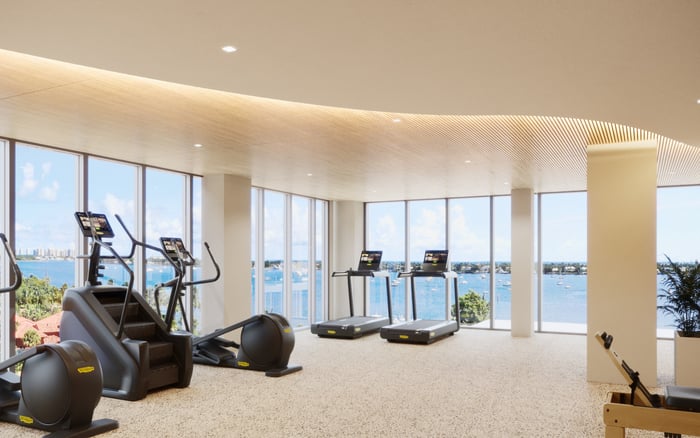
Amenity size alone does not reveal how easily residents can use a particular service. Separate the wellness program into functional components, such as fitness, treatment, recovery, pool, relaxation, and circulation areas. For each component, ask about the number of stations, rooms, class places, staff members, and simultaneous users the space is intended to accommodate.
Compare those answers with the number of residences and anticipated peak periods. A buyer should also ask whether any area can be closed for private events, maintenance, weather, or operational reasons. Where cabanas, treatment rooms, guest access, or private sessions are offered, determine whether reservations or separate fees apply.
Local project research can help organize questions without assuming that similarly named amenities operate under identical rules. Relevant West Palm Beach comparison points include Shorecrest Flagler Drive West Palm Beach and Mr. C Residences West Palm Beach. Any comparison should rely on the current documents supplied for the residence under consideration.
A digital interface may make requests convenient, but it does not by itself define priority or availability. Obtain the written policy governing advance-booking windows, cancellation charges, wait lists, guest rights, owner priority, and limits on active reservations.
Ask whether access is allocated by residence, resident, or guest and whether unused bookings create a penalty. If classes or personal services are contemplated, verify expected operating hours, staffing, participant limits, credentials where relevant, and charges not included in common expenses.
Apply the same review to treatment spaces, pool areas, guest accommodations, transportation, marina-related offerings, and hospitality services. For an operating property, request current rules and fee schedules. For a planned property, identify which terms remain subject to change and where amendment authority will rest.
Air-quality language should be translated into a defined technical scope. Request mechanical plans and specifications showing which systems serve residences, corridors, elevators, amenity rooms, garages, and other shared spaces. Ask for the stated filtration ratings, outside-air design, humidity controls, testing procedures, and filter-replacement schedule.
Clarify whether in-residence equipment is separate from common-area equipment. Determine who will monitor system performance, arrange service, replace consumables, and pay for repairs. Buyers should also ask how residents will be notified if a system is unavailable or operating outside its intended parameters.
Moisture management belongs in this review. Ask where leak sensors are planned or installed, where alerts are routed, whether automatic shutoff functions exist, and who must respond. Condensate management, humidity control, inspection routines, and repair responsibility should be considered alongside filtration.
The phrase “filtered water” is not sufficiently precise for due diligence. Engineering plans and equipment schedules should indicate whether treatment is centralized or located at the point of use, which fixtures are served, and what equipment or consumables are required.
Request the system type, intended performance, testing process, replacement interval, bypass conditions, warranty terms, and recurring service responsibility. Confirm whether in-residence maintenance is an owner obligation or part of building operations.
Potable-water treatment should be reviewed separately from sanitation for pools, spas, and hydrotherapy features. For aquatic amenities, ask about testing, cleaning, treatment, closure, recordkeeping, and incident-response procedures. Buyers considering wellness-focused alternatives may include Banyan Tree Residences West Palm Beach in a local comparison set while verifying every relevant representation in current project documents.
A medical-access promise requires careful definition. Determine whether services would be available in the tower, elsewhere in West Palm Beach, remotely, or through a combination of settings. Ask which services are contemplated, who may use them, whether enrollment or a separate membership is required, and which fees remain the resident’s responsibility.
Buyers should also clarify appointment procedures, operating hours, after-hours arrangements, family and guest eligibility, privacy protocols, and the consequences of a provider change. Marketing language should not be treated as a substitute for emergency planning or as a guarantee of medical coverage. The relevant provider terms and governing documents should explain the actual pathway from a resident request to care.
Wellness and environmental systems can create continuing service and replacement obligations. Request maintenance schedules, vendor contracts, warranties, reserve assumptions, and assignments of responsibility for mechanical equipment, filtration, pumps, sensors, pool systems, and treatment areas.
Separate costs included in common expenses from charges billed directly to an owner or user. Ask how the association may approve new fees, replace an operator, revise amenity rules, or discontinue a service. The review should also address what happens when equipment reaches the end of its useful life or a specialist vendor is no longer available.
Brand recognition should not replace this analysis. A buyer examining The Ritz-Carlton Residences® West Palm Beach or another full-service property should compare documented scope, governance, access, and cost allocation rather than relying only on the amenity label.
A credible wellness proposition should connect design, engineering, staffing, reservations, sanitation, medical-access terms, and funding. Before committing, buyers can request written answers, identify unresolved assumptions, and have the legal and technical materials reviewed by qualified professionals.
For discreet guidance on evaluating a full-service residence in South Florida, connect with MILLION.
If branded residences are on your mind — as a home or as an allocation — we would be glad to share what we are seeing, privately.
Begin a quiet conversationCompare the residence count with treatment rooms, recovery stations, class limits, equipment, and staffing. Total amenity area alone does not establish practical access.
Request advance-booking windows, cancellation fees, wait-list procedures, guest limits, owner-priority terms, and caps on active reservations.
No. Priority, availability, charges, and cancellation terms depend on the written operating rules.
Ask for filtration ratings, outside-air design, humidity controls, testing procedures, replacement intervals, and plans showing which spaces are served.
No. Buyers should separately verify the systems serving residences, corridors, elevators, amenity spaces, and other common areas.
Leak response and moisture management can affect indoor conditions. Confirm sensor locations, alert routing, shutoff functions, and maintenance responsibility.
It may refer to centralized treatment or point-of-use equipment with different coverage. Engineering plans should identify the fixtures and spaces served.
Request sanitation methods, water-testing procedures, cleaning intervals, closure rules, service responsibility, and recurring costs.
Confirm where care occurs, which services are included, who is eligible, whether separate enrollment is required, and which fees apply.
Review service schedules, vendor contracts, warranties, reserve assumptions, responsible-party assignments, and replacement plans for wellness and environmental equipment.