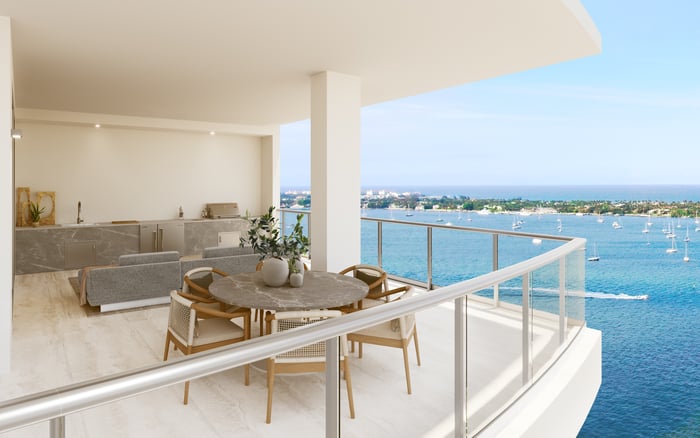
A Palm Beach residence deserves scrutiny beyond its finishes and outlook. Review humidity control, water treatment, replacement supplies, and written maintenance responsibilities before committing.

In Palm Beach, a compelling view can establish the emotional case for a residence in minutes. The practical case for ownership takes longer: how indoor humidity is controlled, what reaches the tap, whether replacement filters are readily available, and who takes responsibility when routine care becomes a repair. These questions deserve the same attention as proportions, materials, and privacy.
For a buyer considering a Palm Beach residence, the essential distinction is between presentation and documentation. A polished interior does not establish the condition of concealed plumbing or demonstrate that air-conditioning equipment maintains suitable humidity. Request a property-specific equipment inventory and service history; a general description of comfort is not technical assurance.
The objective is not to demand every available upgrade. It is to understand the installed systems, their condition, and the obligations that accompany them.
Indoor air diligence begins with moisture. Keeping relative humidity below 60%, with below 50% preferred, helps control conditions associated with mold growth and dust mites. A separate recommended indoor-air range of approximately 35%-55% offers another useful reference. These are recommendations, not proof of a universal legal maintenance standard.
Ask for humidity readings and an explanation of how the residence manages moisture. Air conditioning or a dehumidifier can reduce humidity; a central system that cannot maintain acceptable levels warrants examination. A comfortable temperature alone does not resolve the humidity question.
Leaks, condensation, and poor ventilation are common causes of mold and mildew. The inspection brief should address evidence of moisture, ventilation, and HVAC condition-not focus exclusively on a filter specification. Ask whether moisture from cooking and showering is vented outdoors and whether drip pans are clean.
When comparing West Palm Beach options such as Alba West Palm Beach, apply the same questions to each residence. A project name does not establish equipment performance. Request documentation for the particular home under consideration.
A recommendation of MERV 8 or better is a starting point for discussing filtration, not a reason to choose a replacement solely by rating. Ask the servicing professional to confirm the appropriate specification for the installed equipment, including exact filter dimensions and manufacturer instructions.
The practical questions are straightforward: what is installed, when was it last replaced, and what schedule is appropriate? Request model numbers, manuals, service records, and warranties. Regular HVAC checks should address mold, obstructions, and drip-pan cleanliness-not merely confirm that a new filter has been inserted.
Do not accept a generic 30-, 60-, or 90-day interval as a universal rule. The written schedule should reflect the equipment’s instructions and qualified service advice, rather than assuming a single replacement standard or legal requirement.
First, confirm the actual water provider. A Palm Beach address alone does not establish which utility supplies the property. Utility-level compliance information can provide a baseline, but it cannot establish the condition of an individual residence’s pipes, storage tanks, filters, or treatment equipment.
Request an inventory of any installed water-treatment equipment, including models, cartridge types, service dates, and replacement instructions. Ask what each component is intended to address and what documentation supports its condition. Where circumstances warrant, consider property-specific water testing and inspection of plumbing or treatment equipment.
For a residence under consideration at Forté on Flagler West Palm Beach, treat these as verification questions, not assumptions about installed systems. Establish what serves the individual residence and what, if anything, is maintained centrally.
An equipment specification is incomplete without a replenishment plan. Before committing, request the exact air-filter dimensions, water-cartridge identifiers, and any other consumables required by the installed systems. Confirm availability with suppliers rather than relying on an unlabelled spare in a utility cupboard.
Ask for current replacement prices and service charges, distinguishing materials from labor. Establish whether the owner, a property manager, or a service contractor handles ordering. If a particular cartridge is required, ask how an appropriate replacement is identified when it is unavailable.
This is also the time to reconcile records. Does the invoice describe the equipment currently installed? Do the manuals match the model numbers? Are warranties available for review? Small discrepancies call for clarification before closing, not an unsupported diagnosis.
For every system, establish who purchases supplies, schedules service, grants access, pays invoices, and authorizes repairs. In a condominium, ask which components fall within the residence and which are maintained through shared arrangements. Review the applicable documents rather than inferring responsibility from the presence of a service desk.
For a leased residence, examine the actual lease. Check whether a maintenance clause assigns filter replacement and its expense to the tenant, and whether it specifies a schedule. Do not assume another property’s terms establish the obligations for the residence under consideration.
A comparison that includes Mr. C Residences West Palm Beach should include written answers about maintenance boundaries alongside design preferences. Ask who responds to a humidity concern, who services any water-treatment equipment, and which charges remain the resident’s responsibility.
The most valuable handover file is one the next owner can act on. Include equipment models, filter sizes, cartridge types, manuals, warranties, service records, replacement intervals, supplier contacts, and recurring cost estimates. Pair each task with a named responsible party or contractual role.
Second-home planning adds a practical question: who verifies conditions and completes scheduled work while the owner is away? Request a documented arrangement rather than assuming that occasional visits include technical checks.
Waterfront appeal and lifestyle priorities need not compete with this discipline. They become easier to enjoy when the operational details are clear. Where evidence of moisture or equipment problems warrants further investigation, consider qualified HVAC, dehumidification, water, or moisture assessment before treating the review as complete.
For a discreet approach to evaluating Palm Beach residences beyond the view, explore MILLION.
If branded residences are on your mind — as a home or as an allocation — we would be glad to share what we are seeing, privately.
Begin a quiet conversationReview humidity control, HVAC filtration, plumbing, water-treatment equipment, replacement supplies, and written maintenance responsibilities. Request records specific to the residence.
Keeping relative humidity below 60%, with below 50% preferred, helps control conditions associated with mold and dust mites. These recommendations are not a universal legal maintenance standard.
No. Request humidity readings and examine a central system that cannot maintain acceptable humidity levels.
MERV 8 or better is a starting point for discussing filtration. Have the servicing professional confirm the appropriate filter specification for the installed equipment.
Do not assume a universal 30-day interval. Confirm the schedule using the equipment instructions, qualified service advice, and any applicable maintenance agreement.
Utility compliance does not establish the condition of the home’s plumbing, storage tanks, filters, or treatment equipment. Property-specific inspection or testing may be appropriate.
A Palm Beach address alone does not establish which utility supplies the property. Only the supplying utility’s compliance information provides a relevant utility-level baseline.
Include filter dimensions, cartridge identifiers, replacement intervals, supplier contacts, and current material and service costs. Match those details to the installed equipment.
Review the actual lease and maintenance provisions to determine who handles replacement and pays for it. Do not assume another residence’s arrangement applies.
Establish who checks conditions and completes scheduled maintenance while the owner is away. Put access, scheduling, payment, and repair-authorization responsibilities in writing.