A buyer-focused comparison of two branded living models: a private residential tower in Edgewater and an integrated Auberge resort and club campus in Hallandale Beach.
In South Florida’s market for Branded Residences, privacy is not simply a matter of gates, cameras, or private elevators. It is the product of an operating model: who may enter, why they are there, where they arrive, which amenities they may use, and how their movements intersect with an owner’s daily life.
That distinction separates EDITION Edgewater from Shell Bay by Auberge Hallandale. The former is planned as a private residential development without an on-site hotel. The latter is an integrated luxury resort and private-club destination encompassing residences, lodging, golf, spa, fitness, and social facilities.
Both can deliver high-touch hospitality. They do not, however, produce the same circulation patterns. For a buyer, that operational distinction may prove more consequential than the visual drama of a lobby or the breadth of an amenity brochure.
Privacy is best understood as a circulation plan, not a marketing adjective.
At 2121 N Bayshore Drive, EDITION Edgewater is planned as a 649-foot, 55-story tower with 185 residences and three tri-level penthouses. As the EDITION brand’s first private residential experience worldwide, the building’s essential proposition is clear: hospitality-style service in a residential-only environment.
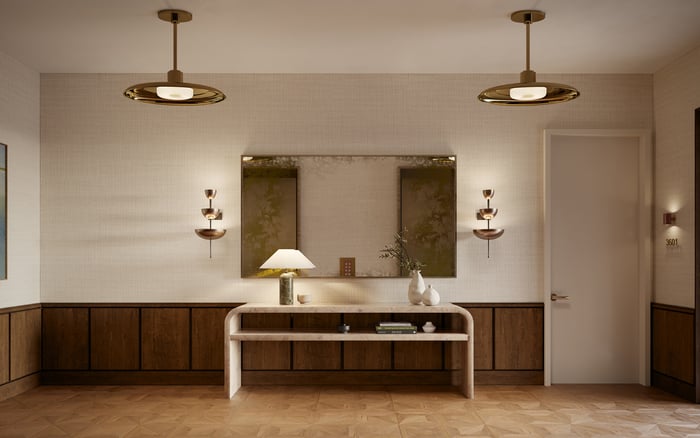
The covered porte-cochère leads to a three-story residential lobby with valet, security, reception, and controlled arrival. No hotel check-in desk creates a daily rhythm of luggage, ride-share activity, visitors unfamiliar with the property, or transient occupants moving through residential elevators and corridors. Circulation is instead limited to owners, their guests, and staff.
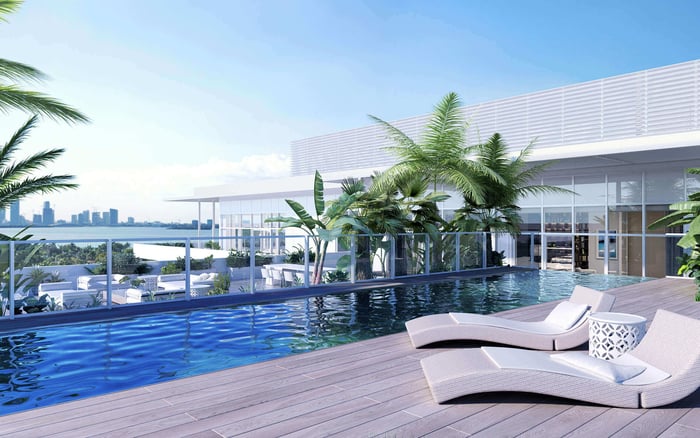
That does not make the property socially narrow. More than 45,000 square feet of indoor and outdoor amenities are planned, with private dining, screening, entertainment, conference, and lounge spaces concentrated on the eighth floor. The ninth-floor wellness program includes a full-service spa, fitness facilities, yoga areas, steam room, sauna, and relaxation spaces. Multiple pools, cabanas, personal-training studios, and dedicated children’s and teen areas broaden the residential offering.
Six reservable luxury guest suites are an especially relevant privacy feature. They allow owners to host visitors within the residential amenity structure without turning the building into transient hotel inventory. Terraces extending up to 12 feet deep also give residences meaningful private outdoor space above the shared amenity floors.
Within Edgewater, buyers may compare this controlled model with other new residential propositions such as Aria Reserve Miami. The useful comparison is not brand prestige alone, but the relationship among arrival, amenity access, guest accommodation, and vertical circulation.
EDITION’s approximately 800 linear feet of bay frontage and direct access to the Miami Baywalk connect the property’s waterfront edge with Margaret Pace Park. This brings activity to the water but should not be confused with public access to residential interiors.
A buyer should distinguish perimeter activity from internal circulation. A lively Baywalk may place walkers and park users near the site, while the porte-cochère, lobby, elevators, pools, and lounges remain residentially controlled. The key issue is where the boundary lies and how access points are monitored, particularly where the waterfront and amenity levels meet.
This is a familiar South Florida condition: public realm and private retreat can coexist when their paths are legible and their thresholds are managed. For Buyer's Guides, the more precise question is not whether the surrounding waterfront is active, but whether that activity crosses an owner’s habitual route from car to residence, pool, spa, or private gathering space.
Shell Bay presents a more layered proposition in Hallandale Beach. Because the campus combines a hotel, private club, residential uses, golf, wellness, and social facilities, hotel guests and club members are inherent participants in its circulation model. Their presence is not limited to guests sponsored by residence owners.
The appeal is equally clear. An integrated Auberge destination can place an expansive hospitality ecosystem close to home, including an approximately 18,000-square-foot indoor-outdoor spa and fitness center. Golf, lodging, wellness, and social life can form part of one managed setting. Buyers drawn to an animated club culture may view that mix as an advantage rather than a compromise.
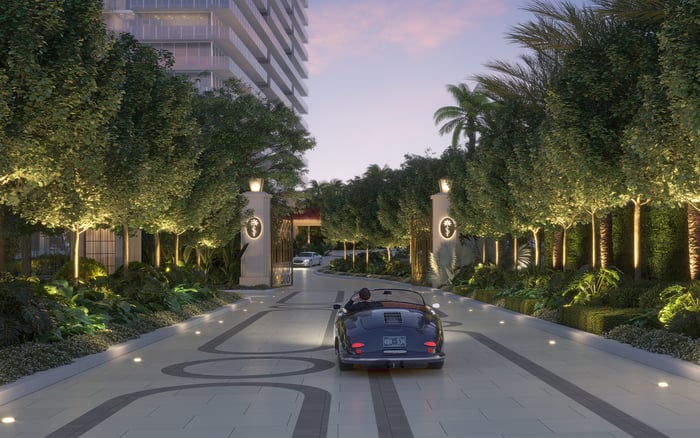
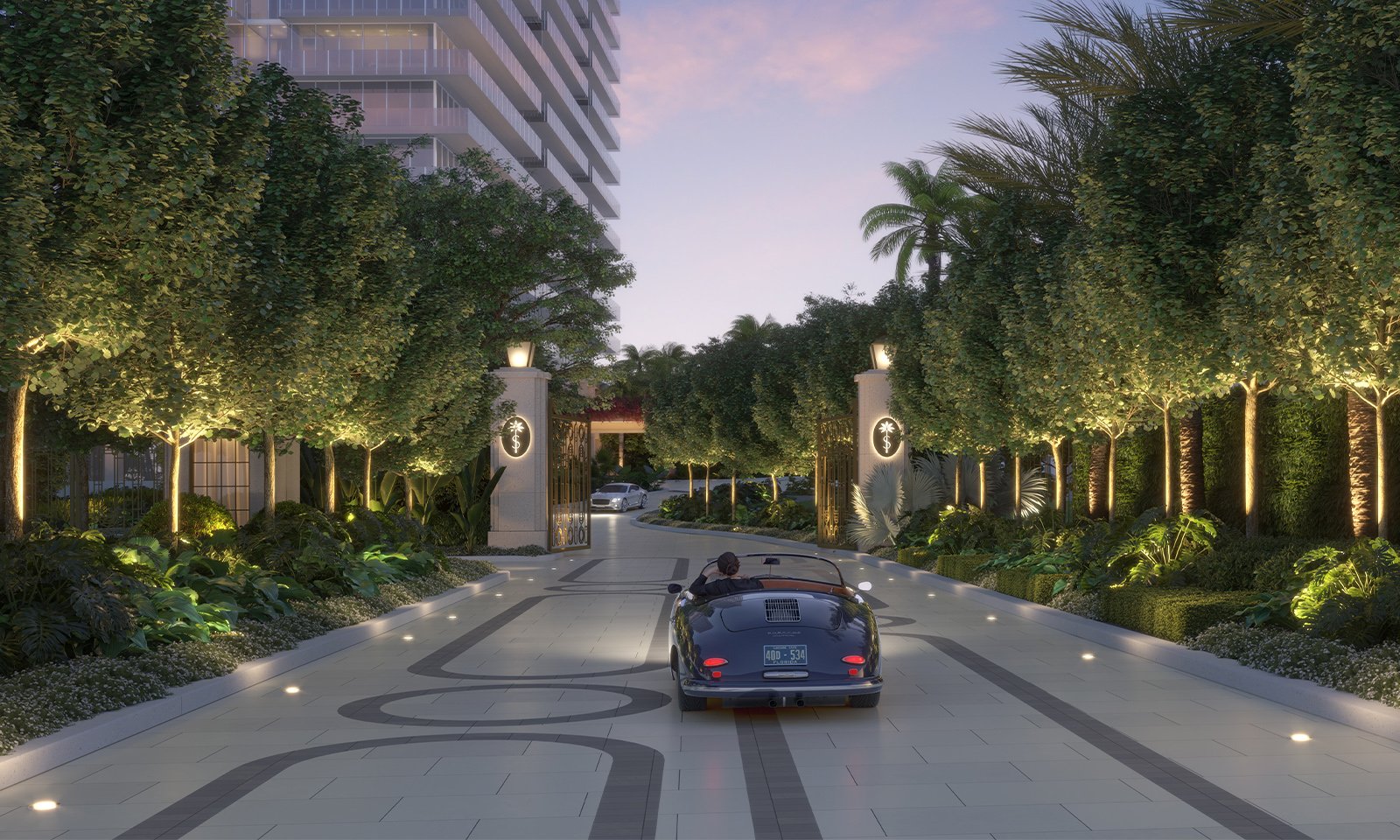
Here, privacy depends less on excluding nonresidential users from the campus than on separating constituencies within it. Residential arrival, hotel check-in, club access, employee entry, deliveries, valet operations, service corridors, elevators, and amenity-booking protocols all matter. The strongest experience would allow an owner to participate in the resort when desired, then withdraw without repeatedly passing through its busiest public or member-facing spaces.
A useful regional comparison is 2000 Ocean Hallandale Beach, which offers buyers a different residential context within the same broader market. The comparison should remain operational: private building circulation and an integrated resort-campus model solve for lifestyle in distinct ways.
A planning amendment reduced Shell Bay’s previously approved hotel inventory from 938 keys to 228, materially lowering the planned scale of transient lodging. The same amendment permitted residential uses within a defined area of approximately 17.5 net acres, more closely integrating homes into the resort plan.
The revised configuration also retained 108 hotel keys in Tower 200, eliminated Tower 300, and slated Tower 400 for redesign. These changes make current documentation essential. Earlier diagrams or marketing presentations may no longer reflect the operative use mix, hotel count, or tower arrangement.
A reduced hotel program may lessen aggregate transient traffic, but key count alone cannot establish residence-owner privacy. Placement is critical. Two hundred twenty-eight keys connected to residential paths could feel more present than a larger inventory positioned elsewhere. Buyers should therefore evaluate adjacency and circulation, not totals alone.
Before contract, request the latest approved site plan and identify every residential, hotel, club, employee, delivery, and service entrance. Review lobby and elevator diagrams, including transfer floors and back-of-house routes. Ask for an access-control schedule defining which credentials open specific doors, elevators, gates, and amenities.
Amenity rights warrant equal scrutiny. Buyers should obtain a written distinction between residential-only facilities and those shared with hotel guests or club members. They should also clarify guest privileges, reservation priority, operating hours, event access, valet procedures, and whether service staff can reach residences without entering owner-facing spaces.
At EDITION, the central diligence question is whether the residential-only concept remains consistently protected across the Baywalk edge, guest suites, social floors, wellness facilities, and service circulation. At Shell Bay, the inquiry is broader: how successfully does the campus allow residents to opt into club and resort life while preserving a private route home?
EDITION Edgewater offers the cleaner privacy proposition. The absence of an on-site hotel removes transient guests from residential elevators, corridors, pools, and lounges. It is likely to appeal to owners who value hospitality cues but prefer a building whose social population remains tied to residents and their invited guests.
Shell Bay offers a more immersive lifestyle proposition. Its hotel and club populations contribute to the destination’s energy and utility while placing greater importance on physical and operational separation. It may better suit buyers who want golf, wellness, social facilities, and resort life close at hand, provided that private residential circulation is convincingly documented.
Neither model is universally superior. The decision turns on the owner’s preferred degree of animation, tolerance for shared environments, and expectation of retreat. In luxury real estate, the decisive plan may not be the residence floor plan. It may be the route from the front gate to the front door.
For confidential guidance on comparing South Florida’s most considered residential offerings, connect with MILLION.
If branded residences are on your mind — as a home or as an allocation — we would be glad to share what we are seeing, privately.
Begin a quiet conversationNo. It is planned as a private residential development, so transient hotel guests are not part of its internal circulation model.
The building is designed around residents, their invited guests, and staff, with controlled arrival through a residential lobby.
The amenity program includes six reservable luxury guest suites for owners’ visitors rather than transient hotel inventory.
It creates an active waterfront edge, but public perimeter activity is distinct from access to controlled residential interiors and amenities.
Shell Bay integrates residences with a hotel, private club, golf, wellness, and social uses, so multiple user groups move through the campus.
The amended plan reduced the previously approved hotel inventory from 938 keys to 228.
No. Privacy also depends on the placement of hotel uses and the separation of lobbies, elevators, amenities, service routes, and entrances.
Its resort and club program includes lodging, golf, social facilities, and an approximately 18,000-square-foot indoor-outdoor spa and fitness center.
Request the latest approved site plan, lobby and elevator diagrams, access-control schedule, and written designations for residential-only and shared amenities.
EDITION Edgewater offers the simpler model because it has no on-site hotel, while Shell Bay relies more heavily on carefully managed separation across an integrated campus.