Edgewater offers a residential bayfront alternative to Brickell, with access to Miami’s performing arts, galleries, and design destinations. For luxury buyers, the decision turns on the building, its immediate surroundings, and the daily balance between waterfront living and urban convenience.

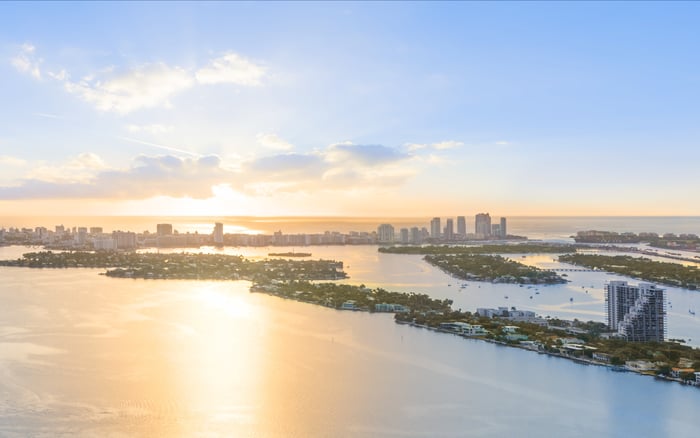
For buyers who want Miami’s cultural life without making Brickell’s financial-district energy their everyday setting, Edgewater offers a distinct alternative. Along Biscayne Bay north of downtown, residential towers and waterfront recreation define the neighborhood’s daily rhythm. Its appeal is not withdrawal from the city, but a different relationship with it: a bayfront home base with access to performances, galleries, restaurants, and design destinations.
That distinction matters. Edgewater is a high-rise neighborhood, not a low-density retreat; quieter is a relative description, not a promise. Compared with Brickell’s concentrated office, dining, and nightlife environment, however, its orientation is more residential. For the right buyer, the luxury lies in separating the atmosphere of home from the energy of an evening out.
Edgewater sits between downtown Miami and the Design District, placing residents near several distinct expressions of the city’s cultural life. Downtown supplies performing-arts destinations; Wynwood adds galleries and restaurants; the Design District brings a focus on design and dining. Rather than concentrating every experience within one neighborhood, Edgewater offers a base for exploring several.
The nearby Adrienne Arsht Center for the Performing Arts is particularly relevant for buyers whose calendars revolve around live performance. Its Ziff Ballet Opera House and Knight Concert Hall accommodate opera, ballet, Broadway, and concerts, including performances associated with Florida Grand Opera and Miami City Ballet.
The ownership question is practical as well as aesthetic: which destinations will you actually use? A buyer who regularly attends ballet may evaluate an address differently from one whose weekends center on galleries and restaurants. Build the shortlist around those habits rather than treating cultural proximity as a single, interchangeable amenity.
The bay is Edgewater’s defining daily advantage, but a view and a usable outdoor routine are not the same thing. Margaret Pace Park provides approximately eight acres of bayfront recreation, including tennis courts, basketball facilities, a dog run, and open green space. For buyers who value time outside, that combination can matter as much as a building’s private amenities.
Consider how a residence would support an ordinary morning or evening. Is the park convenient to reach from the entrance you will use? Does the surrounding streetscape invite the kind of walk you enjoy? Evaluate a waterfront address at ground level, not solely from a terrace or an amenity-deck presentation.
Buyers should also distinguish individual shoreline connections from neighborhood-wide access. Waterfront ownership does not automatically provide public shoreline access, and the Baywalk should not be assumed to form a continuous route throughout Edgewater. Confirm the specific access associated with each property and walk the relevant route yourself.
Edgewater’s luxury housing profile emphasizes modern high-rise condominiums, bay-facing residences, contemporary design, and resort-style amenities. Within that broad category, look beyond a shared waterfront vocabulary to how each building serves residents. Design, hospitality, wellness, private dining, and resident services increasingly shape the neighborhood’s newer luxury offerings.
Villa Miami illustrates the hospitality dimension, combining residential development by Terra and One Thousand Group with Major Food Group as hospitality partner. Buyers drawn to that approach should examine the precise services and obligations in the offering documents rather than assume that a hospitality association defines every aspect of ownership.
Aria Reserve Miami is another example of Edgewater’s concentration of luxury waterfront development. Its place on a shortlist should prompt the same disciplined questions: how does the particular residence engage the bay, which amenities fit the intended routine, and what does the immediate neighborhood offer beyond the property itself?
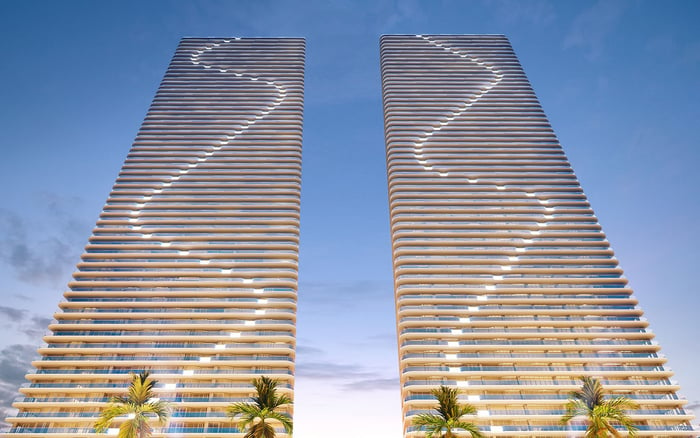
EDITION Edgewater has project specifications of 55 stories and 185 residences at 2121 North Bayshore Drive, with Two Roads Development as developer. The project includes more than 800 linear feet of Biscayne Bay frontage and direct Miami Baywalk access.
Those details move the discussion beyond a general waterfront label. Even so, frontage, views, and access answer different questions. Establish what the individual residence faces, how residents reach the shoreline, and which outdoor spaces support your intended use. A generous stretch of bay frontage does not, by itself, explain the experience of every home.
The same discipline applies to financial expectations. Historical launch prices are not current availability quotes. Obtain current inventory, pricing, project status, and contractual details before comparing an offering with another residence. The meaningful comparison is between specific homes and documented terms, not a launch headline and a present-day asking price.
Brickell remains compelling for buyers who want a denser concentration of dining, shopping, financial-district activity, and access to Metromover and Metrorail. Edgewater offers fewer continuous stretches of street-level dining and retail. That is no minor distinction for someone who expects to step outside and make most everyday decisions on foot.
Nor should nearby be read as universally walkable. Downtown, Wynwood, the Design District, and Miami Beach are accessible by car, but the practical experience depends on the building, destination, traffic, and transportation mode. Test the journeys that matter at the times you expect to make them, including the return home after a performance or dinner.
For some buyers, leaving the neighborhood for culture is an acceptable exchange for a more residential bayfront setting. For others, the additional planning will outweigh the appeal. Neither preference is inherently more luxurious; the better address is the one that requires fewer compromises in the life you actually lead.
A focused Edgewater search should begin with three priorities: the desired relationship to the bay, the cultural destinations used most often, and the level of convenience expected immediately outside the lobby. With those priorities clear, architecture and amenities can be judged against a practical brief rather than an abstract wish list.
Visit the immediate surroundings as carefully as the residence. Compare the route to outdoor space, test journeys to preferred destinations, and ask for precise explanations of services and access. Edgewater is most persuasive when the waterfront and the wider city complement one another, allowing home to feel residential without making culture an occasional undertaking.
For a tailored perspective on Edgewater residences and their lifestyle trade-offs, connect with MILLION.
If branded residences are on your mind — as a home or as an allocation — we would be glad to share what we are seeing, privately.
Begin a quiet conversationEdgewater offers a more residential bayfront setting, while Brickell concentrates more dining, shopping, office activity, and transit access. The choice depends on how you balance waterfront living with immediate urban convenience.
Edgewater can offer a quieter residential setting relative to Brickell’s financial-district core, but it remains a high-rise neighborhood. Evaluate the specific building and its surroundings rather than assuming uniform quiet.
Nearby destinations include the Adrienne Arsht Center, Wynwood’s galleries and restaurants, and the Design District. Practical access varies by address, traffic, and transportation mode.
The center presents opera, ballet, Broadway, concerts, and other performances. Its venues include the Ziff Ballet Opera House and Knight Concert Hall.
Margaret Pace Park provides approximately eight acres of bayfront recreation. Facilities include tennis courts, basketball facilities, a dog run, and open green space.
No, proximity to cultural and dining destinations does not mean universal walkability. Buyers should test routes from the specific building to the places they expect to visit.
Buyers should not assume a continuous Baywalk throughout the neighborhood. Shoreline access and connections need to be checked property by property.
Villa Miami, EDITION Edgewater, and Aria Reserve Miami illustrate the neighborhood’s concentration of luxury waterfront development. Compare individual residences, documented services, and immediate surroundings rather than relying on the waterfront label alone.
Villa Miami combines development by Terra and One Thousand Group with Major Food Group as hospitality partner. Buyers should review offering documents to understand the specific services and ownership obligations.
Historical launch pricing is not a current availability quote. Obtain current inventory, pricing, project status, and contractual details before comparing specific homes.