Downtown Miami delivers institutional culture, events, business activity, and a geographic advantage for PortMiami logistics. Edgewater offers a quieter Biscayne Bay setting with convenient access to Wynwood, the Design District, and contemporary-art destinations.
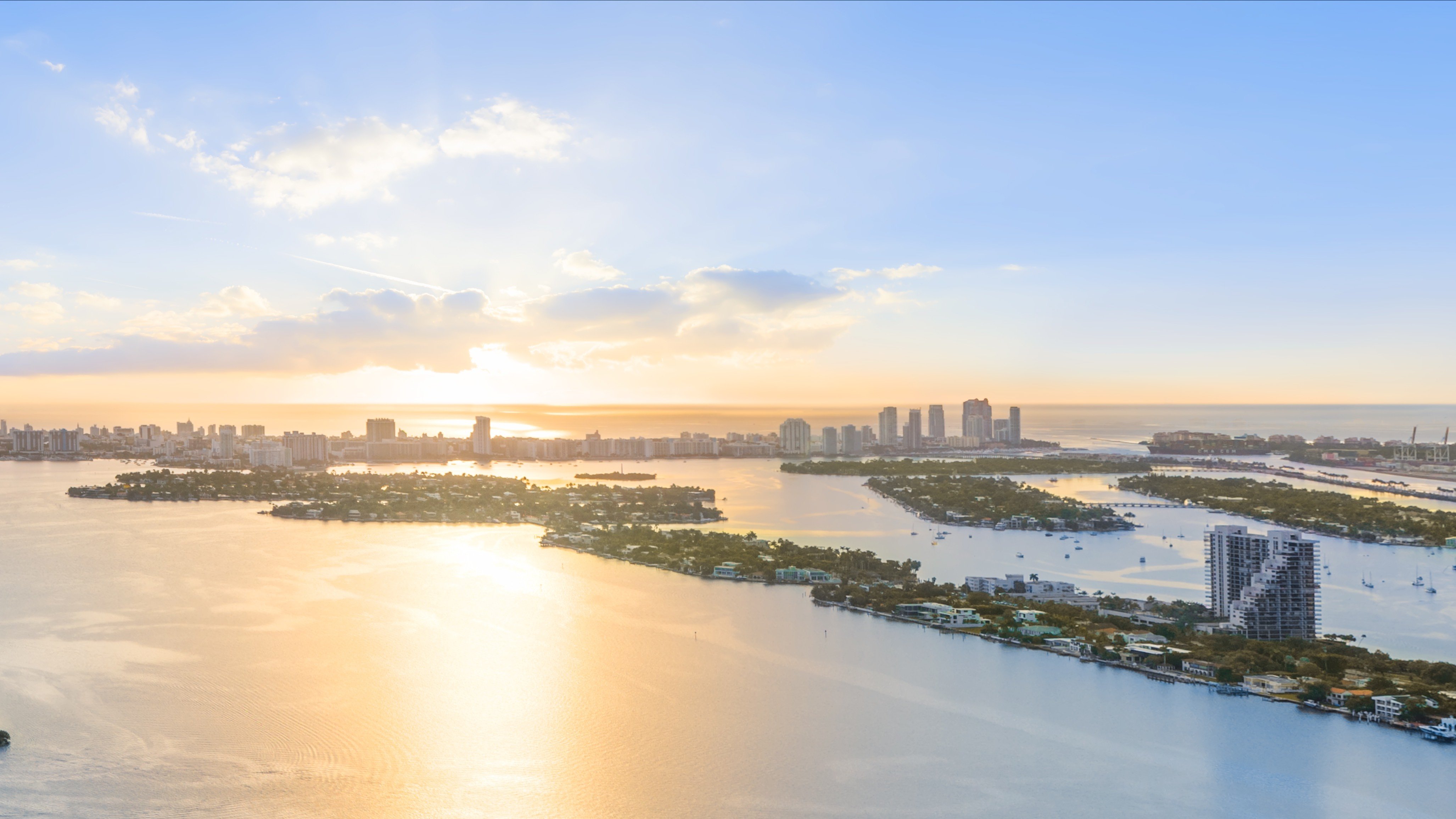
Downtown Miami and Edgewater occupy adjacent stretches of the Biscayne Bay corridor, yet they answer distinctly different briefs. Downtown favors the buyer who wants institutional culture, major events, corporate activity, and transportation infrastructure woven into daily life. Edgewater speaks to the collector who prefers a residential waterfront setting while remaining close to Wynwood, Midtown, the Design District, and Downtown.
The distinction is not whether either neighborhood offers access to culture. Both do. The more useful question is what kind of access matters most. One provides immersion in Miami's civic and event core; the other offers a quieter home base between the urban center and the city's contemporary-art and luxury-retail districts.
The decisive choice is institutional immersion or residential calm near contemporary culture.
Downtown places residents near Pérez Art Museum Miami, the Frost Museum of Science, HistoryMiami Museum, Kaseya Center, and the James L. Knight Center. The adjoining Arts & Entertainment District brings the Adrienne Arsht Center into that cultural circuit. For buyers whose calendars move between exhibitions, performances, business meetings, and major events, the neighborhood makes participation feel immediate rather than occasional.
This is skyline living with an outward-facing rhythm. Residences such as Waldorf Astoria Residences Downtown Miami and One Thousand Museum Downtown Miami illustrate the vertical addresses available to buyers who want the urban core beneath them. The appeal lies less in retreating from the city than in occupying a commanding position within it.
That intensity will not suit everyone. Buyers seeking residential seclusion may find Downtown more animated than restorative. For patrons who regularly attend institutional openings, arena events, performances, and civic gatherings, however, its density can be the principal luxury.
Edgewater presents a more residential counterpoint along Biscayne Bay. Its high-rise landscape is oriented toward bay views and convenient movement among Downtown, Wynwood, Midtown, and the Design District. Margaret Pace Park and waterfront recreation provide breathing room that is harder to find in denser commercial districts.
Projects including Aria Reserve Miami and EDITION Edgewater bring the neighborhood's proposition into clear focus: a waterfront home base with water-view potential, subject to the residence and exposure, rather than a home embedded directly in the central business district.
For contemporary-art collectors, geography is central to the appeal. ICA Miami, Wynwood galleries, and Design District boutiques sit within Edgewater's broader daily orbit. Traffic and a building's precise location can materially alter travel times, while nearby causeways facilitate travel toward Miami Beach.
A collection shapes the residential brief far beyond proximity to museums. Downtown is compelling for buyers whose interests lean toward institutional programming, major performances, civic culture, and an active events calendar. Edgewater may be the more natural choice for those whose routines center on contemporary galleries, design showrooms, and luxury retail, followed by a return to a quieter bayfront residence.
The home's physical performance matters as much as its cultural map. Collectors should evaluate elevator dimensions, loading access, service routes, delivery scheduling, wall area, ceiling height, glazing, direct sunlight, humidity control, backup power, security, and building rules for specialist installers. These requirements cannot be inferred from neighborhood prestige alone.
A residence at Villa Miami, for example, belongs in an Edgewater search by virtue of its location, but any acquisition decision should still turn on the specific residence, exposure, building procedures, and collection plan. The same discipline applies Downtown. Architecture and views begin the conversation; conservation and operations complete it.
For a buyer focused on freight, Downtown holds the clearer geographic advantage. It sits beside PortMiami and close to Miami's central business and transportation infrastructure. That position can matter when a collection includes works arriving through port-related channels or when a principal's commercial interests require frequent contact with maritime logistics.
Proximity, however, is no substitute for a logistics plan. Route constraints, traffic, customs procedures, insurance, secure staging, storage, loading reservations, and specialist art handling all require separate review. A short map distance does not guarantee a simple delivery from port to residence, particularly for oversized, fragile, or climate-sensitive works.
Edgewater remains connected southbound to Downtown and Brickell via Biscayne Boulevard, while northbound routes lead toward Wynwood and the Design District. It can therefore accommodate occasional freight movement, but buyers for whom port access is a recurring operational priority will generally find Downtown more directly aligned with that requirement.
Choose Downtown when the desired lifestyle is participatory and metropolitan. It is best aligned with the executive, patron, or frequent event guest who values immediate access to offices, institutional museums, performance venues, and PortMiami. The neighborhood's energy is part of the acquisition thesis, not background noise.
Choose Edgewater when the priority is a residential waterfront atmosphere without withdrawing from Miami's cultural geography. It suits collectors who want contemporary art, design, and retail districts nearby but prefer Biscayne Bay views and a calmer transition between appointments.
Neither choice is categorically superior. The strongest fit emerges from the frequency of museum and gallery visits, the nature of the collection, freight requirements, preferred routes, tolerance for urban activity, and importance of water views. Buyers should test those priorities from the exact building, as travel times and walking convenience vary across both neighborhoods.
Before selecting an address, map a typical week rather than an ideal weekend. Include office arrivals, exhibition openings, performances, gallery appointments, airport or beach trips, art deliveries, and private entertaining. Then compare the route network with the building's service infrastructure and the residence's environmental conditions.
Downtown prevails on immediate access to institutions and events, along with geographic proximity to port and business infrastructure. Edgewater prevails on residential calm, direct bay frontage, and convenient orientation toward Wynwood and the Design District. For an art-focused buyer, that is the essential trade: culture at the front door or culture nearby, with the bay as a daily buffer.
For discreet guidance on comparing residences in Downtown Miami and Edgewater, connect with MILLION.
If branded residences are on your mind — as a home or as an allocation — we would be glad to share what we are seeing, privately.
Begin a quiet conversationDowntown Miami offers more immediate access to major museums, performance venues, civic culture, and large events.
Edgewater often suits collectors seeking convenient access to Wynwood, ICA Miami, and the Design District from a quieter bayfront base.
Downtown sits beside PortMiami and near central business and transportation infrastructure, giving it a geographic advantage for port-oriented needs.
No. Customs, insurance, routes, secure staging, storage, loading rules, and specialist handling still require separate planning.
Yes. Edgewater has direct bay frontage, distinguishing it from inland Wynwood and the Design District.
Review loading procedures, service routes, elevator dimensions, light exposure, humidity control, backup power, security, and installation rules.
Generally, yes. Downtown's offices, institutions, events, and venues create a more immersive urban rhythm.
Yes. Nearby causeways provide access for residents traveling between mainland cultural districts and Miami Beach.
Travel convenience, service procedures, views, exposure, and collection requirements can differ by building and residence.
Downtown emphasizes institutional immersion and logistics, while Edgewater emphasizes residential calm, bay frontage, and contemporary-art proximity.