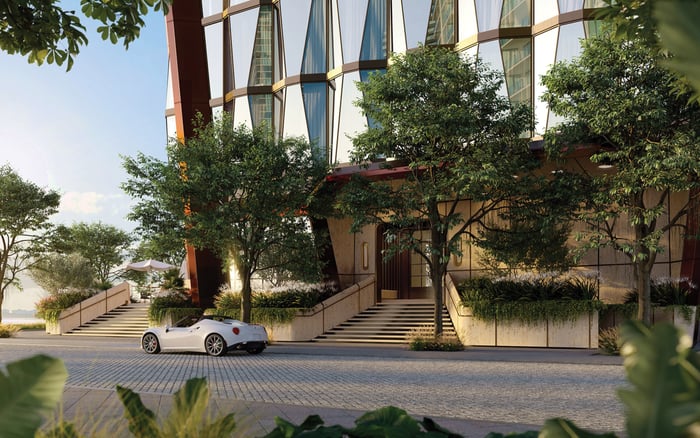
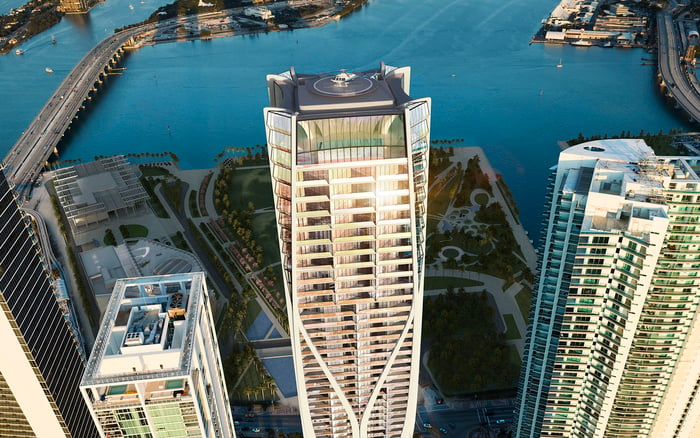
A residence-specific purchase framework for evaluating arrival privacy in Edgewater, from valet handoffs and elevator controls to waterfront access, service circulation, and documented use rights.
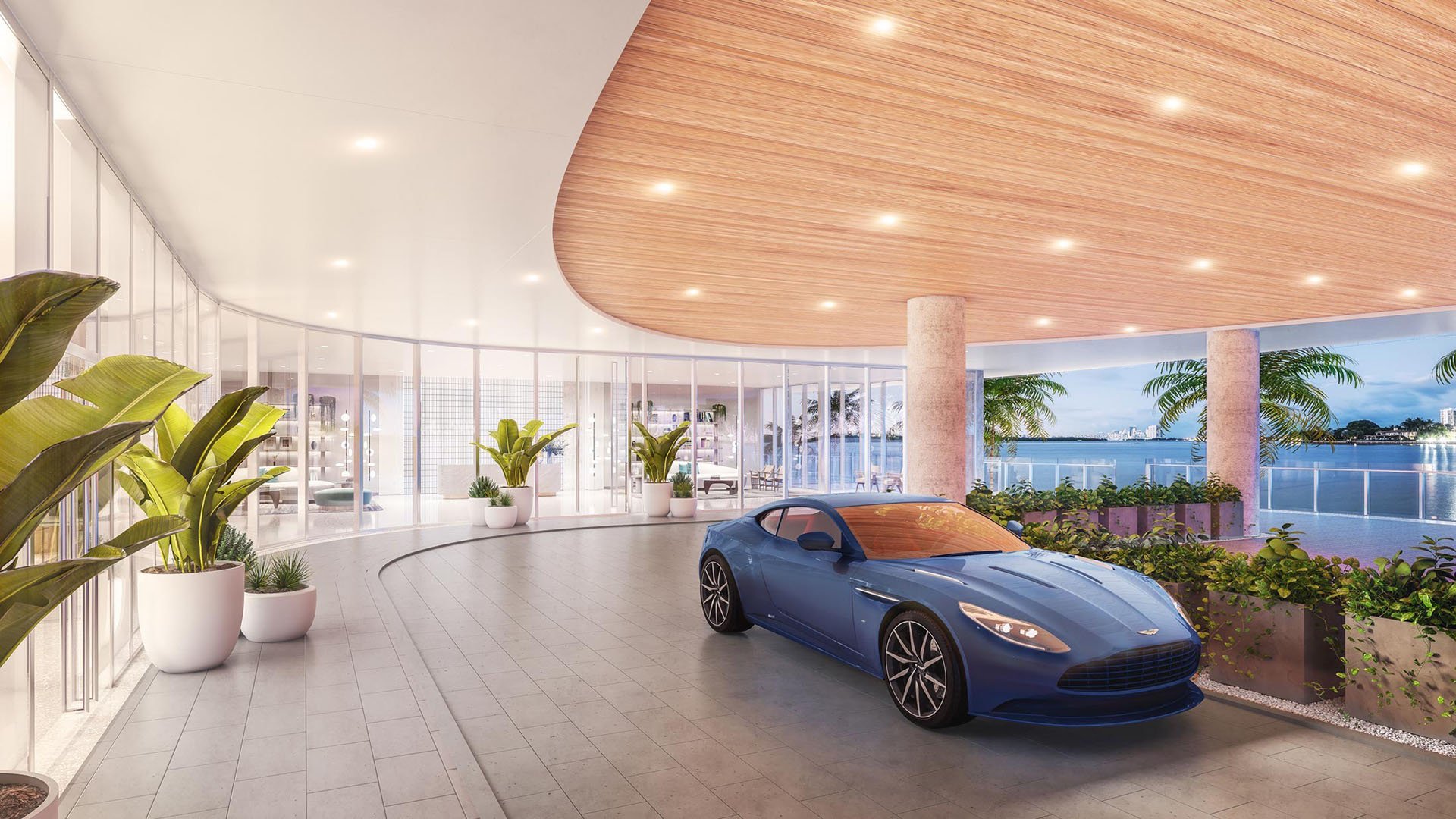
For a family office purchasing in Edgewater, arrival privacy is a condition of suitability, not a decorative amenity. The question is not whether a building offers valet, a private foyer, or a dock. It is whether the complete journey from vehicle or vessel to residence works discreetly for the household, its guests, and its staff.
A private elevator entry may still follow a shared waiting area. A covered arrival court can provide shelter without screening occupants from pedestrians. A dock can add flexibility without creating a controlled waterfront entrance. The purchase plan should evaluate every transition, then establish which arrangements apply to the particular residence.
Before comparing properties, prepare a concise arrival brief covering principal residents, children, guests, drivers, household employees, and contractors. Specify which groups may share circulation and where separation matters. Address luggage handling, unattended deliveries, late arrivals, and an alternative when the preferred entrance is unavailable.
Distinguish discretion from exclusivity. A shared route may be acceptable if waiting positions, access controls, and staff procedures meet the household's requirements. Conversely, an entrance described as private may be unsuitable if reaching it requires an exposed handoff. The brief gives the acquisition team a consistent standard, rather than a shifting response to each presentation.
When evaluating EDITION Edgewater, ask the acquisition team to establish the arrival sequence and confirm which valet, security, reception, and luggage-handling arrangements would apply to the selected residence. A service description alone does not establish an arrival protocol tailored to the principal.
During an authorized inspection, follow a normal arrival from the stopping position to the elevator. Assess pedestrian sightlines, where another vehicle waits, who receives luggage, and whether residents must cross the main lobby. Ask management to demonstrate the proposed handoff rather than describe an idealized version.
Repeat the exercise for a guest and a chauffeured arrival. Establish where each person waits, who authorizes onward access, and how staff handle simultaneous arrivals without improvised exceptions.
For a potential purchase at Aria Reserve Miami, confirm the parking allocation, valet arrangements, and elevator configuration for the particular residence and tower. Assigned parking or valet service, if available, would not alone establish an exclusive garage-to-elevator connection.
Request a walkthrough from the actual proposed parking location to the residence entrance. With management's authorization, test gate controls, visitor permissions, and elevator credentialing. Identify shared waiting areas and any overlap with service vehicles. Ask how a guest, driver, or household employee receives access-and how that access is withdrawn.
Apply the same residence-specific review at EDITION. Verify any proposed private foyer or elevator entry against the selected home's floor plan rather than applying another residence's description to it. At any Edgewater property, garage size or physical separation does not itself establish distinct resident and service routes.
Where an Edgewater residence offers waterfront access, inspect it independently of the curbside entrance. Determine whether resident circulation intersects with a baywalk or other shared waterfront activity, and identify the point at which access becomes controlled.
For a waterfront arrival assessment at Aria Reserve, first establish which facilities and use rights, if any, apply to the selected home. Recreational water access should not be treated as evidence of a controlled vessel-arrival route.
Walk the complete route from any proposed landing point to the residence. Review gangway authorization, neighboring sightlines, lighting, any public-baywalk exposure, and the indoor transition. Establish a bad-weather alternative and clarify whether the household's intended vessel use is permitted. Recreational waterfront amenities and dependable arrival arrangements are different propositions.
When considering Villa Miami, evaluate the residence layout separately from arrival access. Ask which parking and alternative-arrival arrangements are documented for the home under consideration. A full- or half-floor layout, if offered, would not by itself demonstrate independent garage access or a bypass of the main arrival court.
For any proposed dock or helipad arrival, first verify that the facility is part of the property and available for the intended use. Obtain written confirmation of the rights attached to the residence and the applicable operating conditions. Inspect the onward route to the home, not merely the arrival point.
If a building offers a car service, examine booking procedures, passenger identification, waiting locations, and the building handoff. Confirm availability and service terms rather than assuming the arrangement can serve as a dependable alternative. Assess convenience and discretion separately.
Trace loading, packages, housekeeping, contractors, and waste removal independently of the resident journey. Ask management to identify freight elevators, holding areas, authorization procedures, and any points where service and resident circulation intersect. Do not assume that a separate garage or private foyer resolves these questions.
The family office should understand how routine deliveries reach the home and what happens during a move or maintenance visit. Where circulation overlaps, assess whether operating procedures meet the household's requirements. Written policies and a demonstrated route are more useful than assurances that staff will accommodate requests.
Use a residence-specific scorecard covering curb discretion, garage privacy, elevator control, dock privacy where applicable, service separation, staffing, and operational proof. A zero-to-five scale can structure comparisons, but leave unverified features unscored. Record what was demonstrated and which conditions remain unresolved. Do not allow an attractive amenity to substitute for evidence.
Before commitment, have counsel review current condominium documents, access policies, circulation plans, and written confirmation of parking, dock, and helipad rights relevant to the purchase. Distinguish existing operating arrangements from proposed ones. The final recommendation should identify an acceptable primary arrival route, a workable alternative, and any unresolved issue requiring further confirmation.
For a residence-focused Edgewater acquisition conversation, connect with MILLION.
If branded residences are on your mind — as a home or as an allocation — we would be glad to share what we are seeing, privately.
Begin a quiet conversationDefine the household's arrival requirements, then evaluate the complete route from curb, garage, or dock to the specific residence. Separate advertised amenities from demonstrated operating arrangements.
No. The route preceding the foyer may include shared waiting areas or circulation, so the residence's floor plan and access controls require inspection.
Confirm the arrival sequence and which valet, security, reception, and luggage-handling arrangements apply to the selected residence. Ask management to demonstrate the proposed handoff.
Confirm the elevator and foyer configuration serving the selected residence and tower. Review the floor plan and inspect any shared waiting areas.
No. Buyers should walk the route from the proposed parking location to the residence and verify access controls along the way.
No. Buyers should verify gangway controls, sightlines, use rights, and the complete dock-to-residence route.
First confirm which facilities and residence-specific rights are documented. Any proposed dock or helipad use requires verification of availability, operating conditions, and the onward route to the home.
Identify loading areas, freight elevators, package handling, and points where service and resident circulation overlap. Ask how contractors and household employees receive and lose access.
Leave them unscored rather than assuming they provide privacy. Record unresolved questions separately from demonstrated conditions.
Review current condominium documents, access policies, circulation plans, and written confirmation of applicable parking, dock, and helipad rights. Counsel should distinguish existing arrangements from proposed ones.