A discreet buyer’s guide to legal, lifestyle, operating-cost, resiliency, brand, and resale diligence when comparing Shell Bay by Auberge Hallandale, The Residences at Six Fisher Island, and Alma Bay Harbor Islands.
The most sophisticated South Florida buyers do not compare luxury residences by rendering, brand name, or amenity language alone. They test the entire ownership proposition. That discipline is especially important when evaluating Shell Bay by Auberge Hallandale, The Residences at Six Fisher Island, and Alma Bay Harbor Islands, because each belongs to a distinct micro-location with its own rhythm, access profile, operating assumptions, and resale logic.
This is not a ranking. It is a diligence framework. A buyer considering Hallandale Beach, Fisher Island, and Bay Harbor Islands is not merely choosing finishes or views. The decision turns on how a residence will function legally, financially, physically, and socially after closing. The stronger question is: what must be proven before the contract feels as elegant as the presentation?
Shell Bay should be diligence-tested first as a Hallandale Beach project. Buyers should examine access, surrounding market context, and the ways the location differs from Miami Beach, Fisher Island, and Bay Harbor Islands. A Hallandale Beach purchase may appeal for different reasons than an island or boutique bayfront address, so lifestyle assumptions should be challenged early.
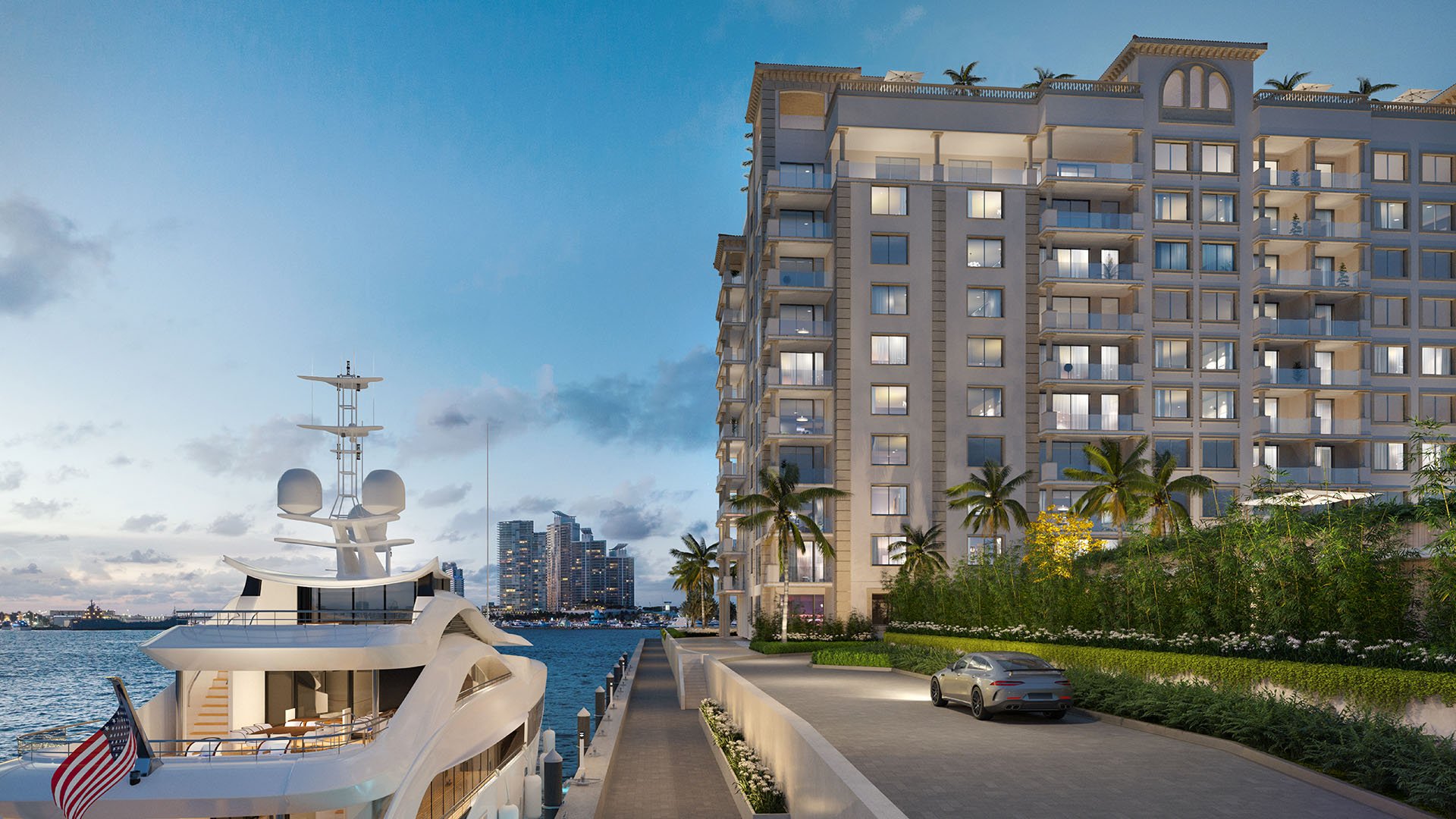
Six Fisher belongs to the Fisher Island universe, where exclusivity, access, transportation, service expectations, and operating structure are not secondary details. They are central to the ownership experience. A buyer who values privacy may see this as the point, while another buyer may need to study how island logistics fit daily routines, guests, household staff, and seasonal patterns.
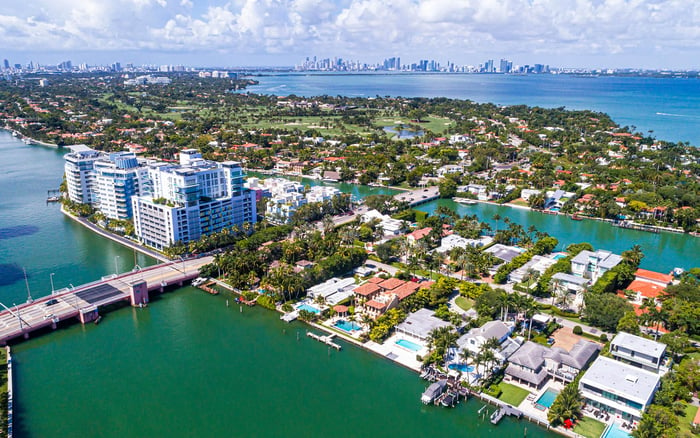
Alma should be examined as a Bay Harbor Islands product. The diligence emphasis shifts toward neighborhood scale, waterfront orientation, walkability, and proximity to Bal Harbour and Miami Beach. This is a different daily-use profile from both Hallandale Beach and Fisher Island. It may suit a buyer seeking a quieter residential base, but that fit should be measured against how the home will actually be used.
In ultra-luxury condominium purchases, the legal regime is not paperwork. It is part of the product. Across all three projects, buyers should understand condominium documents, use restrictions, club or membership structures, long-term owner obligations, and any provisions that shape how the property can be occupied, lent, leased, transferred, or enjoyed.
At Shell Bay, diligence should focus on the relationship among the residence, any club or hospitality component, and the Auberge-branded service offering. The question is not simply whether a luxury name is attached. It is what the documents actually require, who controls what, how long brand participation is contractually structured, and what happens after turnover.
At Six Fisher, the analysis should extend beyond the individual condominium. Buyers should understand how condominium governance interacts with broader Fisher Island access, club expectations, transportation needs, and service protocols. A prestigious setting can be exceptionally compelling, but the ownership architecture must be clear.
At Alma, the key question is whether the Bay Harbor Islands location and product scale match the intended use case. A primary residence, seasonal retreat, and capital-preservation purchase can each imply different priorities for association rules, guest use, storage, privacy, parking, and daily convenience.
Headline purchase price is rarely the full story. Buyers should scrutinize operating budgets, monthly carrying costs, reserves, insurance assumptions, staffing models, and future assessment risk before comparing one residence with another. A building with a sophisticated service structure may justify meaningful ongoing costs, but those costs should be understood rather than absorbed as an afterthought.
For Branded Residences, diligence should be especially precise. Brand value can influence perception and resale narrative, but buyers should separate marketing value from contractual reality. Who operates the property day to day? What standards are enforceable? Can service levels change? Are costs tied to staffing, hospitality expectations, or shared facilities? These questions often matter more than the language used in sales materials.
In Fisher Island, operating costs may be intertwined with broader lifestyle infrastructure. In Hallandale Beach, the interplay among residence, club, and hospitality should be reviewed closely. In Bay Harbor Islands, scale may influence how staffing, reserves, and maintenance obligations feel over time. None of these structures is inherently better. Each must be underwritten.
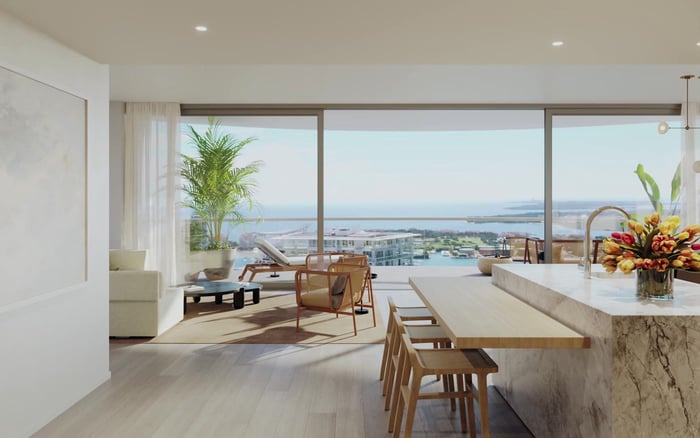
A beautiful image does not reveal how a home lives. Buyers should compare floor-plate efficiency, ceiling heights, terrace usability, view corridors, private elevator access, storage, parking, and service circulation. These details shape daily comfort and long-term liquidity.
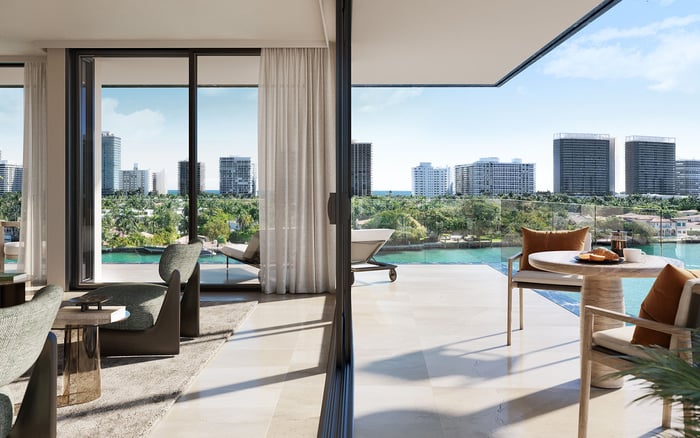
Terraces deserve particular attention in South Florida. A terrace that photographs well may not function equally well across sun exposure, wind, furniture placement, privacy, and actual usable depth. Similarly, a large interior layout can feel less valuable if circulation is inefficient or service zones conflict with entertaining areas.
Waterfront orientation also matters. A Waterfront residence should be reviewed not just for beauty, but for exposure, maintenance implications, privacy, and the durability of the view experience. In Bay Harbor Islands, buyers may compare Alma with other neighborhood references such as La Maré Bay Harbor Islands to understand how boutique waterfront positioning can vary from one product to another.
Environmental diligence belongs at the center of the underwriting, particularly for waterfront-oriented properties. Buyers should examine flood exposure, storm-hardening, insurance availability, and long-term maintenance implications. This is not a pessimistic exercise. It is how serious buyers protect lifestyle continuity and asset quality.
The inquiry should extend to how building systems are protected, how reserves contemplate future conditions, and whether insurance assumptions appear realistic. The most elegant residence can become a more complex ownership experience if future maintenance obligations, association funding, or insurance pressures are not addressed before closing.
For buyers comparing Hallandale Beach, Fisher Island, and Bay Harbor Islands, resiliency diligence should be specific to each setting. The same checklist may apply, but the answers will differ by location, building design, governance structure, and exposure profile.
Pre-construction and new-development purchases require confidence in execution. Developer diligence should cover track record, delivery history, construction financing, deposit protections, completion guarantees, change-order rights, and remedies if specifications shift before closing. These items may feel technical, but they are central to risk allocation.
Buyers should ask how finish packages are defined, what substitutions are permitted, what happens if timing changes, and how disputes are handled. A well-negotiated purchase is not merely one with attractive pricing. It is one that anticipates where uncertainty may appear.
This matters across all three projects. Shell Bay asks buyers to understand brand and hospitality relationships. Six Fisher asks buyers to understand island governance and service context. Alma asks buyers to confirm whether product scale, neighborhood character, and use case are aligned.
Resale diligence should test future buyer depth for each micro-market. Will future value depend more on scarcity, brand, waterfront frontage, club access, or broader South Florida luxury demand? Each of these forces can support value, but each speaks to a different buyer pool.
Fisher Island may appeal to buyers who prize privacy and exclusivity. Hallandale Beach may attract buyers evaluating access and a distinct coastal market position. Bay Harbor Islands may speak to buyers who value neighborhood scale, walkability, and proximity to Bal Harbour and Miami Beach. The strongest purchase is the one where investment logic and lifestyle logic point in the same direction.
Tax and residency planning should also be coordinated with legal counsel before purchase, particularly for buyers using a South Florida residence as part of domicile, estate, or cross-border planning. In the ultra-premium market, the residence often sits inside a broader wealth architecture.
Is this a ranking of Shell Bay, Six Fisher, and Alma? No. These projects require different diligence because Hallandale Beach, Fisher Island, and Bay Harbor Islands function differently.
What should buyers review first? Start with the legal documents, use restrictions, club or membership obligations, and long-term owner responsibilities.
Why do carrying costs matter so much? Monthly costs, reserves, staffing, insurance, and assessment risk can materially change the real cost of ownership.
How should buyers evaluate Shell Bay? Review its Hallandale Beach location and the relationship among the residence, club or hospitality components, and branded service.
What is central to Six Fisher diligence? Buyers should study Fisher Island access, condominium governance, club expectations, transportation, service structure, and operating costs.
What matters most at Alma Bay Harbor Islands? Confirm whether its neighborhood scale, waterfront orientation, walkability, and proximity to Bal Harbour fit the intended use.
Should buyers focus on renderings? Renderings are only a starting point. Floor-plate efficiency, terraces, views, parking, storage, and service circulation require close review.
Why is resiliency diligence important? Flood exposure, storm-hardening, insurance availability, and long-term maintenance can influence both comfort and resale strength.
How should buyers think about resale? Test whether future demand depends on scarcity, brand, waterfront frontage, club access, or the broader luxury market.
What is the best way to shortlist comparable options for touring? Start with location fit, delivery status, and daily lifestyle priorities, then compare stacks and elevations to validate views and privacy.
For a tailored shortlist and next-step guidance, connect with MILLION.
If branded residences are on your mind — as a home or as an allocation — we would be glad to share what we are seeing, privately.
Begin a quiet conversation