A practical buyer’s guide to evaluating private elevators, semi-private elevator cores, controlled arrival, valet flow, access control, foyer privacy, and operational resilience before purchasing a luxury condominium in Midtown Miami.
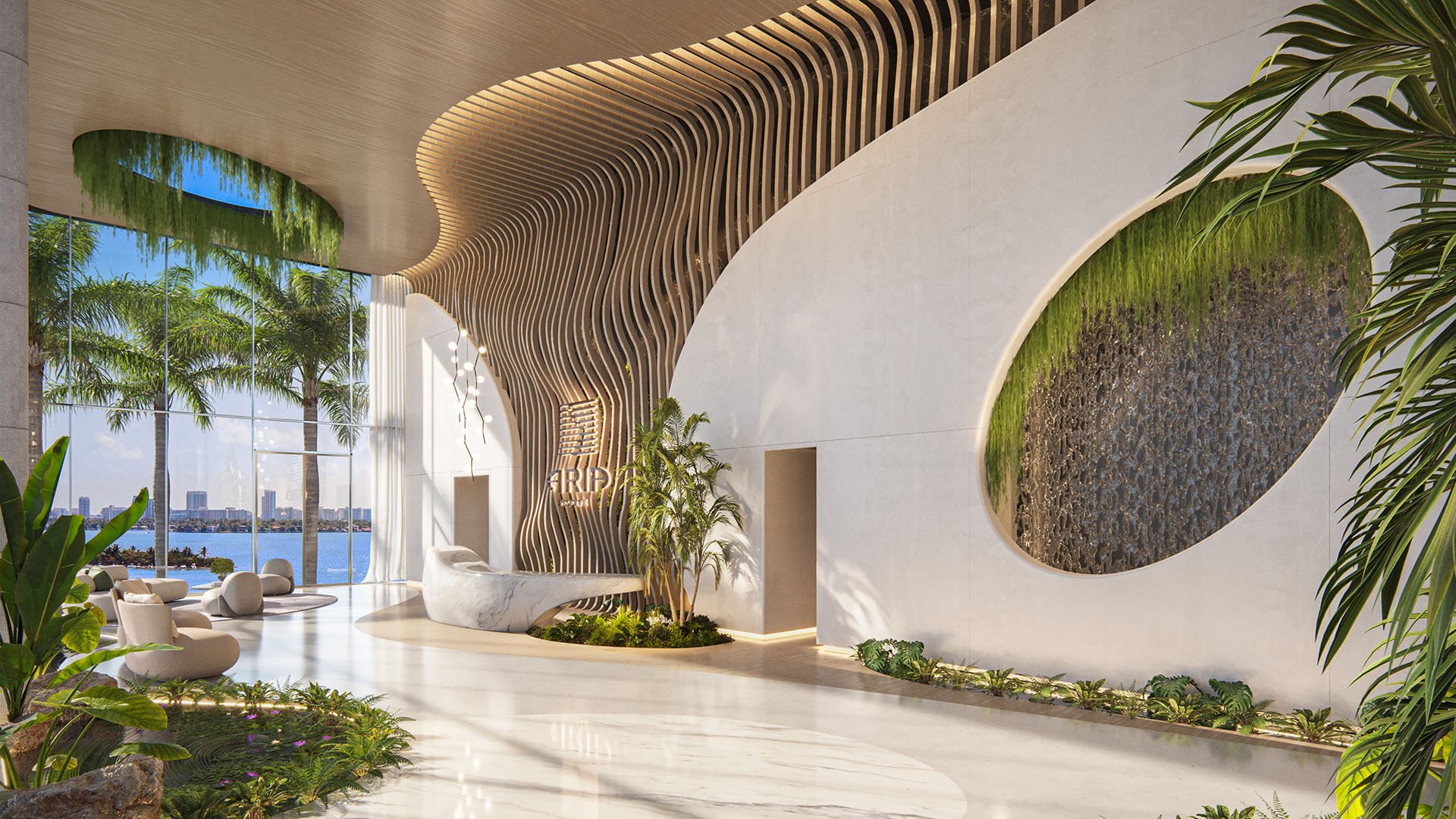
In a luxury condominium, arrival is not a decorative feature. It is the building’s first operational test. For buyers considering Midtown Miami, where residential life intersects with restaurants, galleries, retail, parking movements, rideshare activity, and neighborhood traffic, the path from curb to residence can shape privacy as much as the floor plan itself.
A private elevator or controlled arrival sequence should be evaluated as a complete system. The questions are simple, but the answers are revealing. Who sees you arrive? Where do guests wait? How does valet communicate with the lobby? Can deliveries move without crossing the resident experience? What happens when several households arrive at once?
The most refined buildings make these transitions feel nearly invisible. That invisibility is not accidental. It comes from elevator planning, staff choreography, access-control protocols, vestibule design, and the discipline of separating resident life from service movement. Buyers who treat these elements as due diligence, rather than amenities, are better positioned to understand long-term comfort and resale appeal.
The term private elevator is often used broadly, so buyers should clarify exactly what is being offered. In some residences, the elevator opens directly into a private foyer that serves one home. In others, the elevator may serve a limited number of residences per floor, which is more accurately understood as semi-private. A controlled arrival may refer to the building’s broader access sequence, including valet, lobby authorization, elevator dispatch, and staff-managed guest movement.
The distinction matters. A private elevator experience should minimize incidental contact, reduce hallway exposure, and create a graceful transition into the residence. A semi-private configuration can still feel discreet if the floor plate is limited and the foyer is well resolved. A controlled arrival can be highly effective even without a fully private elevator, provided the building controls who reaches the elevator bank and how visitors are routed.
Ask to walk the exact path from vehicle to front door. Do not rely only on renderings or the phrase private access. Stand where the car stops, where the doorman or valet receives guests, where packages enter, and where residents wait for elevators. The best buildings reveal their quality through sequence.
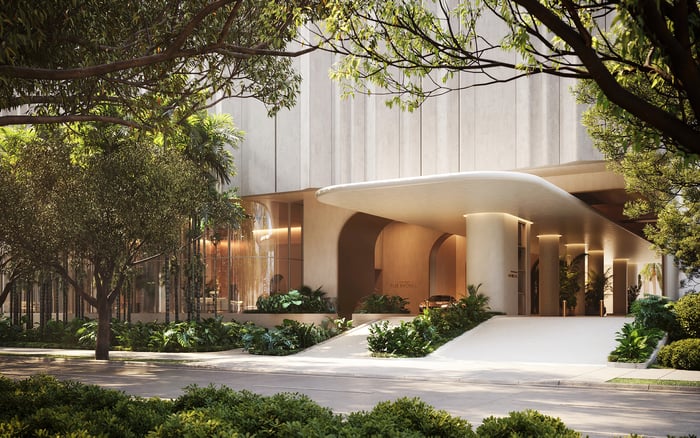
The elevator experience begins outside the elevator. In Midtown Miami, a polished private foyer will feel compromised if the curb is chaotic, exposed, or poorly staffed. Buyers should study the porte cochère, valet queue, rideshare zone, pedestrian approach, and garage entry as one connected arrival environment.
A proper controlled arrival answers several practical questions. Is there a protected place to step out of the car? Can two or more vehicles arrive without blocking one another? Are guests received in a way that feels gracious rather than improvised? Can staff identify residents without making the process feel performative? Is the elevator call integrated into the arrival, or does the resident still wait in a public lobby?
This is especially important for buyers who expect to use the residence frequently rather than occasionally. A second-home owner may notice arrival quality during weekends and holidays. A primary resident will experience it every morning, every dinner reservation, and every grocery delivery.
Elevator speed is only part of the story. Dispatch logic, elevator count, resident density, service-elevator separation, and staff protocols can have a greater impact on daily life. A fast elevator that is poorly managed may feel less luxurious than a slower system that is predictable, quiet, and reserved for its intended use.
Buyers should ask whether residential elevators are separated from service movement, whether staff can hold or call an elevator for a resident, and how guest access is authorized. If the building uses destination dispatch or controlled credentials, understand how the system works for family members, house staff, drivers, and frequent guests.
Also ask how the building handles peak periods. Morning departures, evening arrivals, weekend entertaining, move-ins, vendor appointments, and event nights can all test the system. A serene model residence does not always reveal how vertical circulation performs under pressure.
For comparison, buyers touring the broader urban luxury market may look at nearby high-rise conversations around The Cove Residences Edgewater or EDITION Edgewater to sharpen their questions about how arrival, lobby presence, and elevator movement are presented in different neighborhoods.
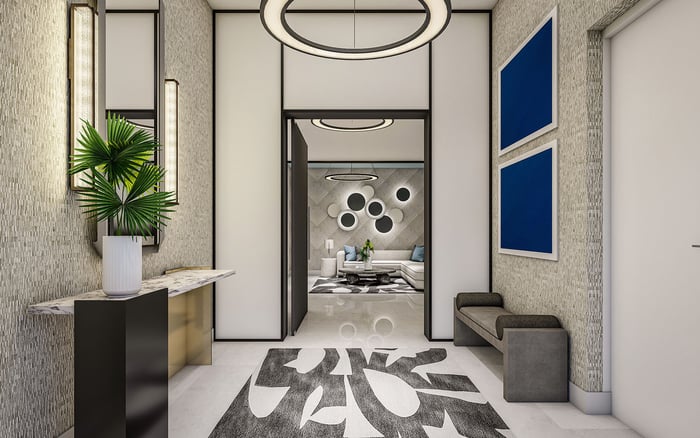
A private elevator foyer is valuable only if it protects the rituals of home. The foyer should be large enough to receive guests, accept flowers or luggage, and create a true pause before entering the residence. It should not feel like leftover circulation space. Lighting, flooring, ceiling height, door placement, and sightlines all matter.
Consider what is visible when the elevator doors open. Does the foyer look directly into the living room, kitchen, bedroom corridor, or art wall? Can guests be welcomed without exposing the interior? Is there room for a console, mirror, or seating moment? Is the front door substantial enough to create acoustic and visual separation?
Buyers should also consider household composition. A couple that entertains often may prioritize a formal arrival sequence. A family may care more about security, stroller movement, pet logistics, and staff access. An art collector may focus on climate stability, wall protection, and how crates or large pieces move from loading to residence without unnecessary exposure.
Luxury security is most successful when it is quiet. Controlled arrival should not resemble a checkpoint. It should feel like hospitality with discipline. The difference is in training, communication, and consistency.
Ask how guests are announced, how vendors are approved, how temporary access is granted, and how staff responds when someone arrives unexpectedly. The building should have clear procedures, but the resident experience should remain calm. If access control depends entirely on one exceptional staff member, the system may be fragile. If it is embedded in building operations, the experience is more likely to remain consistent over time.
Buyers should also inquire about cameras, credentialing, visitor logs, garage access, stair access, and after-hours procedures. The goal is not to accumulate technology for its own sake. The goal is to understand whether the residence can remain private when the building is busy.
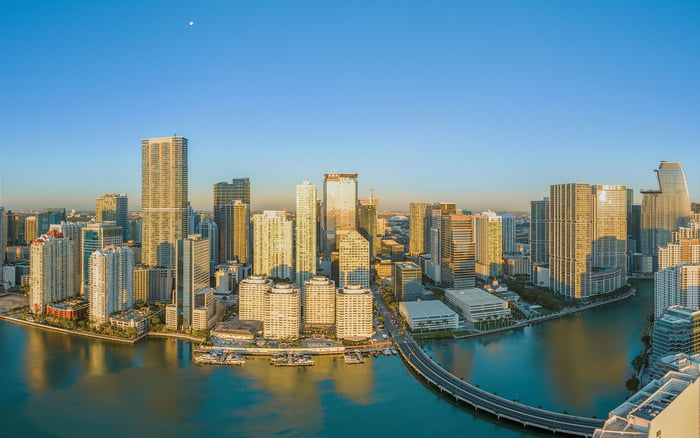
Midtown Miami appeals to buyers who want an urban rhythm close to Design District, Wynwood, Edgewater, and Downtown Miami. That convenience is part of the value proposition, but it also makes arrival planning more consequential. The more active the surrounding environment, the more important it becomes for a residence to create a controlled threshold.
A buyer comparing Midtown Miami with adjacent districts should pay attention to how each building resolves the transition from public city to private home. In Wynwood, the question may be how the building buffers creative street energy. In Edgewater, it may be how waterfront and urban traffic meet residential calm. In Downtown Miami, it may be how a tower handles density, guests, and mixed daily movement.
Broader project comparisons can help frame expectations without assuming identical features. A buyer might compare the presentation of vertical living at Aston Martin Residences Downtown Miami, the urban-branded sensibility around Waldorf Astoria Residences Downtown Miami, or the Brickell arrival language at The Residences at 1428 Brickell, then return to Midtown with sharper operational questions.
A private elevator is still a mechanical system. Buyers should ask how the building handles maintenance, inspections, temporary shutdowns, emergency access, and backup power protocols. Even in a highly serviced residence, the value of privacy depends on continuity.
Important questions include whether there is an alternate resident route, whether the service elevator can be used discreetly when needed, how staff communicates downtime, and how mobility needs are handled. For buyers considering higher floors, these questions are not theoretical. They affect comfort during storms, repairs, and unexpected interruptions.
The same applies to controlled-entry technology. Credentials, mobile access, intercoms, cameras, and elevator permissions should be intuitive for residents and manageable for approved guests. A system that feels impressive in a presentation can become frustrating if it is too rigid for real household life.
Before contract signing, request a detailed explanation of the arrival sequence and access-control procedures. Review the floor plan, elevator core, garage plan, lobby plan, loading area, and service route. If possible, visit at different times of day and observe how staff manages the front door.
For new-construction buyers, ask which elements are fixed and which remain subject to final design, operational policy, or association governance. For resale buyers, speak carefully about how the current building actually functions, not only how it was marketed. In both cases, the objective is the same: determine whether privacy is architectural, operational, or merely rhetorical.
This is where a disciplined buyer’s-guide approach becomes useful. The right question is not, “Does the residence have a private elevator?” The better question is, “Does the building protect the experience of coming home?”
Is a private elevator always better than a semi-private elevator? Not always. A well-managed semi-private arrangement can feel more discreet than a poorly planned private elevator sequence.
What should I ask first when evaluating controlled arrival? Ask to walk the exact route from vehicle arrival to residence entry, including valet, lobby, elevator, and foyer.
Does a private foyer improve resale appeal? It can, especially when the foyer feels intentional, spacious, and genuinely separate from shared circulation.
How important is valet flow in Midtown Miami? Very important. A refined elevator experience can be undermined if the curb, valet queue, or rideshare zone feels disorganized.
Should I review service elevator access? Yes. Service routing affects deliveries, vendors, move-ins, and how private the resident elevator experience remains.
What makes access control feel luxurious? It should be discreet, consistent, and hospitality-driven, with clear procedures that do not make residents feel processed.
Are private elevators mainly about security? Security is part of the value, but privacy, convenience, acoustic separation, and arrival ritual are equally important.
What should families consider? Families should study stroller movement, pet routines, guest access, house staff credentials, and backup routes during elevator downtime.
Can technology make arrival worse? Yes. Overly complicated credentials or rigid guest permissions can frustrate daily life if the system is not intuitive.
When should I evaluate the arrival sequence? Evaluate it before signing, then revisit it during inspections, walkthroughs, or association document review when applicable.
When you're ready to tour or underwrite the options, connect with MILLION.
If branded residences are on your mind — as a home or as an allocation — we would be glad to share what we are seeing, privately.
Begin a quiet conversation