A private foyer is an architectural feature, not a complete access policy. For Downtown Miami buyers, meaningful diligence means verifying elevator permissions, guest approval, service circulation and overnight coverage through written confirmation and an authorized demonstration.
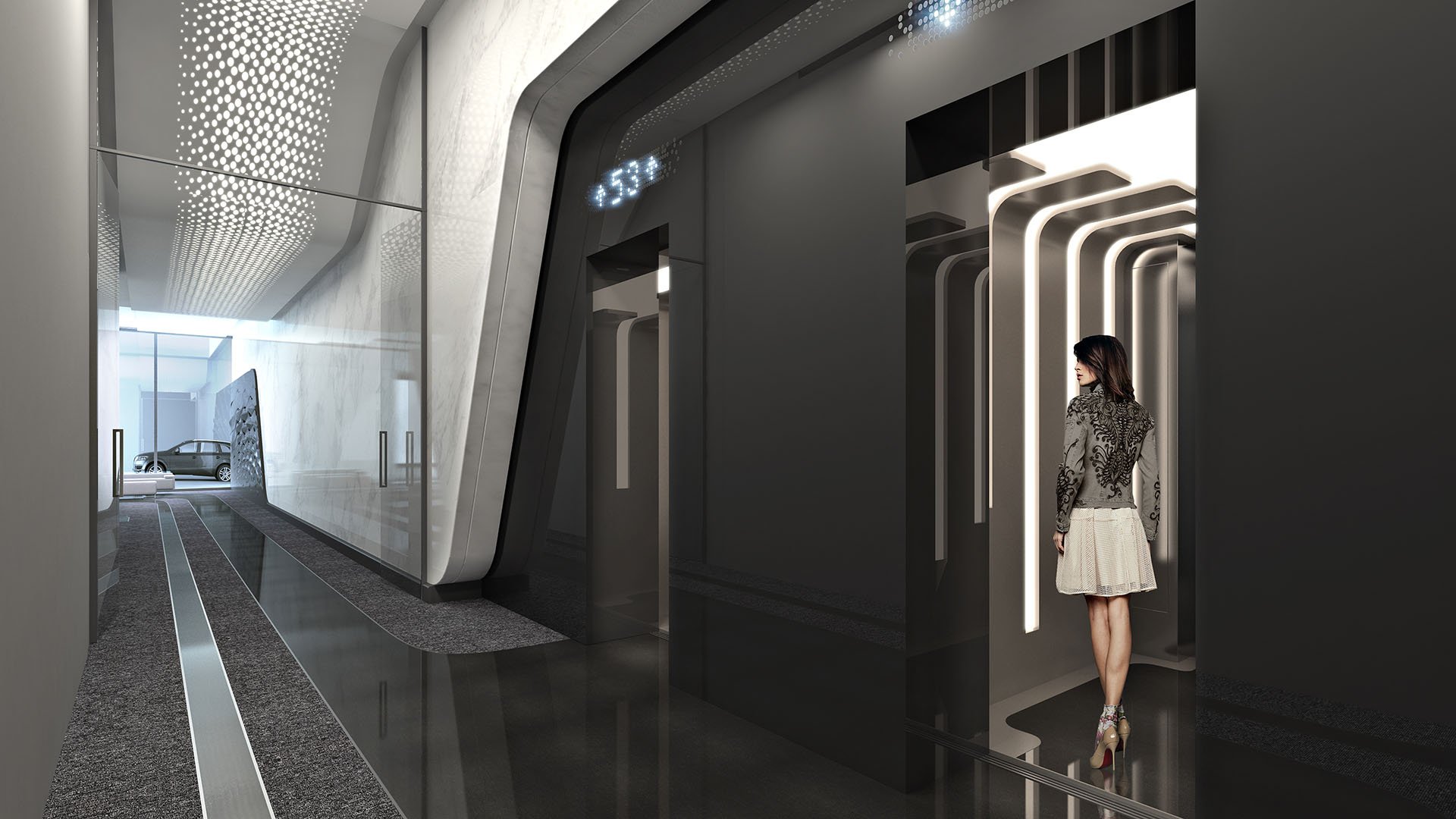
A private elevator arrival is one of residential architecture’s most persuasive gestures: the city recedes, the doors open, and the home begins. For a buyer evaluating Downtown Miami, however, the essential question is not simply whether the elevator opens into a private foyer. It is who can authorize that arrival, under what circumstances, and within what limits.
A private foyer is an architectural feature, not a complete access policy. Practical diligence separates three subjects: elevator permissions, visitor authentication and service circulation. Each deserves its own questions, written answers and, where operational, an authorized demonstration.
Buyers comparing Downtown Miami, Brickell and Edgewater should maintain those distinctions. The examples below illustrate advertised features and questions to ask-not a security ranking or a suggestion that every property sits within Downtown Miami proper.
At St. Regis® Residences Brickell, a private elevator and entry foyer are marketed for each residence. That describes an arrival experience. It does not establish how a guest receives access, whether service personnel use that route, or who may override ordinary permissions.
Private high-speed elevators for all residences, private foyers, and 24-hour security and video surveillance have similarly been advertised at Elysee Miami. These historical descriptions are not a current operational audit. Ask management to distinguish the advertised configuration from the permissions and procedures that apply to the residence under consideration.
The most useful question is specific: what must happen before someone other than the resident can reach this foyer? Request separate explanations for invited guests, household staff, contractors and building personnel. An assurance that an elevator is private does not resolve these distinct access relationships.
Floor-specific elevator control is an available capability. A resident credential can be configured to unlock an assigned floor and common areas rather than provide unrestricted building access. The diligence task is to establish whether-and how-that capability applies in the building under consideration.
Request a management-led demonstration using an authorized test credential. Have staff explain the permitted destinations, show the normal resident journey and demonstrate restrictions without attempting to enter another resident’s private space. Ask whether permissions differ between the lobby, garage and amenity levels.
Also request the procedures for replacing a lost credential, removing access for former household staff and changing permissions after a transfer of ownership. These are questions for management, not assumptions about any named property. The objective is a clear account of who controls access and how changes take effect.
For a buyer also considering One Thousand Museum Downtown Miami, the same demonstration request provides a consistent basis for comparison without presuming any particular access technology or operating arrangement there.
Authentication establishes that a visitor has been accepted through the building’s entry process. Elevator authorization determines where that visitor may travel. Available systems can use QR scans, mobile credentials or video-intercom verification before granting elevator access; guest passes can be limited to a preregistered destination floor.
Ask management to walk through an ordinary dinner guest’s arrival. Who initiates the invitation? How is the visitor checked? Does entry approval automatically authorize elevator travel, or is another action required? What happens when the resident does not answer? Does a guest’s permission expire, or must it be withdrawn?
At Waldorf Astoria Residences Downtown Miami, advertised features include a private porte cochère, 24-hour valet, private residential entry, a live-in resident manager and 24-hour security. These arrival and staffing features are relevant, but they do not, by themselves, establish visitor authentication or destination permissions.
For buyers who entertain frequently, the aim is not unnecessary friction. It is a predictable welcome in which hospitality and authorization remain distinct.
Facial authentication has reportedly been deployed at Nine at Mary Brickell Village across entrances, amenities, elevators, stairwells and the garage, with mobile credentials and encrypted fobs retained as alternatives. This example is neither proof of equivalent arrangements elsewhere nor a complete description of that building’s access policies.
Temporary PINs are another available method for guest and service access. Their availability does not establish use at any named condominium. Rather than choosing a residence for the appeal of a particular technology, ask which methods are actually offered and what permissions accompany each.
If biometric access is offered, request an explanation of enrollment, alternative credentials and removal procedures. Keep the discussion practical: the buyer needs to understand everyday use and the handling of exceptions, not simply the system’s name.
Service separation deserves a physical walkthrough, not merely a question about whether a service elevator exists. Ask management to trace the authorized route from service entrance to elevator, corridor and residence. Identify where that route intersects resident circulation and which doors or transitions require approval.
Contractor access can be restricted by both floor and time window. Ask whether those controls are used, who issues permissions and how a scheduled visit is handled if work runs late. Distinguish a recurring household employee from a one-time repair contractor rather than assuming both receive identical access.
Request clarification about deliveries, maintenance visits and access while the owner is away. The purpose is to understand the operating arrangement, not to assume that every service visit must follow one universal model.
An elegant lobby and a discreet residential entrance cannot answer these questions. The service journey must be evaluated on its own terms.
A statement of 24-hour security does not specify how many people staff the lobby at 3 a.m. Ask directly, along with whether the service entrance is attended or controlled by a badge reader. Request an explanation of how late arrivals and service exceptions are handled overnight.
Before concluding diligence, obtain written management confirmation of resident permissions, guest approval, contractor restrictions and service routing. Match those answers to an authorized demonstration wherever the systems are operating. Where an arrangement remains planned rather than operational, keep that distinction explicit: a presentation is not proof of performance.
The most useful outcome is not a promise of absolute security. It is a clear understanding of who may reach the residence, who approves that access and how the building manages exceptions. That clarity belongs beside the floor plan and the view in any considered purchase decision.
For a discreet perspective on your next South Florida residence, explore MILLION.
If branded residences are on your mind — as a home or as an allocation — we would be glad to share what we are seeing, privately.
Begin a quiet conversationNo. An advertised private elevator or foyer does not establish who can authorize guest, staff or service access.
Ask management to show permitted destinations and restrictions with an authorized test credential. Include the normal arrival routes from the lobby and garage where applicable.
Authentication accepts the visitor through the entry process. Elevator authorization determines which destinations that visitor may reach.
Destination-specific guest permissions are an available capability. Management must confirm whether that restriction is used in the building under consideration.
Available systems can restrict contractors by both destination floor and time window. Ask whether those controls are implemented and how extensions are approved.
It markets a private elevator and entry foyer for each residence. That claim does not verify visitor or service-access permissions.
No. It advertises private elevators, private foyers, 24-hour security and video surveillance, but current operating details require management confirmation.
Ask whether it is offered, which access points it covers and what alternative credentials are available. Also request an explanation of enrollment and removal procedures.
Request a management-led walkthrough from the service entrance to the residence. Identify intersections with resident circulation and the approvals required along the route.
Ask how many people staff the lobby at 3 a.m. and whether the service entrance is attended or badge-controlled. Clarify how overnight arrivals and exceptions are handled.