At Oceana Bal Harbour, domestic staff logistics are part of the residence's privacy architecture. Buyers should understand how registration, service circulation, parking, amenity access, and specialized deliveries are handled, then confirm every operational detail in writing with management.

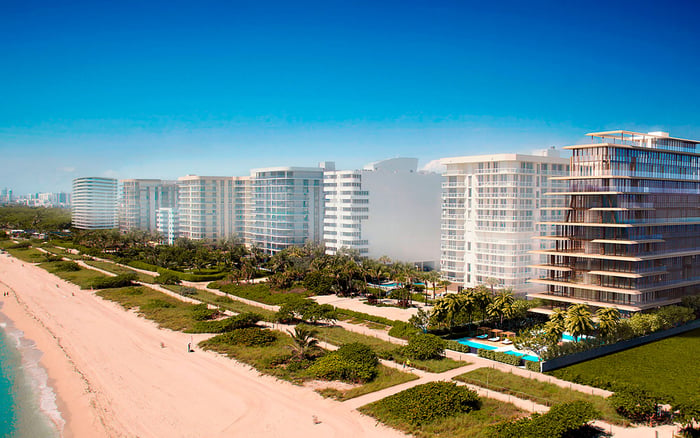
At Oceana Bal Harbour, domestic staffing is more than a household matter. It is part of the operational architecture that safeguards privacy, security, and the composed atmosphere of an art-focused oceanfront residence. Set prominently in Bal Harbour, immediately north of Miami Beach, the building combines resort-style living with curated, museum-quality common areas.
That environment relies on controlled circulation. Domestic workers and vendors are expected to follow designated access routes rather than move freely through resident-facing spaces. For owners employing housekeepers, nannies, chefs, drivers, assistants, security personnel, or technical consultants, the essential question is not whether staff can work in the residence, but how every arrival, movement, delivery, and departure is coordinated.
This is an Oceanfront Lifestyle consideration with practical consequences. Current condominium documents and written management guidance should govern every household plan.
The building maintains formal concierge, security, and visitor-registration procedures. Regular household employees may receive more streamlined access once registered, but familiarity does not eliminate identification or security requirements.
Before the first shift, owners should provide staff with the correct entrance, identification requirements, destination information, and departure procedure. Housekeepers carrying carts, linens, cleaning products, or equipment are generally directed through service entrances and back-of-house corridors. This separation preserves the calm of resident lobbies and art-filled common areas while providing working teams with a defined route.
A recurring employee roster can reduce confusion, particularly when schedules rotate. Buyers comparing Rivage Bal Harbour or other premium residences should ask the same operational questions rather than assume neighboring properties follow identical rules.
Service elevators are the expected route for staff transporting supplies or equipment. Residents should confirm applicable elevator hours, call procedures, access credentials, and any advance notice required for larger loads. Because these details are not established here as fixed current policy, they should be confirmed directly with management.
The distinction between accompanying a resident and traveling independently can matter. A nanny walking with a resident's children may be handled differently from one arriving alone with a stroller or other equipment. The most discreet approach is to define both scenarios in advance, including the appropriate entrance and elevator for each.
This circulation planning is equally relevant to buyers considering nearby The Surf Club Four Seasons Surfside, where household routines should also be assessed through property-specific documentation rather than regional assumptions.
Drivers, personal-security personnel, and assistants are subject to rules governing arrival, registration, garage access, and waiting locations. Owners should not assume employee parking, garage privileges, vehicle staging, or prolonged waiting is included simply because a staff member visits frequently.
An effective household protocol identifies who drives onto the property, who remains with a vehicle, who enters the residence, and where each person waits between assignments. Written confirmation is particularly important for a full-time driver or security professional whose role may alternate among transport, accompaniment, and standby.
For buyers comparing residences such as Eighty Seven Park Surfside, staff parking and waiting arrangements merit the same scrutiny as finishes or amenities. They shape the daily experience long after closing.
Private chefs and catering teams require advance coordination when bringing food, personnel, and equipment through loading and service areas. Residents should communicate timing, team size, destination, and the nature of incoming items before arrival. A dinner at home may feel effortless, but its back-of-house sequence should be carefully planned.
Housekeepers need equally clear instructions for carts, linens, supplies, and waste removal. Art handlers, IT technicians, and audiovisual consultants should be treated as service personnel, with management coordination completed before arrival. This is especially important in a residence with curated artwork in its common areas, where uncontrolled movement could compromise both privacy and the intended setting.
Oceana's resident amenities include pools, spa and fitness facilities, beach service, and food-service options. Staff access is generally limited to work-related necessity rather than independent enjoyment. A nanny accompanying children, for example, presents a different use case from an off-duty employee seeking access alone.
Owners should define where each staff member needs to go, why access is required, and whether accompaniment changes the applicable route. Clear instructions protect employees from uncertainty and residents from avoidable calls at security.
Before closing, request written confirmation of employee registration, credentials, service-entrance procedures, elevator hours, garage privileges, driver waiting, nanny circulation, catering access, loading arrangements, and departure requirements. Ask how recurring staff are handled differently from one-time vendors and how changes to an approved roster should be submitted.
The goal is not to bypass controls, but to make them predictable. In a property where privacy depends on separating resident-facing spaces from service circulation, a well-briefed household team supports the building's quiet atmosphere. These questions belong in any serious Bal Harbour acquisition review and should be revisited whenever staffing patterns change.
Do domestic employees need to be registered? Recurring household employees should be registered, while all access remains subject to the building's security procedures.
Can housekeepers use the resident entrance? Housekeepers carrying supplies or equipment are generally routed through service entrances and back-of-house areas.
Which elevator should domestic staff use? Staff transporting carts, linens, supplies, or equipment are generally expected to use service elevators.
Are service-elevator hours fixed? Current hours should be confirmed in writing with management before a household schedule is established.
Can a nanny accompany children through resident areas? A nanny accompanying resident children may be treated differently from one arriving alone or carrying equipment, so the applicable route should be confirmed.
Do private chefs need advance notice? Private chefs and catering teams require advance coordination when bringing food, personnel, and equipment through service areas.
Is parking available for household employees? Garage access and employee parking should not be assumed; request current written rules from management.
Where may a private driver wait? Driver arrival and waiting locations are governed by building rules and should be confirmed before regular service begins.
May staff use pools, the spa, or beach service? Staff access to amenities is generally limited to work-related necessity rather than personal use.
How should art handlers or technology consultants enter? Treat specialized vendors as service personnel and coordinate their arrival, equipment, and access route with management in advance.
For a confidential assessment and a building-by-building shortlist, connect with MILLION.
If branded residences are on your mind — as a home or as an allocation — we would be glad to share what we are seeing, privately.
Begin a quiet conversation