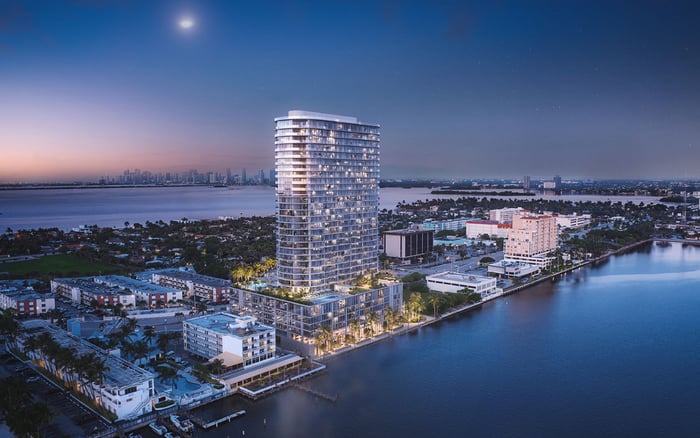
A buyer-focused examination of liquidity, portfolio lending, contract timing, condominium review, and exit planning for a potential purchase at Shoma Bay in North Bay Village.

For affluent purchasers considering Shoma Bay North Bay Village, the central financing question is rarely limited to whether they can pay cash. It is also whether deploying cash represents the most deliberate use of capital when contractual funds are due.
Financing strategy belongs within the broader ownership decision. Buyers should evaluate the applicable contract, project rules, association costs, operating obligations, liquidity needs, and the sequence in which funds must be committed. No loan program, lender approval, project eligibility, or borrowing terms should be presumed without direct verification.
A cash purchase can simplify funding, but cash capacity and cash deployment are distinct considerations. A buyer may prefer to retain liquid assets for other investments, business needs, portfolio management, or property reserves. Financing can therefore be assessed as a capital-allocation tool rather than solely as a prerequisite for acquisition.
When a contract requires payments at different stages, buyers should review the specific amounts, conditions, and dates with their legal and financial advisers. The practical question is not simply whether a buyer can close in cash, but which assets should fund each obligation and when those assets must be available.
The analysis should extend beyond the acquisition amount. Applicable association obligations, insurance, taxes, furnishing, maintenance, and future capital needs can affect the wisdom of concentrating liquidity in one residence. Every expense and restriction requires current, transaction-specific confirmation.
Portfolio lending generally refers to a loan a financial institution intends to retain rather than transfer through a standardized secondary-market channel. A lender may evaluate the client’s financial relationship, asset profile, income structure, and liquidity under its own framework. This does not imply relaxed scrutiny, guaranteed approval, or a confirmed financing route for any particular residence.
For buyers with complex finances, the potential benefit is flexibility in how the overall financial picture is reviewed. Terms, collateral expectations, reserve requirements, property review, documentation, and borrower eligibility remain institution-specific.
Even a buyer planning to close without debt can discuss financing early. That conversation may help identify documentation needs, likely underwriting steps, and whether a borrowing contingency is practical if capital priorities change before closing.
Timing risk can arise when financing is treated as an end-stage task. A more disciplined sequence begins with the purchase contract and maps each required payment against available liquidity, planned asset sales, currency considerations, and proposed borrowing.
Financing discussions should begin early enough to accommodate borrower underwriting and property-level diligence. Condominium lenders may examine both the purchaser and the project, so a financially strong borrower should not assume that every institution will reach the same decision.
For a North Bay Village comparison, buyers may review Continuum Club & Residences North Bay Village and Tula Residences North Bay Village. These links provide comparison options, not evidence of identical contracts, costs, timelines, or lender treatment.
Luxury condominium analysis extends beyond the unit. Prospective owners should examine available association materials, budgets, anticipated expenses, project rules, and any use restrictions relevant to their plans. These items can affect lifestyle, annual obligations, and future marketability.
Buyers should request current project documents and ask each proposed lender which materials it requires. Legal, financial, insurance, and tax advisers can then evaluate the transaction within their respective areas of expertise.
The same discipline applies when comparing a North Bay Village purchase with a Miami Beach alternative such as The Perigon Miami Beach. Each property’s contract, expenses, rules, timing, and underwriting outcome should be assessed independently.
A cash closing does not eliminate future financing considerations. A later purchaser may seek a mortgage, while an owner may eventually consider financing or refinancing under different personal and market conditions. Neither future lender appetite nor future loan availability should be assumed.
Before committing funds, buyers should coordinate legal review, tax advice, wealth planning, insurance analysis, and lending conversations. Contractual payment timing, completion and closing requirements, association costs, use rules, project documents, and lender eligibility should all be verified directly. Optionality is most useful when investigated before it is needed.
Should a cash buyer still speak with a lender? Yes. An early conversation can clarify documentation requirements, underwriting timing, and whether financing fits the buyer’s capital plan.
Is portfolio financing confirmed for Shoma Bay? No specific loan program, lender approval, or financing terms should be assumed. Buyers must confirm availability directly with prospective lenders.
What is portfolio lending? It generally describes a loan retained by the originating institution and evaluated under that institution’s underwriting framework.
Does strong personal liquidity guarantee condominium financing? No. A lender may assess both the borrower and the condominium project before making a decision.
When should financing discussions begin? They should begin early enough to allow for borrower underwriting, document collection, and property-level review before contractual deadlines.
Why should buyers map contract payments against liquidity? Doing so can reveal timing gaps and help determine which assets or borrowing sources may fund each obligation.
Which ownership costs deserve review? Buyers should verify applicable association obligations, insurance, taxes, maintenance, furnishing, and other transaction-specific expenses.
Why do project rules matter financially? Rules may affect intended use, ownership flexibility, ongoing obligations, and future marketability.
Does a cash closing remove future financing risk? No. An owner may later seek financing, and a future buyer may depend on lender approval under conditions that cannot be predicted.
What should be verified before committing funds? Confirm payment timing, closing requirements, project documents, ownership costs, use rules, and financing eligibility with the appropriate advisers and institutions.
For a confidential assessment and a building-by-building shortlist, connect with MILLION.
If branded residences are on your mind — as a home or as an allocation — we would be glad to share what we are seeing, privately.
Begin a quiet conversation