Surfside combines public beach access, a pedestrian-friendly commercial district, and community recreation within approximately one square mile. For families, its appeal rests on how those elements can support everyday life, not simply a coastal address.
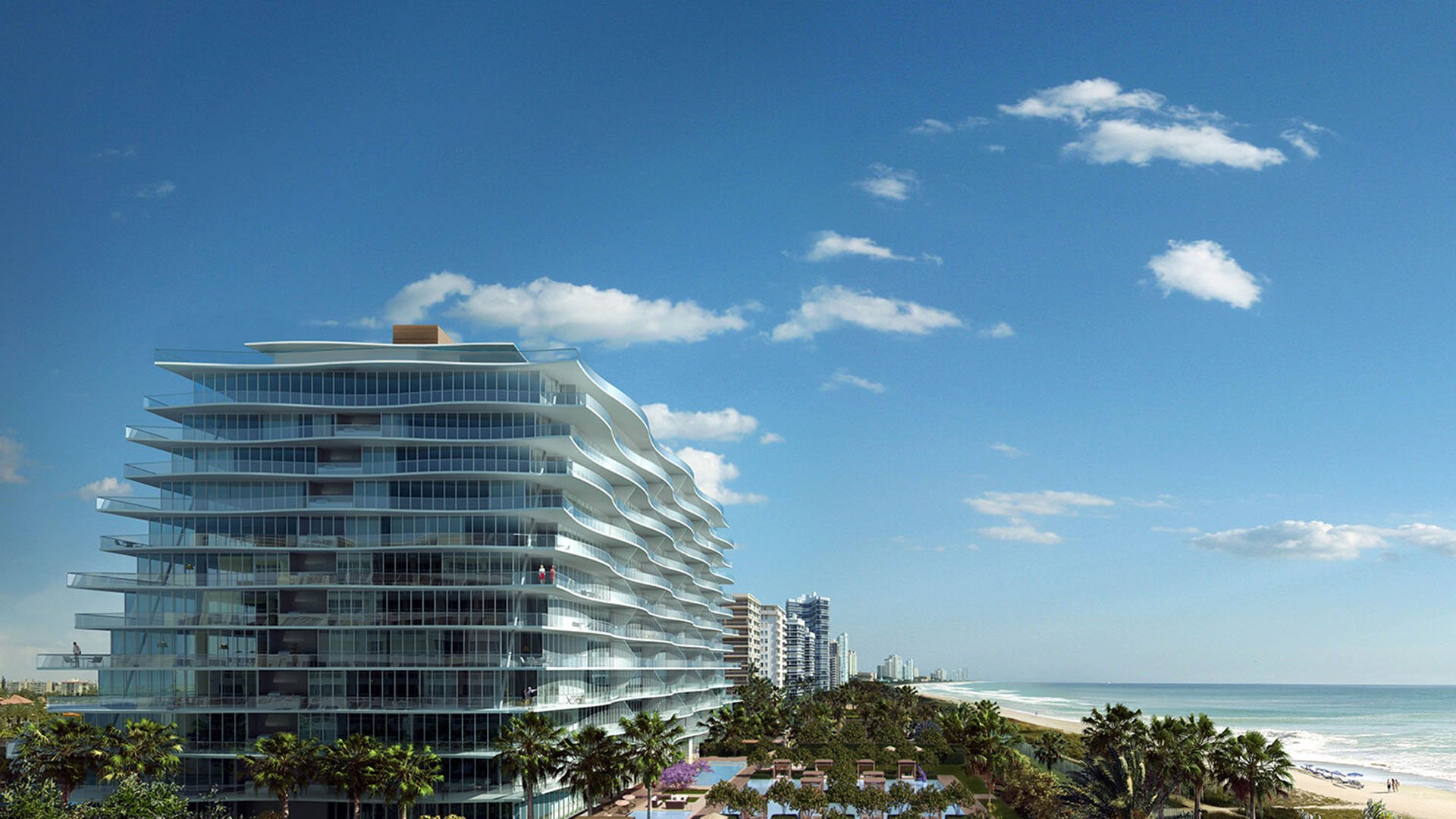
For families considering South Florida’s luxury market, a compelling address must offer more than an ocean view. It must also work on an ordinary afternoon: a manageable beach outing, somewhere for children to play, and a local district where an errand can become part of a walk. Surfside brings those possibilities together in a compact coastal setting.
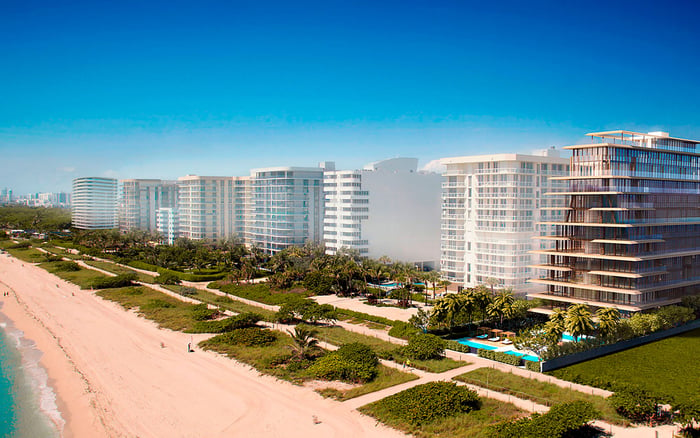
Between Miami Beach and Bal Harbour, the town extends from 87th Terrace to 96th Street and covers approximately one square mile. That modest footprint underpins its village atmosphere. Here, “village” describes the relationship between beach, commerce, and community amenities-not an official municipal designation.
For a buyer considering Arte Surfside, the question extends beyond the residence itself: does its location support the routines the household wants to establish outside the building?
Surfside offers about one mile of public beach, making the Atlantic central to the residential experience. For families, the distinction is between enjoying the coastline as an occasional destination and choosing a home that makes regular beach visits practical.
Public beach access, however, does not mean direct access from every property. A residence’s precise location, exit arrangements, and route to a beach entrance all deserve attention. Walk that route with the equipment your household actually uses, whether a stroller, beach cart, or mobility aid. A map alone cannot establish how comfortable the journey will feel.
Wheelchair-accessible beach entrances are available at 88th and 96th streets. A beach wheelchair is also available to town residents and guests staying at Surfside hotels. Families should confirm current availability and arrangements before planning around that service.
Evaluate access as carefully as the view. An attractive outlook and a convenient route to the sand are separate considerations; each can influence how a family uses its home.
The beach is an anchor, but families also need alternatives. Surfside’s recreational amenities include parks, playgrounds, and tennis facilities, while the oceanfront Community Center supports recreation and aquatics programming. Together, they give buyers more to consider than a single residential property’s amenity package.
That distinction matters when assessing Fendi Château Residences Surfside or another address on a family’s shortlist. Separate the home’s private amenities from the town’s recreational offerings, then determine which combination fits the household. Neither proximity nor ownership should be treated as proof of unrestricted access.
Before making community programming part of a purchase decision, confirm eligibility, registration requirements, schedules, and any applicable charges. The same principle applies to condominium or hotel facilities: understand precisely what accompanies the residence and what requires a separate arrangement.
For parents, the value is choice. A coastal lifestyle becomes more adaptable when a beach visit is one option among several, rather than the only activity around which to organize the day.
Surfside’s commercial district brings restaurants, shops, and everyday services together in a pedestrian-friendly setting. This is an important part of its village atmosphere: local commerce complements the beach, giving residential life a focus beyond the shoreline.
For a family, that relationship between home and neighborhood matters. A restaurant outing, a small purchase, or a routine errand can help reveal whether the area suits the household’s preferred pace. The point is not to assume that every task can be completed on foot, but to test which ones realistically can.
When evaluating Ocean House Surfside, for example, include a walk through the surrounding area alongside the property visit. Consider crossings, parking arrangements, and the route back home. Compact geography is useful context, but it does not make every address equally convenient for every family.
A useful viewing itinerary includes both the residence and the places likely to become part of an ordinary week.
Surfside’s family-oriented events and community programming add a social dimension to its beach and recreation offerings. For buyers seeking a neighborhood connection, these provide opportunities to participate beyond the private sphere of a residence.
Participation is personal. A town calendar does not guarantee friendships or a particular social experience. It does, however, give families something tangible to explore when deciding whether the setting aligns with their interests and children’s routines.
Surfside also maintains its own municipal government and police department, distinguishing it administratively from neighboring Miami Beach. That is a jurisdictional distinction, not a basis for assuming a particular safety outcome. Buyers should understand which municipality serves an address and direct property-specific questions to the appropriate offices.
The town’s appeal rests on the combination: coastal access, local services, recreational choices, and opportunities for community participation within a small area.
A search that includes The Surf Club Four Seasons Surfside should distinguish neighborhood appeal from the rights, obligations, and practical details attached to an individual residence. A desirable setting does not replace careful review of the property itself.
Start with the daily essentials: the actual beach route, parking arrangements, visitor access, and eligibility for the amenities your family expects to use. Verify school assignment directly rather than assuming that a town address guarantees access to a particular school. School fit requires its own assessment, separate from a coastal lifestyle decision.
Construction activity, flood exposure, and storm considerations also belong in the evaluation. Ask appropriate professionals to review the relevant property information and explain its implications. These subjects are not peripheral to family comfort; they are part of understanding ownership.
Finally, visit with your household’s routine in mind. Consider what a school day, weekend, and extended stay would require. Surfside’s compact scale can be attractive, but the right purchase is the one whose specific arrangements match the way a family intends to live.
Surfside appeals to families because its coastal identity is supported by more than sand. Public beach access, recreation, pedestrian-oriented commerce, and community programming offer a framework for a neighborhood-centered life. The luxury is not simply proximity to the ocean, but the possibility of making it part of a broader daily rhythm.
Explore Surfside residences through the lens of your family’s priorities with MILLION.
If branded residences are on your mind — as a home or as an allocation — we would be glad to share what we are seeing, privately.
Begin a quiet conversationSurfside lies between Miami Beach and Bal Harbour, extending from 87th Terrace to 96th Street.
The town covers approximately one square mile. Its compact geography helps explain its neighborhood-oriented appeal.
Its compact scale, pedestrian-friendly commercial district, and community amenities contribute to that description. Village atmosphere is not its official municipal designation.
Surfside offers about one mile of public beach. Buyers should verify the actual beach route from any residence they consider.
Wheelchair-accessible beach entrances are available at 88th and 96th streets.
A beach wheelchair is available to town residents and guests staying at Surfside hotels. Confirm current availability and arrangements before a visit.
The town offers parks, playgrounds, and tennis facilities. Its oceanfront Community Center also supports recreation and aquatics programming.
The pedestrian-friendly district combines restaurants, shops, and everyday services. Buyers should test the routes between a prospective home and the destinations they expect to use.
No. Buyers should verify eligibility and access rules for municipal programming, condominium facilities, and hotel amenities rather than assume access accompanies an address.
Review beach routes, amenity eligibility, school assignment, parking, and construction activity. Property-specific flood and storm considerations also deserve professional evaluation.