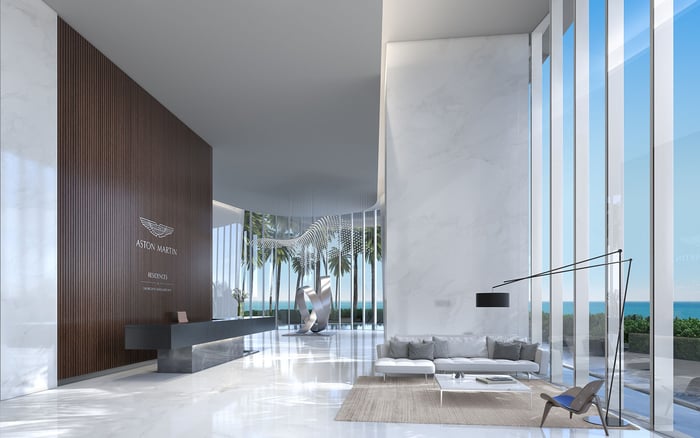
A document-led review of design selections at One Thousand Museum can help buyers evaluate approval requirements, scheduling dependencies, completed work, and potential resale considerations without assuming that every customization adds value.

For a residence at One Thousand Museum in Downtown Miami, customization should be evaluated through the documents governing the individual home. Buyers should avoid assuming that a finish, fixture, layout change, or technology feature shown in marketing material is included, available, or approved for a particular residence.
The practical first step is to separate standard specifications from optional selections and later owner alterations. Written records can clarify what was selected, who approved it, whether it was completed, and which party remains responsible for outstanding work.
Customization can introduce dependencies among design approval, ordering, installation, inspection, and final programming. A change involving built-in work may require coordination with other components, while a decorative choice that can be installed later may have less influence on the broader schedule.
No precise timing effect should be assigned without records for the specific residence and proposed work. Buyers should request written deadlines, approval requirements, current status, and any stated consequences of revising a selection. If work is incomplete, the documents should identify the remaining scope and responsible party.
A careful review may include the purchase agreement, specifications, selection sheets, invoices, change orders, approval correspondence, completion records, warranties, and documentation for later renovations. The applicable set will depend on the residence and the history of its interior work.
The records should be reconciled against the home’s current condition. Buyers can note whether installed materials match the written description, whether alterations were documented, and whether any incomplete or substituted item requires clarification. Where a feature cannot be verified, it should be treated as unconfirmed rather than inferred from appearance alone.
Customization does not automatically create a resale premium or discount. Its potential influence depends on the quality and condition of the work, the clarity of the records, the permanence of the choice, and its relevance to future buyers.
Adaptable selections may be easier for a broad audience to evaluate, while highly individualized permanent work may require a buyer with similar preferences. Reversible personalization can be considered separately from alterations that would be disruptive or costly to change. Any claim about resale impact should be tested against evidence for the residence and appropriate comparable sales rather than presented as a guaranteed outcome.
Buyers considering One Thousand Museum may also review Aston Martin Residences Downtown Miami, Casa Bella by B&B Italia Downtown Miami, and Waldorf Astoria Residences Downtown Miami. These project pages can help organize a Downtown Miami search, but each residence still requires a unit-specific review of included features, completed work, documentation, and condition.
A useful comparison framework keeps the categories consistent: confirmed specifications, optional upgrades, later alterations, maintenance needs, adaptability, and available records. This avoids treating visual preference as proof of quality, timing, or resale performance.
Begin by identifying the exact residence and collecting its governing documents. Next, compare the written scope with current conditions and list every discrepancy or unresolved item. Then determine which choices are permanent, which are reversible, and which require further approval or professional review.
Before relying on a completion date or resale claim, request the evidence supporting it. This disciplined sequence helps keep design preference, contractual scope, scheduling, and market positioning separate.
Is every design choice available for every residence? Availability should not be assumed. Confirm each choice through the documents and approvals applicable to the specific residence.
Can marketing images establish what is included? No. Inclusion should be verified through the residence’s written specifications and related records.
Which documents are most useful when reviewing customization? Relevant records may include specifications, selection sheets, invoices, change orders, approval correspondence, warranties, and completion documents.
Can a design change affect completion timing? It can if the work introduces approval, ordering, installation, or coordination dependencies. The actual effect requires evidence tied to the proposed change and residence.
Should buyers rely on verbal timing estimates? Material timing representations should be documented in writing and checked against the current status of the work.
How should later owner renovations be treated? Review them separately from the original specifications and verify their scope, approvals, condition, and supporting records.
Does customization guarantee a higher resale price? No. Any claimed price effect should be supported by residence-specific information and relevant comparable-sales evidence.
Why does reversibility matter? A reversible choice may give a future owner more flexibility than a permanent alteration that is difficult to change.
How should incomplete work be evaluated? Identify the remaining scope, responsible party, required approvals, and documented schedule before drawing conclusions.
What is the best way to compare design-led Downtown Miami residences? Apply the same review categories to each home, including confirmed specifications, alterations, condition, adaptability, and documentation.
For a tailored shortlist and next-step guidance, connect with MILLION.
If branded residences are on your mind — as a home or as an allocation — we would be glad to share what we are seeing, privately.
Begin a quiet conversation