A buyer-focused review of view protection, neighboring development rights, and construction milestones at One Thousand Museum, with a practical framework for evaluating the exact residence before committing.
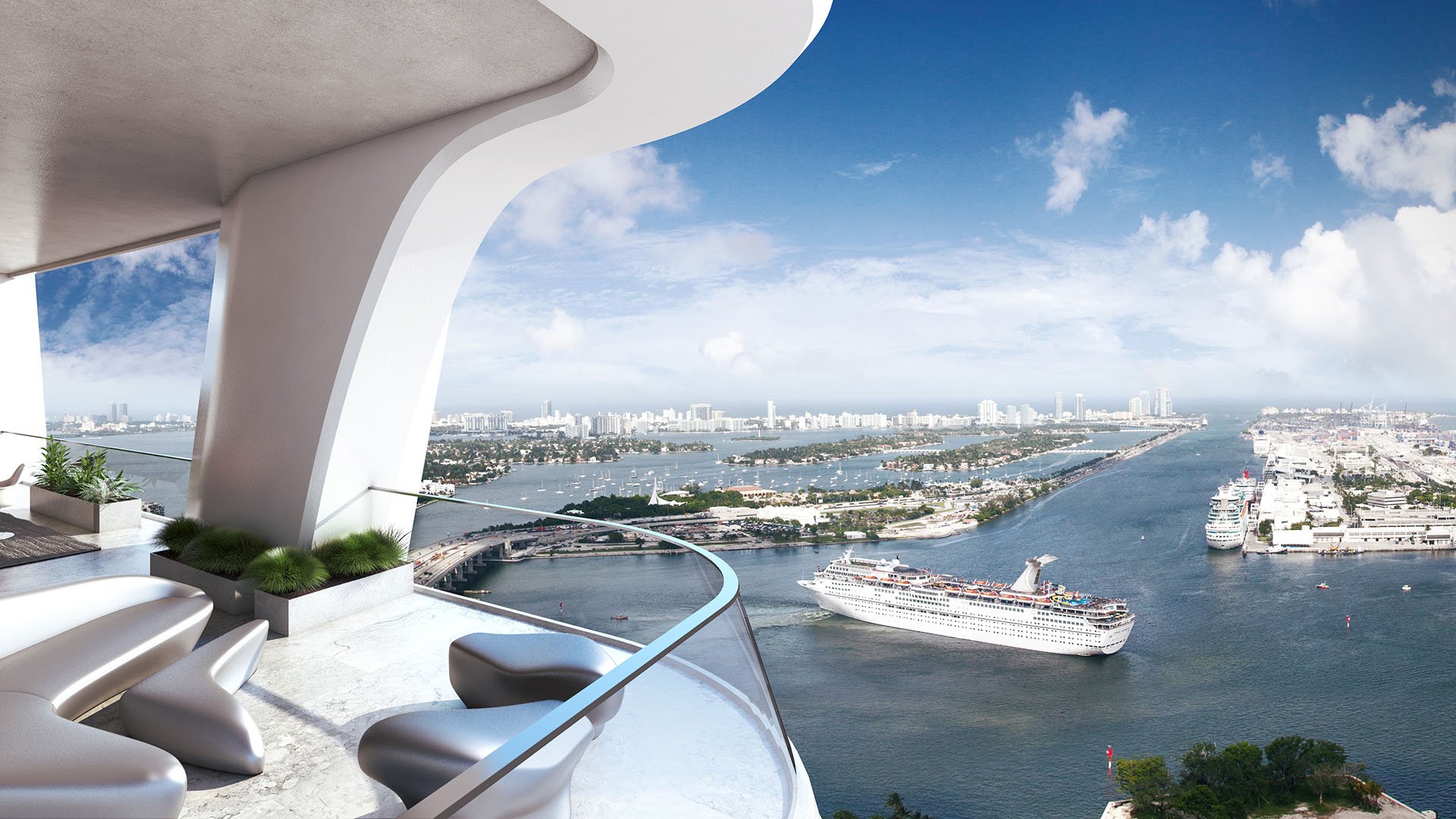
At One Thousand Museum Downtown Miami, the setting is central to the purchase decision: 1000 Biscayne Boulevard, opposite Museum Park, also known as Maurice A. Ferré Park. The 62-story condominium rises approximately 707 feet and contains 84 residences. Completed in 2019, it calls for a risk review focused on surrounding development rather than its original construction.
For a buyer placing substantial value on the outlook, three questions deserve separate answers. What is visible from this residence today? What might neighboring parcels accommodate? How long could active construction affect daily life here? A compelling panorama does not, by itself, answer any of them.
The distinction is between present enjoyment and documented protection. No recorded restriction guaranteeing a particular residence's views is established here. That does not mean protection is absent; it means any assurance should be tested against the relevant documents before it influences the purchase price.
Begin inside the exact residence. Photograph the principal outlook from the living room, bedrooms, and balcony, then record side and rear sightlines. Date the images and identify each viewing position. A wide-angle photograph may convey atmosphere beautifully without clarifying which parcels sit within a valued view.
Separate the outlook into distinct components: the park, visible water, skyline, and lateral openings between buildings. Decide which elements are indispensable and which are incidental. A broad description such as “open views” should not substitute for a precise understanding of what matters to you.
For each important sightline, identify the intervening parcels by address or folio number. Include parcels affecting oblique views, not just those directly in front of the main windows. Let the residence's actual outlook define the review, rather than a generic radius around the building.
Apply the same standard when comparing an apartment at Aston Martin Residences Downtown Miami. Building identity is no substitute for unit-level observation, and this comparison does not imply that the properties share the same exposure.
Review property-level zoning information for each relevant address or folio, including its assigned transect zone. That designation is a starting point for understanding a parcel's development context, not a complete answer about its future form.
Ask a qualified land-use professional to distinguish what the zoning framework permits, what has been requested, what has been approved, and what is actually under construction. Keep those categories separate in the buyer's file. An allowed development envelope is not a construction commitment; an active site warrants more immediate attention.
Extend the review to warrant permits, exception permits, development covenants, and administrative site-plan reviews. Check relevant zoning text changes, code amendments, and Miami Comprehensive Neighborhood Plan amendments as well. The purpose is to establish the applicable rights and restrictions, not infer them from a neighboring property's current height or appearance.
A comparison involving Casa Bella by B&B Italia Downtown Miami requires its own parcel analysis. Inclusion in a buying shortlist does not establish it as an obstruction to any One Thousand Museum residence.
Park frontage and legally protected views are different propositions. Before relying on words such as “permanent” or “unobstructed,” request the supporting document and have counsel determine its relevance to the residence and the parcels in question.
The review should identify the land covered, the restriction's scope, who can enforce it, and whether amendment or termination provisions affect its durability. Counsel should also distinguish a binding restriction from a description in marketing material. A general statement about the neighborhood is not a residence-specific legal assurance.
Where no applicable protection is established, assess the purchase on that basis. Ask your advisers to illustrate plausible development scenarios using verified parcel information, clearly separating existing conditions from assumptions. A scenario can inform judgment; it should not be presented as an approved future building.
Construction timing requires its own diligence. Request separate, dated forecasts for topping out, façade completion, crane removal, and occupancy from the relevant developer or contractor. No milestone should serve as shorthand for the others, and every forecast should remain labeled as such.
A verified crane-removal schedule for Okan Tower is not established here. Nor is an obstruction to any particular One Thousand Museum residence established; that question requires a unit-specific sightline assessment.
Review permit activity and electronic plan-review records for parcels relevant to your outlook. Ask the project team which milestones remain dependent on other work, and seek updated forecasts before a purchase decision that relies on a near-term change. Do not translate a structural percentage into a countdown to an unobstructed view.
Keep permanent and temporary effects separate. A crane's departure addresses one condition; the completed building's relationship to the residence is another question entirely.
For an owner planning immediate occupancy, temporary disruption may carry considerable weight. A buyer with a later move-in date may assess the same uncertainty differently. Neither perspective removes the need to understand the eventual built setting.
If Waldorf Astoria Residences Downtown Miami is also under consideration, compare the evidence supporting each residence's outlook and timing. Do not assume a recognizable address resolves either issue. Each option should stand on its own documented conditions.
Before committing, assemble a concise decision file: dated unit photographs, a sightline map, relevant parcel identifiers, zoning and approval records, written construction forecasts, and counsel's assessment of any claimed protection. Record unresolved questions alongside the answers, clearly distinguishing confirmed conditions from expectations.
The objective is not to eliminate every uncertainty in an evolving Downtown Miami skyline. It is to know which part of the experience exists today, which rests on enforceable documents, and which depends on events outside the owner's control. That clarity supports a more considered decision without diminishing the pleasure of the residence.
For a discreet conversation about your Downtown Miami residence search, connect with MILLION.
If branded residences are on your mind — as a home or as an allocation — we would be glad to share what we are seeing, privately.
Begin a quiet conversationOne Thousand Museum is at 1000 Biscayne Boulevard in Downtown Miami, across from Museum Park, also known as Maurice A. Ferré Park.
The condominium has 62 stories, approximately 707 feet of height, and 84 residences. It was completed in 2019.
No recorded restriction guaranteeing a particular residence's views is established here. Have counsel review any document offered to support a protection claim.
Document the principal outlook from living areas, bedrooms, and the balcony, including side and rear sightlines. Date each image and identify its viewing position.
Review property-level zoning records by address or folio number to identify the assigned transect zone. Have a qualified land-use professional assess the applicable rights and restrictions.
Review relevant warrant permits, exception permits, development covenants, administrative site-plan reviews, and permit activity. Applicable zoning and comprehensive-plan amendments also deserve attention.
No; request separate forecasts for topping out, façade completion, crane removal, and occupancy. Each forecast should be dated and clearly identified.
An obstruction to any particular residence is not established here. The relationship must be assessed from the exact unit and its sightlines.
Seek updated forecasts before a purchase decision that depends on a near-term construction milestone. Keep forecast dates distinct from verified conditions.
Include dated photographs, a sightline map, parcel identifiers, zoning and approval records, written construction forecasts, and legal review of claimed view protection. Keep unresolved questions distinct from confirmed conditions.