At Apogee South Beach, the most consequential design decisions extend well beyond finishes. Buyers should assess a residence’s existing condition, approval requirements and technical scope before assigning value to customization or assuming a delivery date.
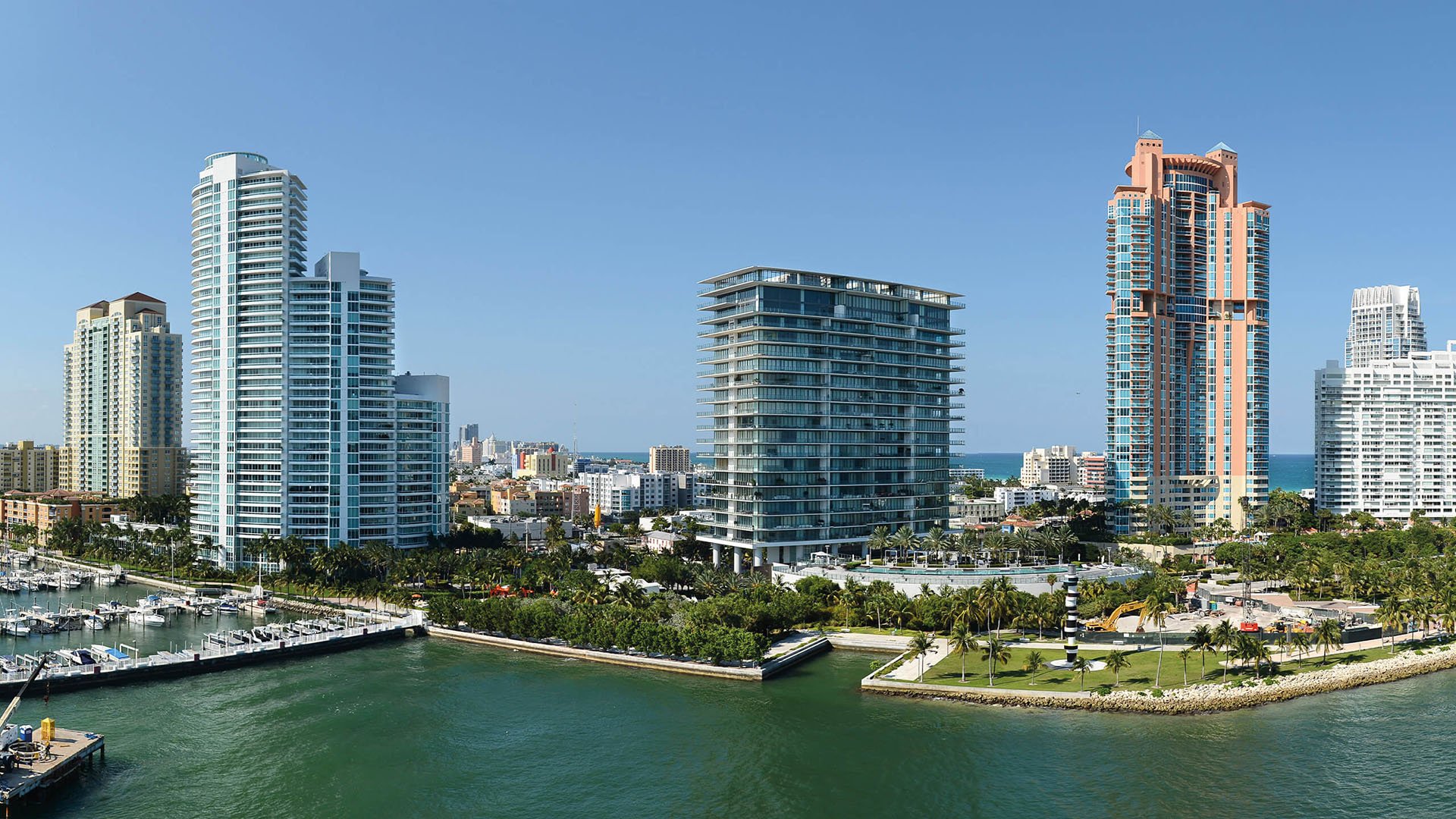
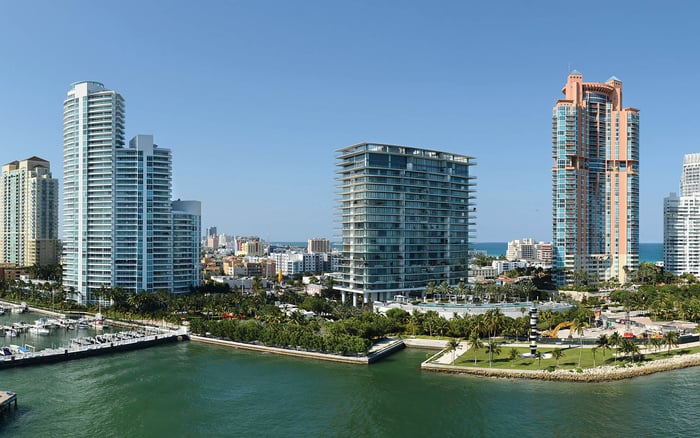
At Apogee South Beach, customization extends well beyond selecting stone, millwork and upholstery. The boutique building occupies the southern tip of Miami Beach and was conceived as a low-density, privacy-oriented alternative to larger resort-style condominiums. Its expansive residences, private elevator access and generous terraces offer an unusually broad design canvas-but also make the brief more consequential.
The first consideration is whether a residence retains its developer-era interior, features a first-generation custom installation or has undergone a more recent renovation. Apogee’s history of individualized design means that two homes in the same building may differ substantially in configuration, systems, renovation age and finish quality. Any proposed budget and timeline should therefore begin with the specific residence, not a generalized assumption about the building.
Buyers should not presume that standardized design packages, fixed package pricing or guaranteed delivery schedules are currently available. A finish refresh and a comprehensive transformation are fundamentally different undertakings, even when both are casually described as customization.
Decorative selections are typically the more legible part of a project. Flooring, wall treatments, cabinetry fronts, plumbing fixtures and decorative lighting can define the atmosphere without necessarily changing how the residence operates. When the underlying plan and systems remain suitable, this approach may offer the clearest route to a coherent update.
Complexity rises when the brief extends to lighting controls, audiovisual infrastructure, automated shades, HVAC zoning or concealed air distribution. Reworking room boundaries adds another layer, particularly within a large footprint that can accommodate either open entertaining spaces or more compartmentalized living. These decisions demand coordination across design, engineering, construction and building procedures; the calendar cannot be inferred from the visual simplicity of a rendering.
This distinction matters when comparing an existing custom home with newer Miami Beach offerings such as Five Park Miami Beach or Shore Club Private Collections Miami Beach. The prudent comparison is not merely finished versus unfinished, but the entire path from present condition to the desired standard-including approvals, technical work and execution risk.
Apogee’s private elevator foyers can serve as composed transitions rather than residual circulation space. Material continuity, lighting and art placement can establish privacy and tone before the main interior is revealed. From a design and architecture perspective, the arrival sequence deserves the same discipline as a living room.
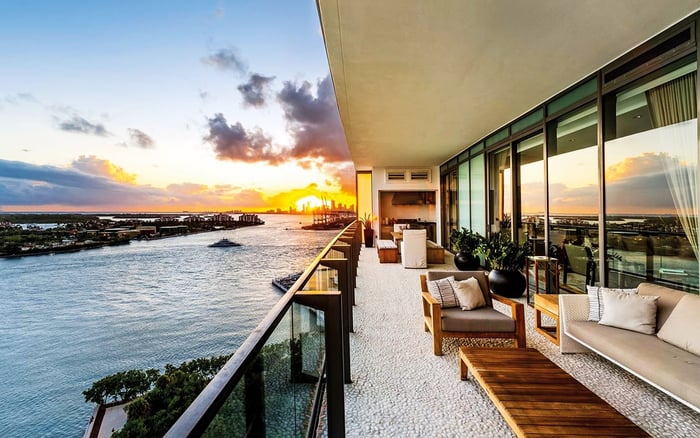
The terrace is equally central. Deep wraparound terraces, water or city views and built-in summer kitchens allow outdoor areas to function as living and entertaining rooms. Interior materials, furniture planning and lighting should respond to that relationship, creating visual continuity without overlooking durability or building requirements.
Exterior-facing changes warrant particular caution. Terrace modifications that affect the building’s exterior appearance may receive closer association review, adding another approval consideration to the timeline. Buyers should confirm what can be altered before ordering custom components or committing to an installation date.
Customization can create emotional value for an owner, but it does not yield a universal resale premium. There is no reliable basis for assigning a fixed premium or discount to a particular palette or package. At Apogee, variations in layout, renovation date and execution can make same-building comparable sales less straightforward than square footage alone would suggest.
Neutral need not mean generic. A restrained material palette, resolved lighting, discreet technology and consistent detailing may allow a broader group of buyers to envision immediate occupancy. By contrast, a highly personalized interior may be exceptional for its current owner while narrowing the audience willing to accept it without changes. A visibly dated home presents a different calculation, as buyers may price both the required work and the uncertainty surrounding it.
The relevant competitive set may extend beyond Apogee. A purchaser focused on South of Fifth might also consider Continuum on South Beach, while another may compare privacy, condition and outdoor living across a broader coastal market. For sellers, the strongest presentation makes the residence’s quality immediately legible and avoids asking buyers to decode unfinished ideas.
Before closing, buyers should define the proposed scope, inspect existing systems and determine which elements can remain. They should then verify current association rules, alteration agreements, contractor requirements, insurance obligations, work-hour restrictions and review procedures. These considerations can shape sequencing as decisively as product lead times or design choices.
A useful plan organizes the process around clear decisions: retain or replace the layout, preserve or modernize systems, define the interior palette, and confirm any work involving terraces or common interfaces. It should also distinguish an aspirational completion target from a schedule grounded in approvals and contractor planning.
For owners contemplating a future sale, documentation can become part of the asset. Clear records of approved work, system upgrades and material specifications may help a prospective buyer understand what was completed, though documentation alone does not guarantee value. At this level, certainty and coherence are often as important as novelty.
Does Apogee South Beach offer a standard design package? Buyers should not assume that standardized packages, package pricing or guaranteed delivery schedules are currently offered.
What is usually simpler than a full renovation? Updating decorative finishes while retaining a suitable layout and functioning systems generally involves less complexity than deeper technical changes.
Which upgrades can add technical complexity? Lighting controls, audiovisual systems, automated shades, HVAC zoning and concealed air distribution can require coordinated specialist work.
Can an Apogee residence support an open layout? Its large footprints and flexible configurations can accommodate open entertaining areas or more compartmentalized plans.
Why does the private elevator foyer matter? It creates a transition between common areas and the residence, offering an opportunity to compose a deliberate arrival experience.
Should terrace work be included in the initial schedule? Yes. Exterior-facing modifications may require closer association review and should be evaluated before orders are placed or dates committed.
Do neutral interiors always command a resale premium? No fixed premium can be assumed, although neutral and recently updated interiors may appeal differently than highly personalized or dated homes.
Why are same-building comparables difficult at Apogee? Residences can vary in renovation age, layout and finish quality, making direct comparisons less straightforward.
What should buyers verify before setting a renovation timeline? Confirm current alteration rules, contractor requirements, work hours, insurance obligations and association review procedures.
Can customization improve marketability? A coherent, well-executed interior may broaden buyer appeal, but marketability still depends on condition, audience and the specific residence.
When you're ready to tour or underwrite the options, connect with MILLION.
If branded residences are on your mind — as a home or as an allocation — we would be glad to share what we are seeing, privately.
Begin a quiet conversation