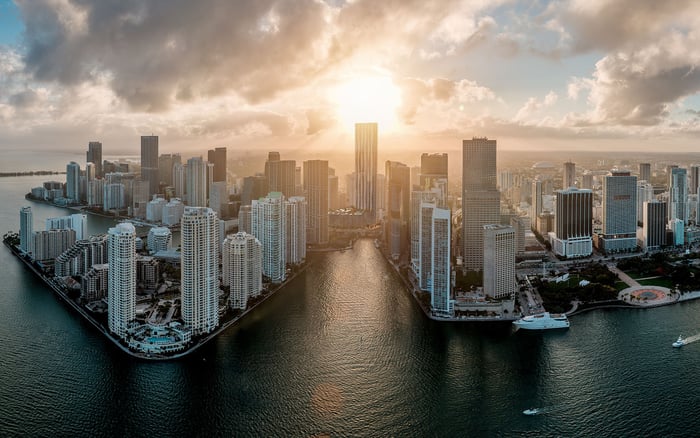
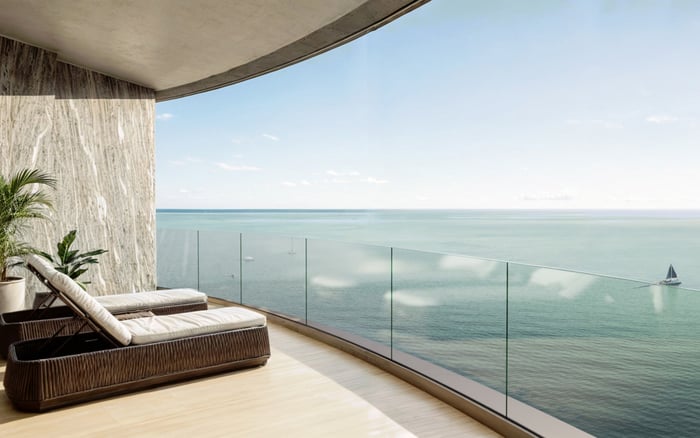
A discreet buyer guide to comparing Delano Residences & Hotel Miami and Fendi Château Residences Surfside through waterfront rights, marine-service questions, and insurance documentation rather than lifestyle language alone.

The most sophisticated South Florida buyer is no longer satisfied with a broad promise of waterfront living. In 2026, the choice between Delano Residences & Hotel Miami and Fendi Château Residences Surfside is less about brand, skyline, or sand than a disciplined review of rights, services, and risk transfer. The stronger residence is the one whose documents, operations, and long-term carrying costs align with the buyer’s actual use.
That distinction matters because waterfront language can be persuasive. A buyer may be drawn to the mood of a hotel-residence setting, the privacy of Surfside, the possibility of marine convenience, or the prestige of a branded address. Yet enduring value is often found in less visible places: the declaration, easements, insurance schedules, association budgets, dock rules, service agreements, and management structure.
For a primary residence, second home, or portfolio acquisition, the proper test is direct: what does the buyer truly control, what is merely permitted, what is revocable, and what will the owner be asked to fund over time?
A waterfront right is not the same as a waterfront impression. It may involve access, use, view corridor, setback protection, beach adjacency, bay proximity, guest privileges, or the ability to transfer rights at resale. Each point should be reviewed as its own question.
For a Surfside buyer, the phrase Fendi Château Residences Surfside naturally invites comparison with the area’s quiet, high-end residential vocabulary. Nearby references such as The Delmore Surfside and The Surf Club Four Seasons Surfside illustrate why Surfside buyers often think in terms of discretion, building culture, and long-horizon ownership rather than short-cycle spectacle. Still, even in a refined setting, the buyer should not assume that every waterfront benefit is held in the same way.
The core question is simple: does the right attach to the unit, to the association, to a license, to a club-style arrangement, or to a separate operating entity? That answer can affect use, transferability, financing comfort, future disputes, and resale storytelling.
Downtown offers a different waterfront conversation. It is more urban, more connected to hospitality rhythms, and often more layered in the way private residential life meets public-facing service. For Delano Residences & Hotel Miami, the buyer should study how residential governance interacts with hotel operations, shared areas, service expectations, and owner privacy.
This is where Condo-hotel literacy becomes valuable, even though the precise legal structure must always be confirmed in the offering documents. Buyers should ask whether amenities are owned by the residential association, operated by a hotel entity, shared under a use agreement, or subject to separate rules. The most elegant service model can still create friction if priority, access, hours, fees, and maintenance obligations are not clearly described.
Downtown buyers may also compare the broader branded-residence landscape, including Waldorf Astoria Residences Downtown Miami, not to choose by height or glamour alone, but to understand how different luxury buildings frame privacy, management, and owner control.
Dockmaster service is often discussed as a lifestyle amenity, but serious buyers should treat it as an operational contract. The important questions are not cosmetic. Who controls the dock area? Who schedules access? What vessels qualify? What are the hours? Are guests treated differently from owners? What happens during weather events, peak weekends, maintenance periods, or insurance restrictions?
The word Marina should not stand in for a documented right. A Boat-slip may be deeded, assigned, licensed, leased, limited by vessel size, or available only through a separate arrangement. In some cases, the value lies not in ownership of a slip but in the quality, predictability, and accountability of service. In others, the absence of a secure slip materially changes the property’s usefulness for a boating household.
For the ultra-premium buyer, the right question is not, “Can I keep a boat here?” It is, “What written instrument gives me that ability, under what conditions, and can it be transferred to the next buyer?”
Insurance has become one of the most important filters for waterfront condominium acquisitions. The buyer should understand the master policy, windstorm coverage, flood considerations, deductibles, exclusions, reserve posture, claims history if available, and the line between association responsibility and individual owner responsibility.
This is not only a cost question. It is a governance question. A project with elegant architecture but unclear insurance obligations may create uncertainty at financing, closing, or resale. Buyers should request plain-language summaries from the appropriate professionals, then reconcile those summaries against the actual governing documents. If the residence involves shared hotel or amenity components, the insurance review should also distinguish between residential areas, commercial or hospitality areas, common elements, and limited common elements.
Luxury buyers are increasingly willing to pay for certainty. They are less willing to accept ambiguity around deductibles, special assessments, or the repair sequence after a storm event.
The buyer drawn to Delano Residences & Hotel Miami may want urban immediacy, hospitality atmosphere, and the feeling of a private residence within a more active Downtown setting. That buyer should focus on service boundaries, residential privacy, governance, and the durability of shared-use arrangements.
The buyer drawn to Fendi Château Residences Surfside may prioritize a quieter coastal identity, brand intimacy, and a more residential rhythm in Surfside. That buyer should focus on waterfront rights, building culture, association discipline, and how the property’s privileges are preserved for future owners.
Neither path is inherently superior. The better acquisition is the one where legal rights, operating practices, and insurance architecture match the buyer’s intended life. In this segment, beauty opens the conversation. Documentation closes it.
Is the better choice Delano Residences & Hotel Miami or Fendi Château Residences Surfside? The better choice depends on whether the buyer values Downtown hospitality energy or a quieter Surfside residential setting, then confirms that preference in the documents.
What should a buyer verify first in a waterfront purchase? Start with the exact nature of waterfront rights, including access, transferability, restrictions, and whether rights attach to the unit or another entity.
Does a water view automatically create a waterfront right? No. A view is a physical condition, while a right is created by legal documents, rules, easements, licenses, or association governance.
Why is dockmaster service important for luxury buyers? Dockmaster service can define how smoothly boating access works, but its value depends on hours, authority, vessel rules, and written accountability.
Is a Boat-slip always deeded to the residence? No. A Boat-slip may be deeded, assigned, licensed, leased, or separately controlled, so the ownership structure must be confirmed before closing.
Why does insurance clarity matter so much in 2026? Insurance clarity affects carrying costs, financing comfort, storm recovery, deductible exposure, and the likelihood of future assessments.
What should buyers ask about a Condo-hotel structure? Buyers should ask how residential areas, hotel operations, shared amenities, fees, and owner priority are separated or coordinated.
How should Surfside buyers compare buildings? Surfside buyers should compare governance, privacy, association culture, waterfront rights, and resale durability rather than relying only on design.
How should Downtown buyers evaluate hospitality-branded residences? Downtown buyers should study service agreements, shared spaces, privacy protocols, and the balance between residential control and hotel activity.
Who should review the documents before a buyer commits? Buyers should use qualified legal, insurance, tax, and marine professionals as needed, especially when waterfront access or shared operations are involved.
For a discreet conversation and a curated building-by-building shortlist, connect with MILLION.
If branded residences are on your mind — as a home or as an allocation — we would be glad to share what we are seeing, privately.
Begin a quiet conversation