A discreet buyer’s guide to verifying medical-equipment power, caregiver parking rights, and emergency access at Mr. C Tigertail Coconut Grove before committing to a residence.
For a household that depends on powered medical equipment or regular caregiver visits, luxury is measured partly in continuity: reliable access, clear procedures, and a residence that supports daily routines without unnecessary friction. At Mr. C Tigertail Coconut Grove, the purchase decision should distinguish advertised services from the electrical capacity, parking rights, and emergency arrangements your household requires.
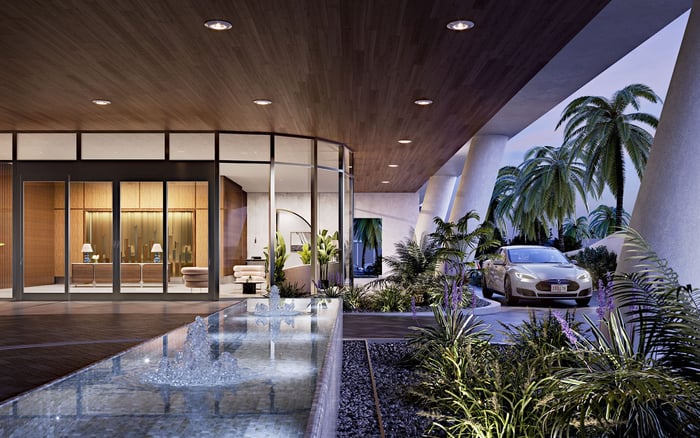
Covered valet drop-off, 24-hour valet and security, and above-ground parking with security surveillance are advertised features. None, on its own, establishes generator-backed residential outlets, a dedicated caregiver-parking program, or elevator availability during an outage. Those questions require written answers tied to the residence under consideration.
Begin diligence with a household brief: equipment requirements, caregiver schedules, vehicle dimensions, mobility needs, and transport arrangements. Give it to management and the appropriate technical advisers before relying on a general assurance that the building can accommodate you.
Tigertail Tower is identified at 2678 Tigertail Avenue, Miami, FL 33133. The project is also associated with 2655 South Bayshore Drive. Confirm which address and entrance caregivers, equipment deliveries, wheelchair transport, and emergency responders should use.
Ask management to distinguish the everyday arrival route from any service or emergency route. Walk the full route from vehicle drop-off to the residence, including doors, controlled-entry points, elevators, and corridors. A covered arrival area does not confirm wheelchair-van clearance, stretcher passage, or permission to remain while equipment is unloaded.
If your Coconut Grove search also includes Park Grove Coconut Grove, use the same arrival checklist there. Compare documented procedures rather than assuming similar service language means equivalent access.
Generator-backed residential outlets and medical-equipment electrical capacity remain unresolved questions. Neither should be treated as an advertised amenity or inferred from staffed operations.
Request a written assessment from the building engineer and a licensed electrician for the exact unit. Provide equipment specifications and ask them to address operating loads, simultaneous use, circuits, outlet locations, and any required modifications. Clarify association approval requirements before assuming an electrical change can be made after closing.
The essential distinction is between ordinary electrical suitability and continuity during an outage. Ask exactly which outlets, if any, receive emergency power. Obtain the documented scope of generator coverage and testing records, then have the relevant professionals assess whether the arrangement supports your household’s equipment needs.
Do not substitute a broad statement such as “the building has backup power” for a unit-specific answer. Review any independent equipment-backup plan with the treating team and equipment provider; do not infer its suitability from the residence’s amenities.
Power to a device and access to the residence are separate issues. Obtain written emergency elevator procedures, including what happens during a utility interruption and how management assists residents who cannot use stairs.
Request an evacuation plan addressing both limited mobility and dependence on powered equipment. Ask who coordinates assistance, how residents communicate their needs, and which procedures apply overnight. Outage elevator access and a dedicated assistance arrangement remain unestablished.
Buyers considering Four Seasons Residences Coconut Grove should carry these same questions into their comparison. A service-oriented setting is not a substitute for documented emergency procedures at either property.
Parking descriptions vary by residence. Unit 202 has been advertised with one parking space and round-the-clock valet parking for one vehicle. Penthouse 1 has been advertised with one deeded, assigned self-parking space plus two dedicated valet spaces. Unit 1205 has been described with two allocated garage spaces, while Unit 911 has been advertised with two valet spaces.
These distinctions make unit-specific verification essential. They do not establish a building-wide allocation, and advertised terms should be reconciled with purchase documents and association confirmation.
For caregivers, ask whether the owner’s space may be used when the owner is absent, whether access credentials can be issued, and whether rotating caregivers require separate registration. Establish recurring-visit rules, overnight permission, access hours, and charges in writing. Do not assume a valet privilege includes unrestricted self-parking or transferable caregiver access.
The Mr. C Coconut Grove hotel’s valet-only policy for guests and visitors does not establish that every Tigertail residence prohibits self-parking. Nor does the hotel’s valet arrangement establish who operates residential parking.
Historical hotel rates effective November 1, 2024 were $20 validated, $26 visitor, and $48 overnight. These are not confirmed current residential caregiver charges. Ask residential management for the applicable fee schedule, any recurring-caregiver arrangements, and the rules governing overnight stays and shift changes.
For a household with frequent visits, request a written cost illustration based on the actual schedule. Predictability matters more than an isolated visitor rate.
Arrange a practical access review with management using the dimensions and loading needs of the vehicle and equipment your household expects to use. Confirm wheelchair-van clearance, unloading procedures, permitted waiting time, and equipment-delivery access.
For emergency response, request identification of the correct tower entrance, ambulance staging area, fire lanes, fire-department connections, and responder key-access procedures. Ask how valet operations are kept clear of emergency routes and who directs responders from the entrance to the residence.
Fire sprinklers, fire alarms, and smoke detectors, alongside controlled-access or attended-entry features, have been described for Unit 1205 and PH4. These descriptions are not inspection findings. Obtain recent fire/life-safety inspection records and elevator certifications, and ask management to explain any outstanding issues.
Before committing, assemble condominium rules, relevant recent board minutes, parking documentation, generator coverage and testing records, emergency procedures, and written management answers. Have the engineer and electrician address technical suitability, and discuss appropriate inspection and document-review contingencies with counsel.
If The Well Coconut Grove is also on your shortlist, apply the same evidence standard rather than inferring medical-equipment support from its name. Each residence requires its own assessment.
The strongest purchase file connects three things: the household’s requirements, the unit’s documented rights and capabilities, and management’s operating procedures. Resolve gaps before the applicable contractual deadlines, not after moving day.
For a discreet approach to evaluating Coconut Grove residences against your household’s priorities, explore MILLION.
If branded residences are on your mind — as a home or as an allocation — we would be glad to share what we are seeing, privately.
Begin a quiet conversationTigertail Tower is identified at 2678 Tigertail Avenue, Miami, FL 33133. Because project materials also reference 2655 South Bayshore Drive, confirm the correct entrance with residential management.
Generator-backed residential outlets are not established by the supplied project details. Request written confirmation identifying exactly which outlets, if any, receive emergency power.
Ask the building engineer and a licensed electrician to assess device loads, circuits, outlet locations, and modification requirements for the exact residence.
No dedicated caregiver-parking program is established. Obtain written rules for recurring visits, overnight parking, fees, registration, and access hours.
Advertised allocations vary by unit and distinguish assigned self-parking from valet privileges. Verify the exact rights in the purchase documents and with the association.
That permission is not established by the supplied details. Ask management whether caregiver use is permitted without the owner present and what credentials are required.
The historical hotel rates are not confirmed current residential caregiver charges. Request the applicable residential fee schedule and recurring-visit rules.
No. Confirm vehicle clearance, unloading procedures, equipment access, and permitted waiting time through a practical review with management.
Outage elevator access is not established. Obtain written emergency elevator procedures and an evacuation plan addressing residents who cannot use stairs.
Request responder-entry procedures, ambulance staging details, recent fire/life-safety inspections, and elevator certifications. Confirm how valet operations are kept clear of emergency routes.