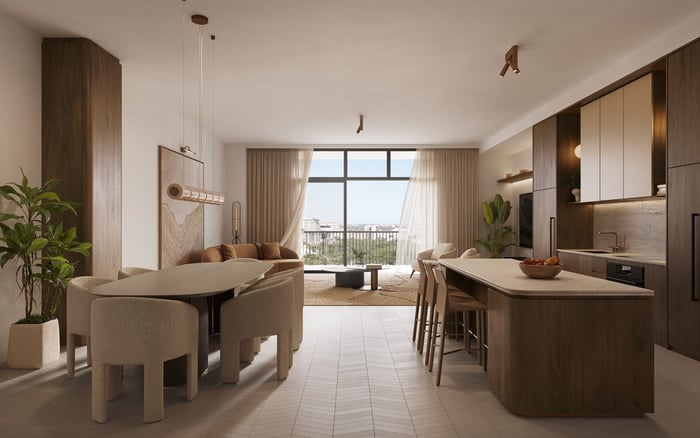
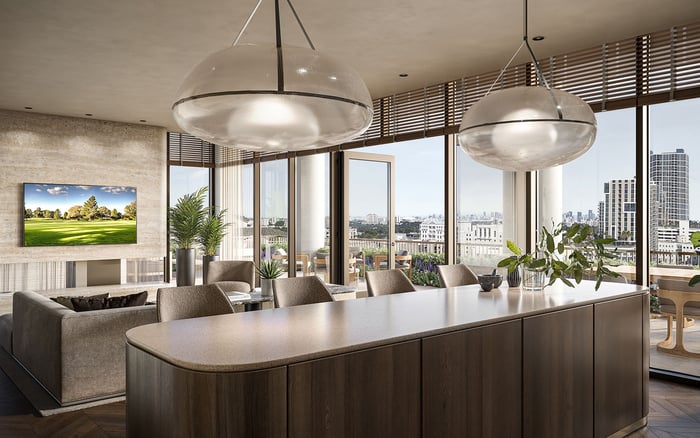
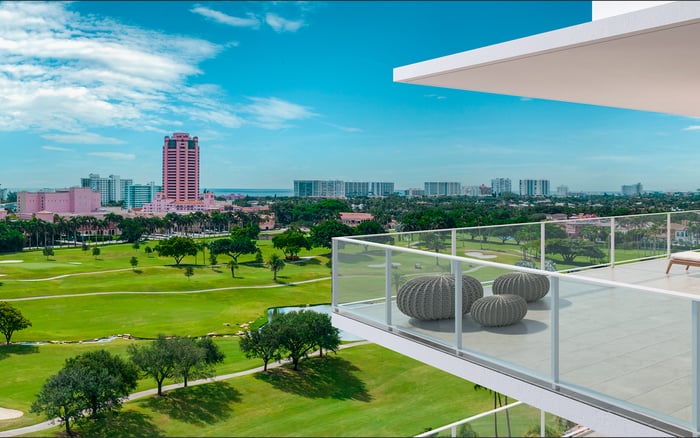
A buyer-focused 2026 checklist for evaluating outdoor-kitchen permissions at Cora Merrick Park, with attention to governance documents, fire safety, building systems, hurricane exposure, insurance, and the difference between delivered features and future customization.
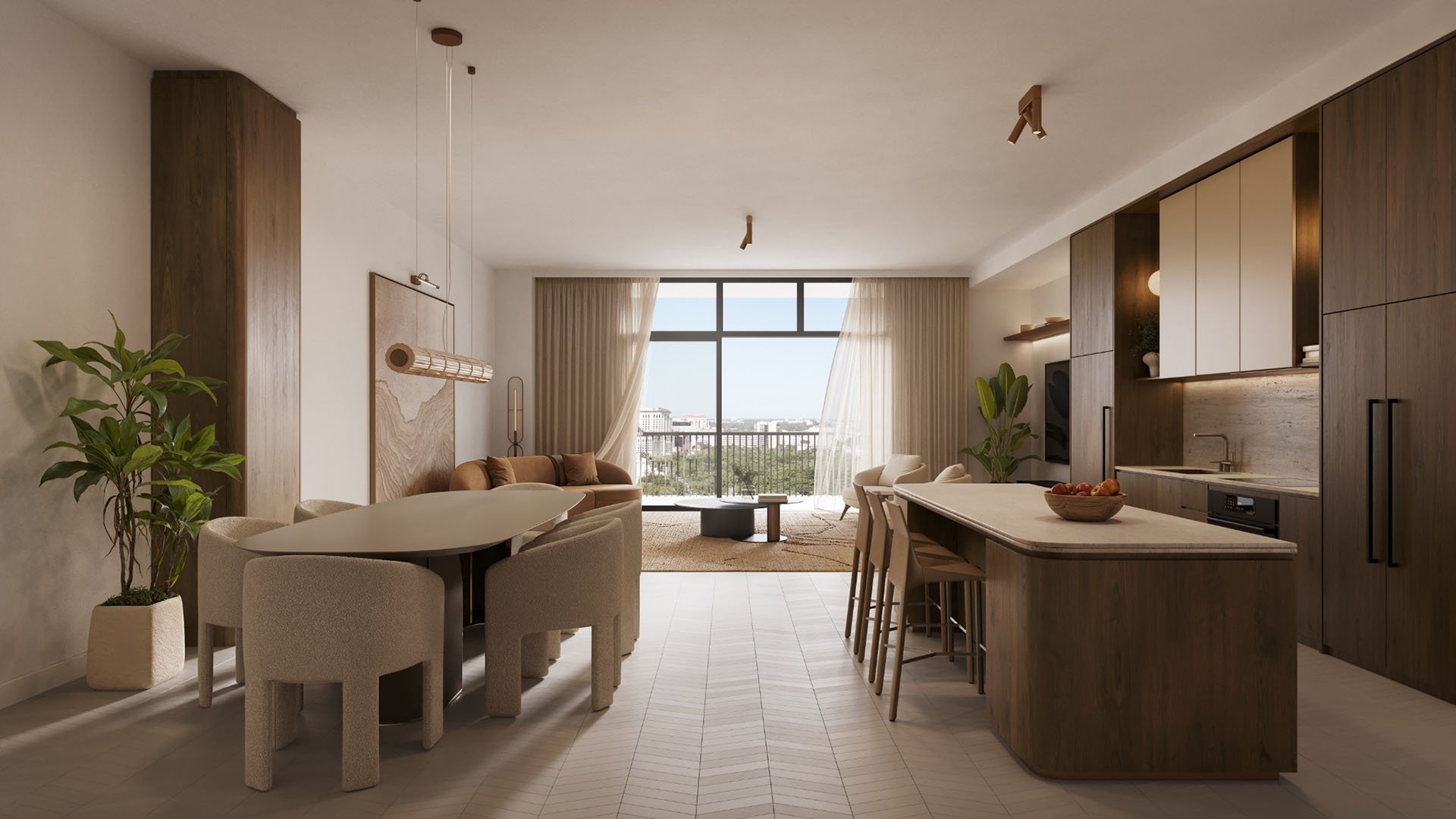
At Cora Merrick Park, the outdoor kitchen belongs in the same due-diligence file as floor plans, finish schedules, association documents, and closing costs. In Coral Gables’ Merrick Park context, the appeal is clear: a shaded terrace, a quiet dinner, a glass of wine after errands or office hours, and the sense that private outdoor living has become part of the residence itself. Yet in a multifamily luxury building, the right to enjoy an outdoor kitchen is not always the same as the right to alter, expand, fuel, or operate it without conditions.
The careful buyer should approach the 2026 outdoor-kitchen conversation as a rules analysis, not a lifestyle assumption. A rendering may show a handsome counter, appliance niche, or grill-like element, but imagery alone does not confirm what an owner may install, replace, enlarge, or use. The essential distinction is between what the developer delivers as part of the residence and what a buyer later wants to customize. Those two categories can move through different approval paths.
For buyers comparing Coral Gables inventory, the same balcony and terrace questions often carry across new-construction and pre-construction decisions. Cora Merrick Park simply makes the issue more concrete because affluent buyers increasingly expect the private outdoor room to work as hard as the interior kitchen.
The first document set to review is the condominium governance package. The declaration, bylaws, rules and regulations, architectural-review procedures, alteration agreements, and use restrictions can determine whether an outdoor kitchen is treated as part of the unit, a limited common element, or an area subject to association control. That classification matters because it can affect who approves the work, who maintains it, and who pays if something fails.
The most important question is not, “Is there an outdoor kitchen?” It is, “What exactly is permitted, and under what conditions?” A buyer should ask whether private balconies, private terraces, and shared amenity decks are governed differently. Shared spaces can be subject to hours, reservation policies, guest limits, event rules, and cleaning obligations, while private outdoor areas may carry restrictions tied to smoke, grease, noise, odor, drainage, and visibility from neighboring residences.
Written confirmation is essential before money is committed to construction deposits, designer retainers, custom stone, appliance orders, or contractor mobilization. Oral assurances are rarely enough when the item involves fire, structural load, drainage, façade penetrations, or insurance allocation.
A developer-delivered outdoor-kitchen component may have been coordinated with the building’s original plans, engineering, and approvals. A later buyer customization may not have the same status. That distinction should sit at the center of the checklist.
If an outdoor counter, sink, storage element, or appliance is delivered with the residence, the buyer should still verify its permitted use, maintenance obligations, replacement standards, and warranty boundaries. If the buyer wants to add gas-fueled equipment, expand stone counters, install a wine cooler, or introduce a pizza oven, the review becomes more exacting. Each change can implicate electrical capacity, ventilation, drainage, fire safety, structural weight, waterproofing, and the building envelope.
Outdoor-kitchen upgrades are especially sensitive when they change how the area functions. A modest prep counter is one thing; a full cooking station designed for frequent entertaining is another. In dense vertical living, the building must balance private enjoyment against adjacent residences above, below, and beside the terrace.
Open flame is the category most likely to attract scrutiny. Gas lines, propane storage, high-heat appliances, grills, and pizza ovens raise questions that go beyond aesthetics. Buyers should confirm whether the building permits gas-fueled appliances in private outdoor areas, whether only certain appliance types are allowed, and whether any approved installation must be completed by licensed professionals under association oversight.
Electric appliances are not automatically simple. They may still require load verification, dedicated circuits, weather-rated equipment, GFCI protection, waterproofing coordination, and a review of how heat and smoke move across the façade. The buyer’s checklist should include the exact appliance model, specifications, fuel source, installation method, clearance requirements, shutoff access, and service route.
The practical rule is straightforward: if the appliance cooks, heats, vents, burns fuel, stores fuel, chills wine, adds weight, or requires penetration into building systems, it deserves formal review before purchase.
South Florida outdoor living is beautiful because it is exposed. That same exposure makes hurricane-zone design, corrosion resistance, drainage, and flood resilience part of the outdoor-kitchen conversation. A terrace installation must respect wind loads, anchoring, flying-debris concerns, salt-air corrosion, waterproofing membranes, and storm-preparation procedures.
A stone counter that looks effortless in a showroom may be materially different on a high balcony or terrace. Weight, anchoring, edge conditions, and support systems all matter. So do cabinet materials, fasteners, hinges, appliance housings, and any item that may degrade in humidity or salt air. Buyers should ask whether removable components must be secured or stored before storms, whether association rules require seasonal protocols, and whether specific materials are prohibited.
The building envelope deserves special attention. Any change touching the façade, slab, railing, waterproofing, drains, electrical conduits, or mechanical systems can affect more than one residence. A luxury finish does not excuse an engineering conflict.
Outdoor kitchens create hospitality, but they also create smoke, aroma, sound, light, and traffic. In a refined building, those are not minor details. They shape the lived experience of every neighboring owner.
Work-from-home and hybrid-use patterns have made daytime terrace use more common. A weekday lunch grill, a late-afternoon gathering, or a small catered event may be felt by others in ways that would have been less visible when residents were away all day. Luxury rentals and short-term-rental demand can make associations even more sensitive to party use, guest behavior, cleaning lapses, and recurring nuisance complaints.
For an owner who expects to entertain, the due-diligence question is not only whether cooking is allowed. It is whether the rules permit the style, frequency, hours, and guest profile the owner has in mind. This is where lifestyle planning and legal review meet.
Insurance should be reviewed before installation, not after an incident. Buyers should understand which losses are the owner’s responsibility, which are covered by association policies, and how deductibles, negligence claims, water intrusion, fire damage, smoke damage, or damage to neighboring units may be handled.
If an outdoor kitchen is altered after closing, the association may require contractor insurance, indemnities, licensed trades, permits, deposits, or post-work inspections. The owner may also need to disclose improvements to the unit insurer. High-value outdoor equipment and custom finishes can create gaps if coverage is not updated.
Maintenance responsibility is equally important. Who services the drain? Who repairs failed waterproofing below an outdoor cabinet? Who replaces corroded components? Who is liable if grease migration stains another surface? A buyer should insist on clarity before an outdoor room becomes a capital project.
Before committing to any outdoor-kitchen plan at Cora Merrick Park, a buyer should request the operative condominium documents and confirm how private balconies, terraces, and amenity decks are categorized. The next step is to obtain written guidance on permitted appliances, fuel sources, open-flame restrictions, ventilation expectations, drainage, electrical load, structural limits, and storm protocols.
The buyer’s design team should prepare a specific scope rather than a mood board. Include appliance models, dimensions, weight, utility needs, anchoring approach, material specifications, and drawings showing the relationship to railings, walls, drains, and façade elements. Then ask the developer, association, counsel, and qualified engineers to review the same package.
Finally, build timing into the purchase strategy. Approval windows, board meetings, permit requirements, contractor availability, and insurance documentation can affect when the terrace becomes usable. For a sophisticated buyer, the win is not simply obtaining permission. It is obtaining durable permission that survives ownership, resale, and daily use.
Does a rendering prove an outdoor kitchen is fully permitted? No. A rendering can suggest design intent, but buyers should verify the actual rights, restrictions, and approval requirements in writing.
Should I review outdoor-kitchen rules before signing a contract? Yes. The review should occur before committing capital to a residence, customization, appliance purchase, or construction plan.
Are private terraces and shared amenity decks governed the same way? Not necessarily. Private and shared outdoor areas can have different rules for use, hours, guests, cleaning, cooking, and liability.
Why are gas appliances especially sensitive? Gas systems and open-flame equipment can raise fire-safety, ventilation, shutoff, installation, and insurance questions in multifamily buildings.
Can I add a pizza oven or wine cooler later? Possibly, but those upgrades may require separate review for heat, electrical demand, weight, ventilation, drainage, and association approval.
Why does hurricane resilience matter for an outdoor kitchen? Terrace installations must account for wind exposure, anchoring, corrosion, storm preparation, drainage, and building-envelope protection.
Can nuisance rules limit how I use an outdoor kitchen? Yes. Smoke, grease, odors, noise, lighting, guests, and party activity can all be regulated to protect neighboring residences.
Who pays if an outdoor-kitchen alteration causes damage? Responsibility depends on the governing documents, insurance policies, maintenance obligations, and the specific cause of the damage.
Is developer-delivered equipment treated differently from later upgrades? It can be. Delivered components may have been coordinated with original plans, while later customizations may need fresh approvals.
What is the safest next step for a serious buyer? Request the governing documents, define the desired outdoor-kitchen scope, and obtain written confirmation from the proper reviewing parties.
For a tailored shortlist and next-step guidance, connect with MILLION.
If branded residences are on your mind — as a home or as an allocation — we would be glad to share what we are seeing, privately.
Begin a quiet conversation