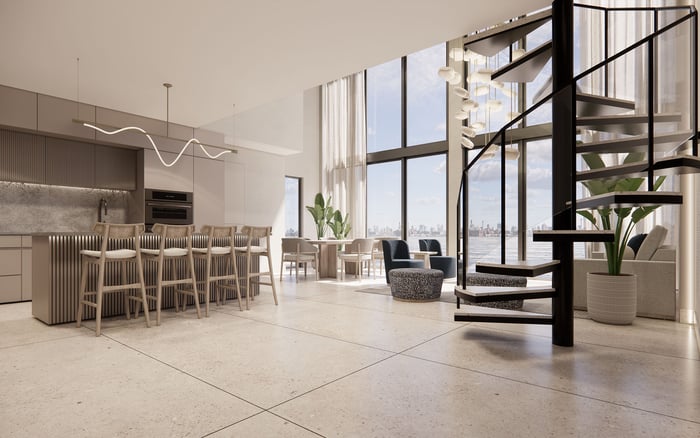
A buyer-focused look at how building culture changes the meaning of luxury floor plans, from flexible rooms and secondary bedrooms to staff spaces and daily service logic.

In South Florida’s upper tier, the most revealing question is not simply how many bedrooms a residence has. It is how those rooms perform once the household arrives, guests settle in, staff begin moving through the day, and the building’s social rhythm becomes part of daily life. That is where the comparison between Continuum Club & Residences North Bay Village and The Ritz-Carlton Residences® Fort Lauderdale becomes more useful than a conventional bay-versus-beach discussion.
Continuum Club & Residences is framed around a “Club & Residences” concept rather than a standard condominium identity. That distinction matters. A club-oriented residential culture suggests a daily environment shaped by shared amenities, community habits, social programming, and a stronger sense of residential continuity. In North Bay Village, it also creates a bayfront Miami-area alternative for buyers who may otherwise be comparing oceanfront luxury residences across South Florida.
The Ritz-Carlton Residences® Fort Lauderdale belongs in this conversation as a useful buyer lens, especially for those considering a branded coastal lifestyle in Broward. The disciplined approach is to compare the questions each building asks of a floor plan, rather than assume every branded or club-style residence lives the same way. Culture, not just square footage, determines whether rooms become genuinely useful or remain attractive on paper.
A flexible floor plan is often described as a bonus. In practice, it is a form of insurance against lifestyle change. In a club-style residential environment, rooms may need to shift between family living, hosting, remote work, wellness routines, children returning from school, and extended guest stays. The buyer is not only purchasing space. The buyer is purchasing optionality.
At Continuum Club & Residences North Bay Village, the “club” framing gives buyers a reason to study how private interiors connect to a social building culture. If a household expects to entertain frequently, a den near the living area may feel more valuable than a closed secondary room with little relationship to the main gathering space. If the residence will serve as a second home, the same den may need to function as an office during long stays, a media room during family visits, or overflow sleeping space during holidays.
This is why new-construction buyers should resist judging plans only by total area. Two residences with similar square footage can live very differently. One may give the primary suite impressive scale but leave secondary rooms undersized. Another may create a more balanced arrangement, allowing guests, older children, or household help to maintain privacy without feeling removed from the residence.
Secondary bedrooms are where luxury floor plans often reveal their discipline. In marketing language, a bedroom count can sound complete. In daily use, the questions are more specific. Can the room hold a proper bed, seating, and luggage without feeling compromised? Is there a bathroom arrangement that works for adult guests? Does the room feel suitable for a long-stay family member, or is it better understood as a short-stay guest room?
For buyers comparing North Bay Village with Fort Lauderdale, this is especially important because household patterns vary. Some buyers are relocating full time. Others are maintaining a South Florida base for seasonal use. Some expect adult children, grandchildren, or friends to visit often. Others want a quiet private residence supported by a service-forward building culture. In every case, the secondary bedroom should be evaluated for real livability, not just count.
A bayfront residence in a community-oriented setting may place a higher premium on flexible guest use. A coastal branded residence may invite different expectations around service, arrival experience, and hospitality-style polish. The point is not to rank one culture above the other. It is to understand how the building’s identity should influence the buyer’s reading of the plan.
In the ultra-premium market, staff rooms and service areas are often treated too casually. A room labeled for staff is only useful if it has a coherent role within the residence. Does it support regularly present household help, such as a nanny, housekeeper, caregiver, or live-in assistant? Or is it better understood as a flexible overflow room for storage, luggage, exercise, or occasional guests?
The difference is meaningful. A true staff-supporting layout should provide privacy, practical circulation, and a sense of separation from the principal living areas. It should not require staff to move through formal entertaining zones unnecessarily. It should not create awkward overlap between family routines and service functions. Even in a highly social building, the residence itself still needs operational discretion.
At Continuum, the club-style positioning makes this question especially relevant. A household may spend more time engaging with shared amenities and community spaces, which can reduce pressure on the private residence in some ways. Yet it can also increase the need for the home to function smoothly when the owner is hosting, receiving guests, or using the unit as a base for an active Miami lifestyle. Staff space, in that setting, should be evaluated through daily operating logic rather than prestige language.
North Bay Village gives Continuum a distinctive Miami-area context. It is bayfront rather than oceanfront, which changes the emotional register of the residence. Waterview living here can feel connected to the city, the islands, and the broader Miami Beach luxury lineage without relying on a direct beach narrative. For some buyers, that creates a more residential and socially grounded atmosphere.
Fort Lauderdale, by contrast, often enters the buyer’s mind through a coastal lifestyle frame. When The Ritz-Carlton Residences® Fort Lauderdale is part of the comparison set, buyers may naturally focus on the experience of branded residential living, hospitality expectations, and the way private interiors support a polished coastal routine. The correct diligence is to read the specific floor plan carefully, then ask whether the residence supports the way the household actually lives.
The best plan is rarely the one with the most dramatic label. It is the one where every secondary suite, service zone, corridor, and flex area has a clear purpose. A beautiful residence can still fail a practical test if the guest room cannot host adults comfortably, if the staff room lacks privacy, or if the flex room sits too far from where life actually happens.
A serious buyer should walk the plan in scenarios. Imagine arriving with luggage after a flight. Imagine hosting dinner while a guest stays for a week. Imagine a caregiver or housekeeper moving through the residence during breakfast. Imagine two people working from home while family members use the common areas. These scenarios expose strengths and weaknesses faster than a simple square-footage comparison.
For Continuum Club & Residences North Bay Village, the most relevant questions begin with the relationship between private space and community life. Does the residence provide enough quiet retreat after using the club-style amenities? Can secondary bedrooms support longer visits without making the household feel crowded? Does the plan make entertaining feel natural rather than staged?
For The Ritz-Carlton Residences® Fort Lauderdale, the parallel questions should focus on whether the selected plan supports the buyer’s expectations of a branded coastal home. If service is central to the lifestyle, staff and utility spaces should be tested with particular care. If the residence will be used seasonally, flexible rooms may matter more than formal room labels.
Square footage alone does not determine whether a luxury residence works. In South Florida, where homes often serve multiple purposes across family, entertaining, seasonal use, and staff support, building culture becomes a practical design force. Continuum’s club-oriented identity gives buyers a clear example of how social atmosphere, shared amenities, and bayfront living can change the way interior rooms are valued.
The smartest comparison is not a superficial contest between Miami-area bayfront living and Fort Lauderdale coastal prestige. It is a careful reading of how each residence supports real life. Flexible rooms should be judged by adaptability. Secondary bedrooms should be judged by dignity and duration of stay. Staff rooms should be judged by privacy, usefulness, and operating logic. When those elements align with the building’s culture, the floor plan becomes more than efficient. It becomes quietly inevitable.
Why does building culture matter when comparing luxury floor plans? Building culture influences how residents host, work, use amenities, receive guests, and rely on service spaces.
What makes Continuum Club & Residences North Bay Village relevant to this discussion? Its “Club & Residences” positioning makes it a strong case study for community-oriented, bayfront luxury living.
Should buyers compare only square footage? No. Similar square footage can produce very different levels of comfort, privacy, and flexibility.
How should secondary bedrooms be evaluated? Buyers should test whether they can comfortably serve adult guests, family members, or extended-stay visitors.
When is a staff room truly useful? It is most useful when it supports privacy, service circulation, and a defined household function.
Can a staff room also be flexible space? Yes, but buyers should decide whether it will support regular household help or mainly serve as overflow.
Why is a club-style residence different from a conventional condominium? A club-style setting places more emphasis on shared amenities, social rhythm, and community identity.
How does bayfront living affect the buyer lens? Bayfront living can emphasize views, city connection, and residential calm rather than a pure beach routine.
What should second-home buyers prioritize? They should prioritize flexible rooms, guest comfort, storage logic, and plans that adapt to seasonal use.
What is the key takeaway for new-construction luxury buyers? The best plan is the one whose rooms match the household’s real patterns, not just its desired bedroom count.
If you'd like a private walkthrough and a curated shortlist, connect with MILLION.
If branded residences are on your mind — as a home or as an allocation — we would be glad to share what we are seeing, privately.
Begin a quiet conversation